
Build the coffee station around a real morning
A useful coffee station is a small work zone, not simply a pretty machine in a cabinet niche. It may need water, power, mugs, beans or tea, spoons, filters, waste, a place to pour, and room to open lids or remove a tank. You can begin with the appliances you already own, a tape measure, pencil, paper, and one ordinary morning. Measure every moving part, place the supplies beside it, and notice who walks through the area. These ten checks will help you create a calmer plan. Final cabinetry, electrical work, plumbing if used, ventilation, heat and moisture conditions, accessibility, clearances, installation, and code compliance still require current product instructions and the responsible suppliers, trades, installer, contractor, and project professionals.
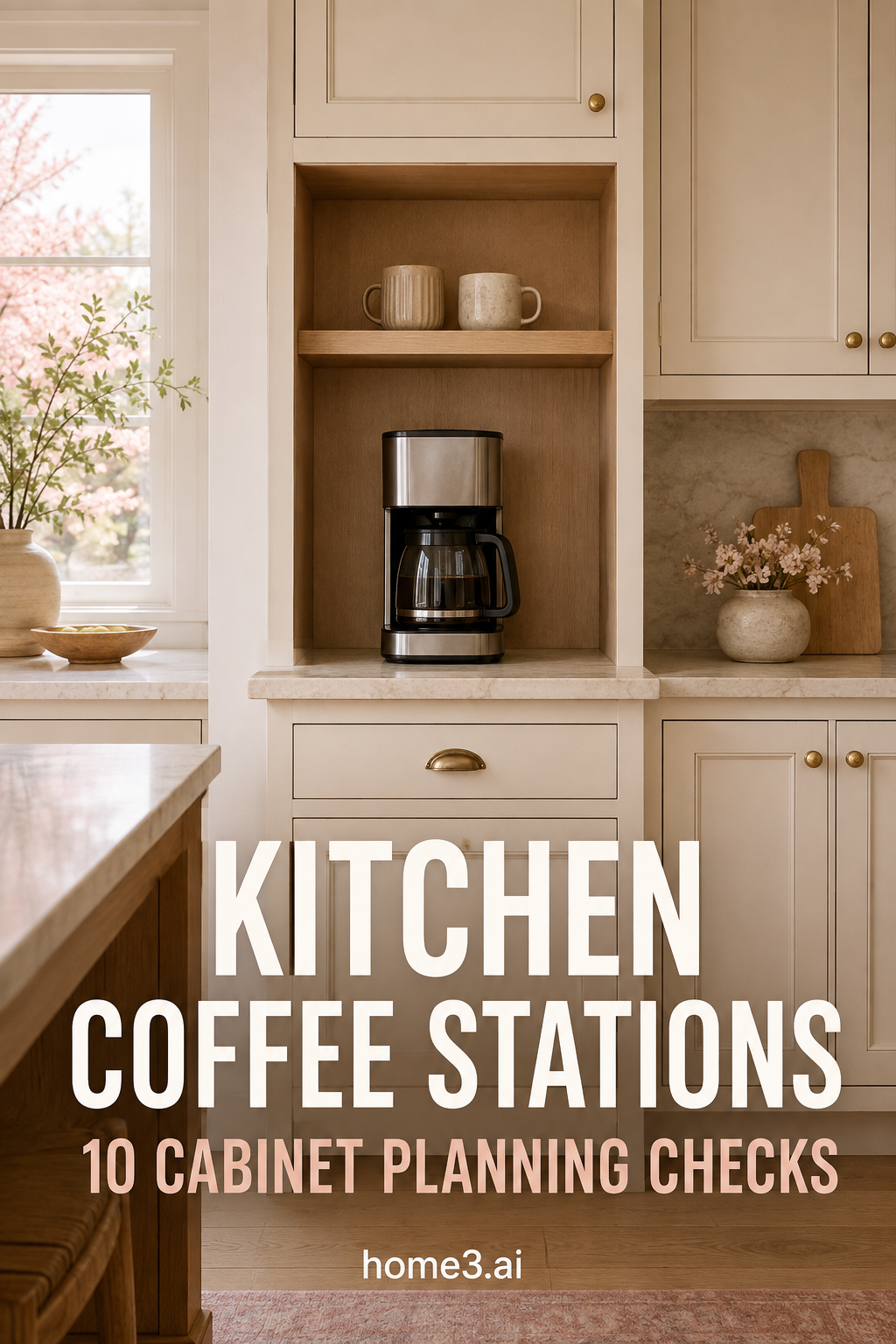
1. Inventory the appliances and the complete routine
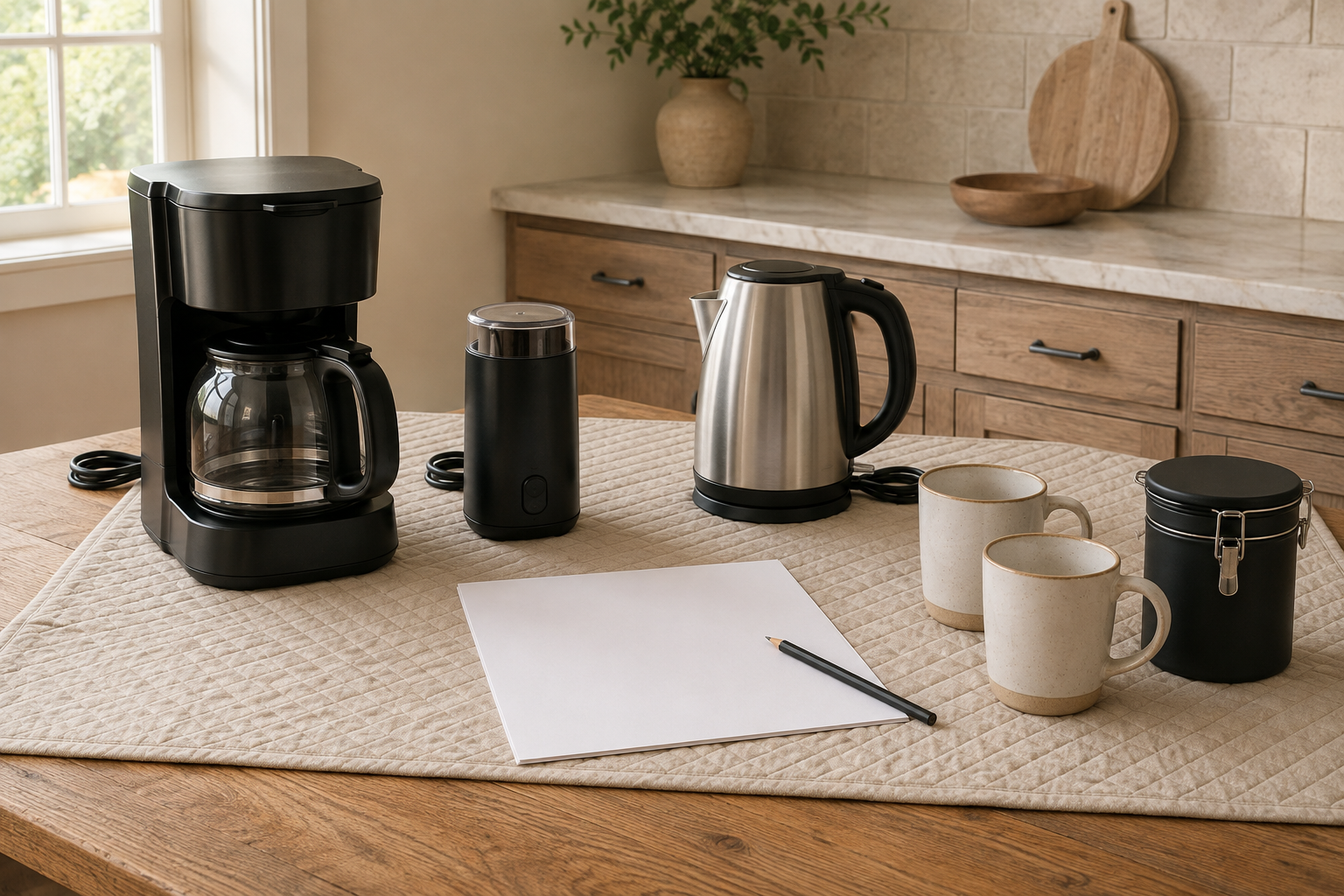
Write down what actually happens: grinding, brewing, boiling water, filling a reservoir, steaming milk, making tea, adding ingredients, discarding grounds, rinsing parts, and returning mugs. Record the exact appliances, cords, lids, handles, removable tanks, carafes, and accessories. The common mistake is designing around one photogenic machine while the grinder, kettle, syrups, filters, and drying parts spread across the main counter. Another is planning for a future appliance without allowing today's routine to work. A quick inventory on a normal weekday is enough. Group what comes out together and let those objects define the cabinet, counter, storage, and cleanup questions.
2. Choose a location outside the busiest cooking path
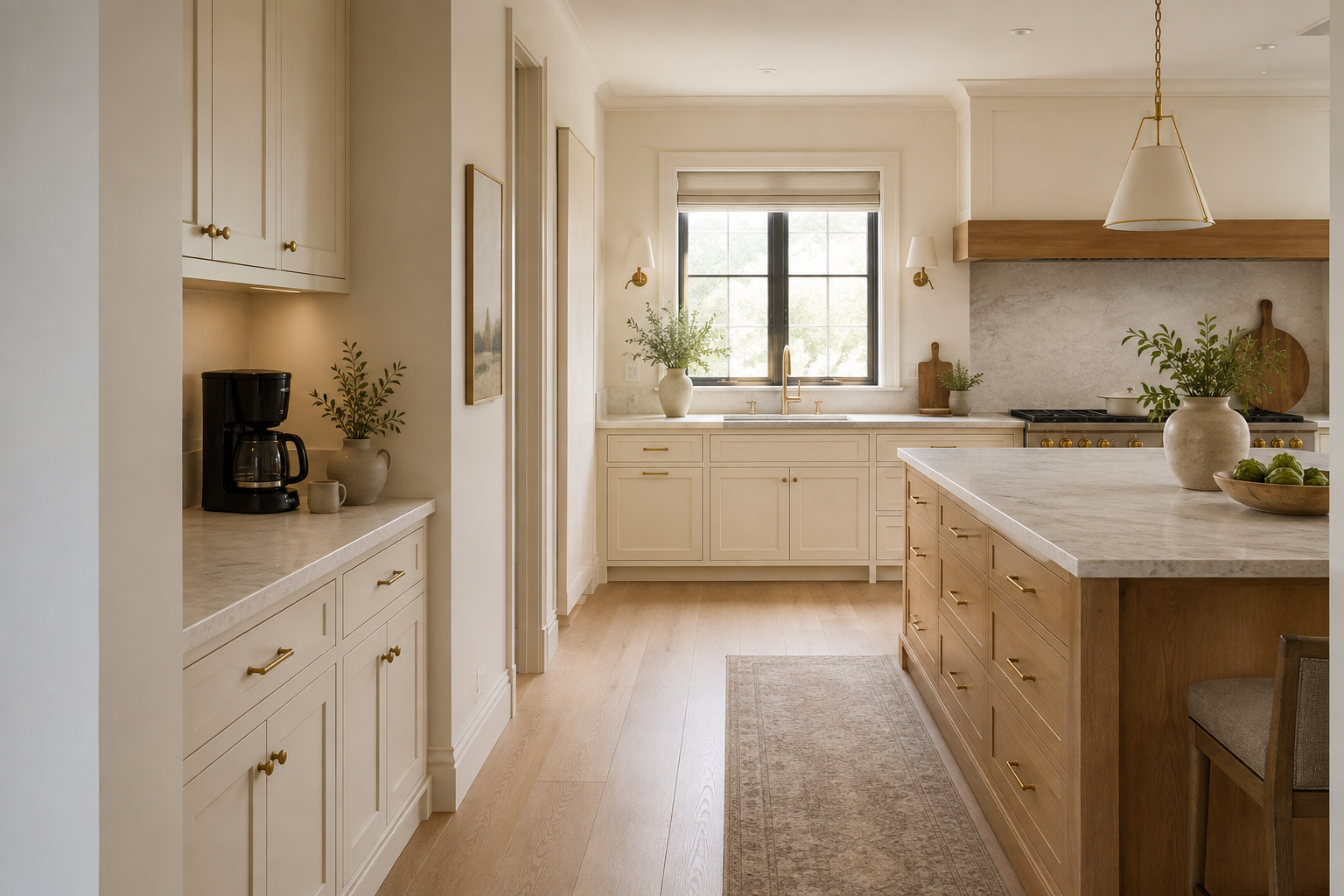
Trace the morning route from bedroom or entry to mugs, coffee or tea, refrigerator if needed, water, waste, and seating. A station outside the main preparation and cooking aisle can let one person make a drink while another cooks. The common mistake is placing it beside the refrigerator because milk is nearby, then blocking the refrigerator every morning. Another is using the best uninterrupted prep surface because the machine looks attractive there. Mark two options on the plan and walk both during a busy routine. The stronger location reduces crossings without sending water, grounds, and cups through several unrelated cabinet runs.
3. Measure every lid, tank, handle, and operating movement
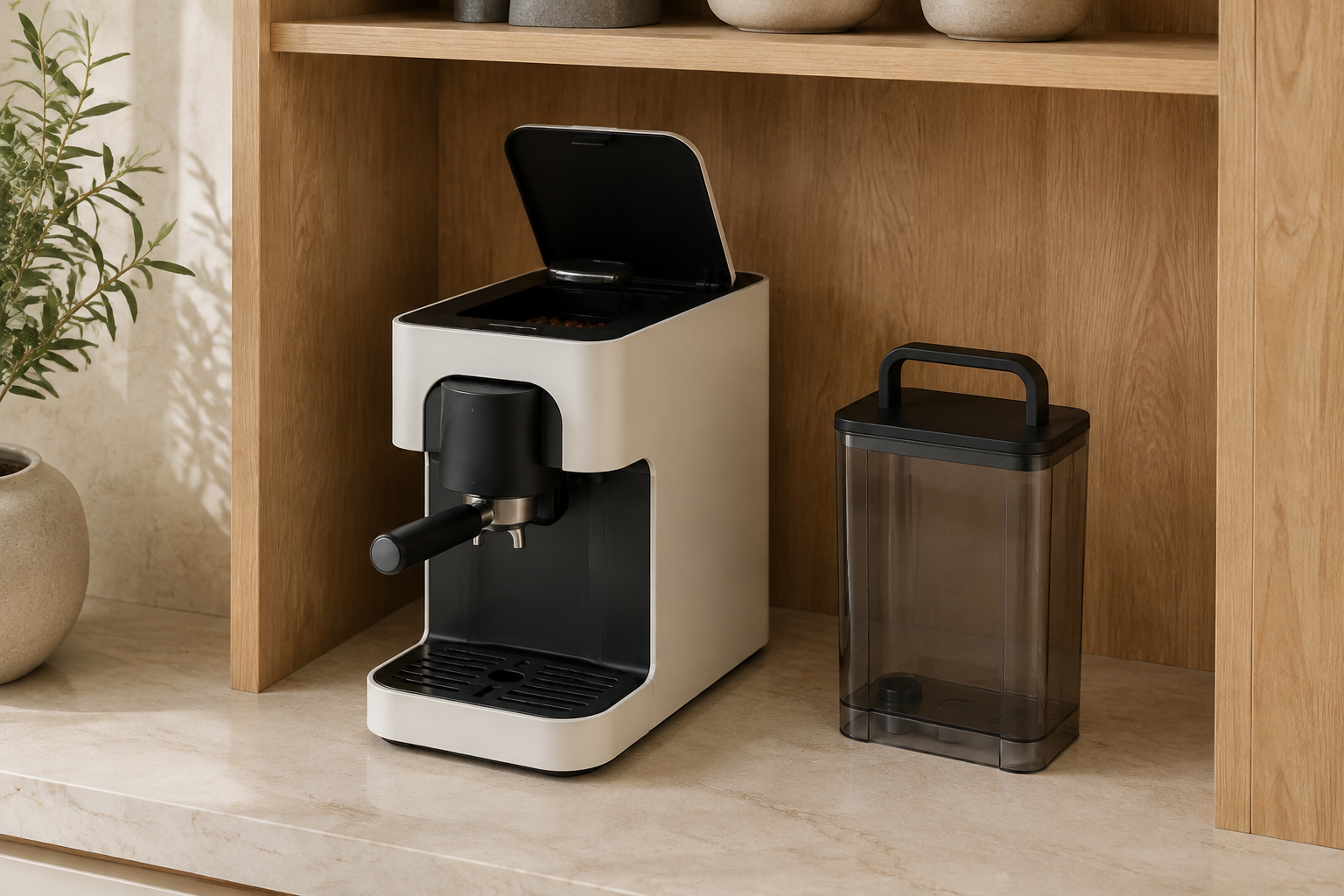
Measure the appliance body, then open the top, remove the water tank, slide out the drip tray, swing the steam wand, lift the grinder hopper, and pull the machine forward if the instructions require it. A common mistake is matching a niche to the closed appliance and discovering the lid strikes the shelf. Another is leaving enough height but too little hand room to refill or clean it. Use a cardboard shelf over the real machine and rehearse every movement. The product instructions and responsible providers must determine approved conditions, but your mockup can reveal whether the proposed cabinet is comfortable before anyone fabricates it.
4. Protect one clear surface for pouring and setting down
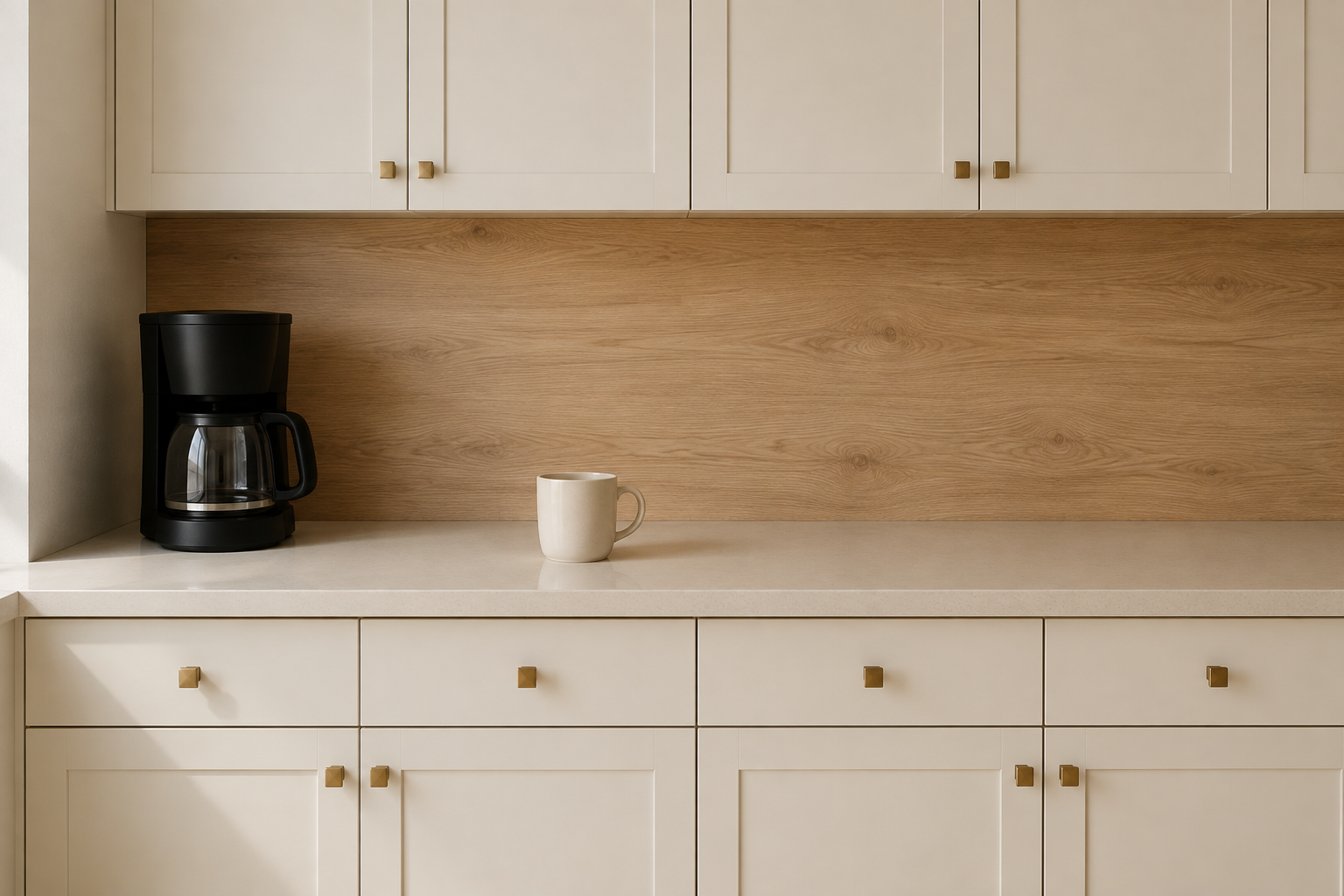
Leave a dependable spot for the mug, carafe, kettle, milk, spoon, and the moment something drips. The entire counter is not available when permanent appliances occupy most of it. The familiar mistake is centering the machine for symmetry and splitting the remaining surface into two slivers. Another is filling every open inch with canisters until there is nowhere to pour. Put all daily items on the proposed counter footprint and make two drinks. If the routine spills into the main kitchen, reduce the appliance group, move storage upward, or give the station a wider uninterrupted landing area.
5. Coordinate power without trapping cords or service
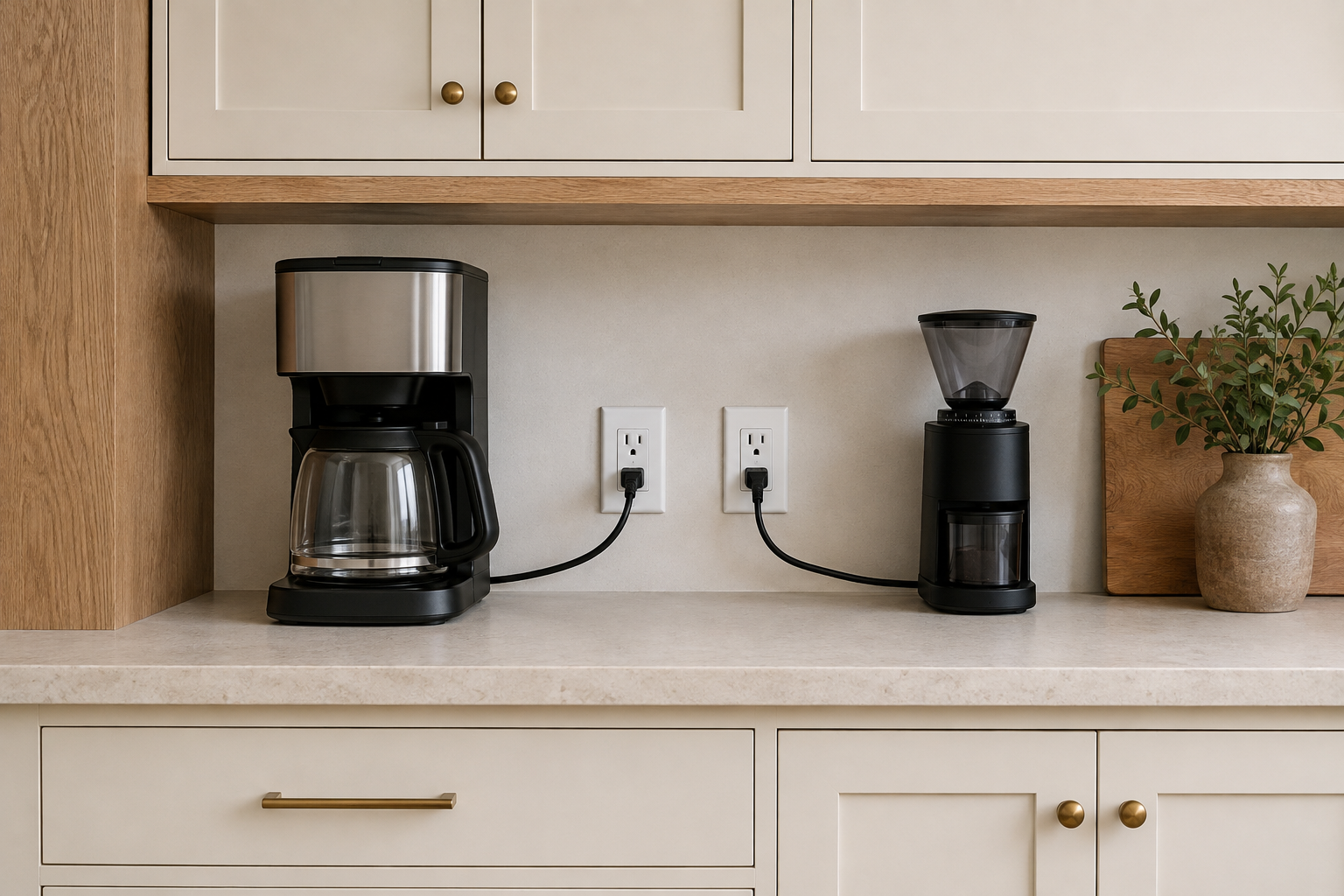
List each powered appliance, its cord exit, plug, operating position, and whether several items are likely to run together. Show outlets where plugs remain accessible and cords do not cross water, heat, moving doors, or sharp cabinet edges. A common mistake is hiding one outlet directly behind a machine that must sit against the wall. Another is depending on an extension cord or power strip because the finished niche lacks the approved provision. Do not design or alter electrical work from this article. Give the exact appliance list and cabinet elevation to the licensed electrician, appliance providers, installer, contractor, and authority for the real circuit and outlet plan.
6. Give steam, heat, and moisture somewhere to go
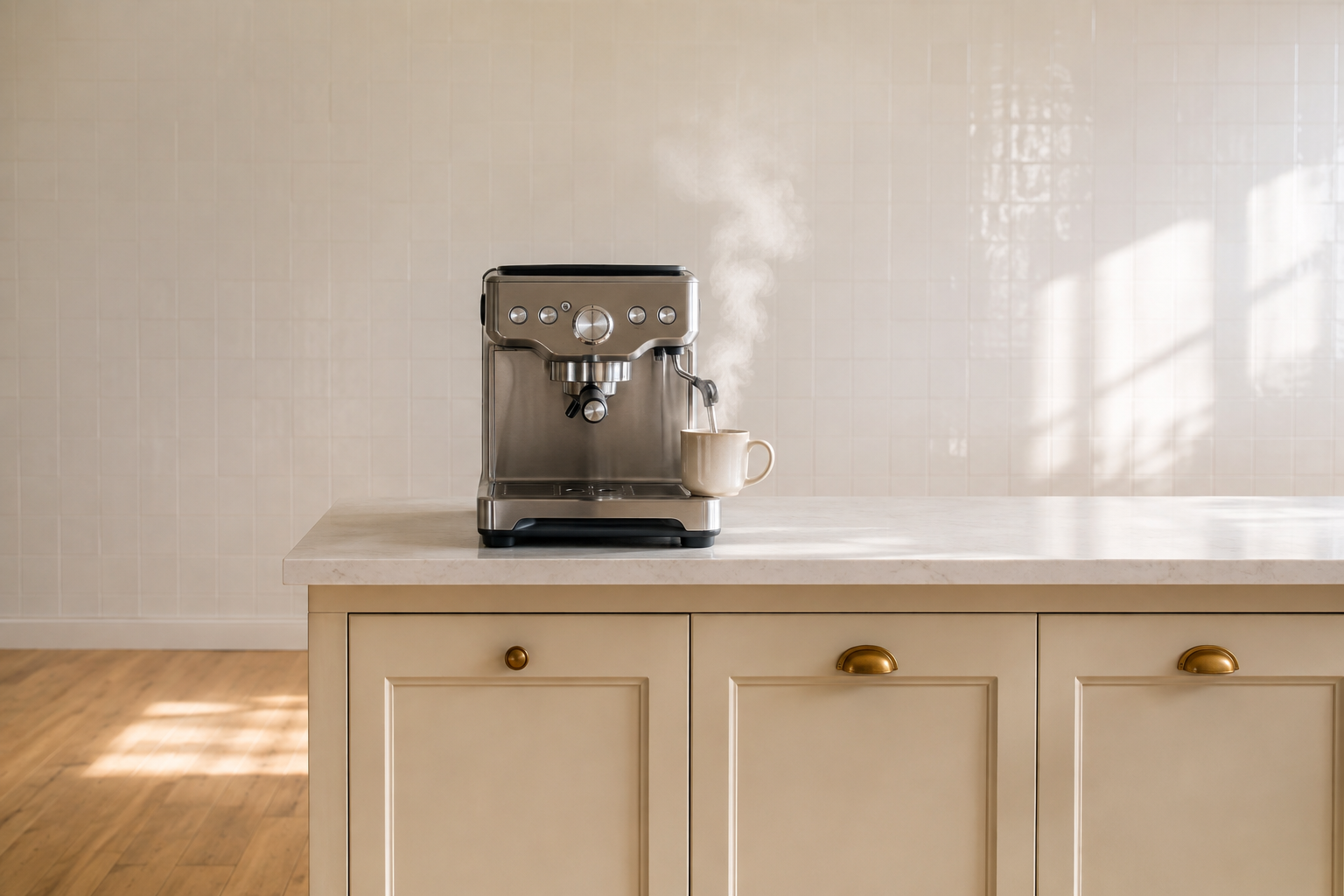
Watch where steam leaves the kettle, brewer, espresso wand, or cup warmer, and where heat or condensation reaches the cabinet underside, wall, shelf, and stored goods. A common mistake is enclosing a machine tightly because it fits while ignoring the operating environment in the product instructions. Another is brewing under a shallow shelf and accepting repeated moisture as normal. Some appliances may need open use, front clearance, ventilation, or a different location. Follow the current product and material guidance, and have the responsible cabinet supplier, appliance provider, electrician or other trade, installer, contractor, and professional confirm the finished niche.
7. Make an appliance-garage door help instead of interfere
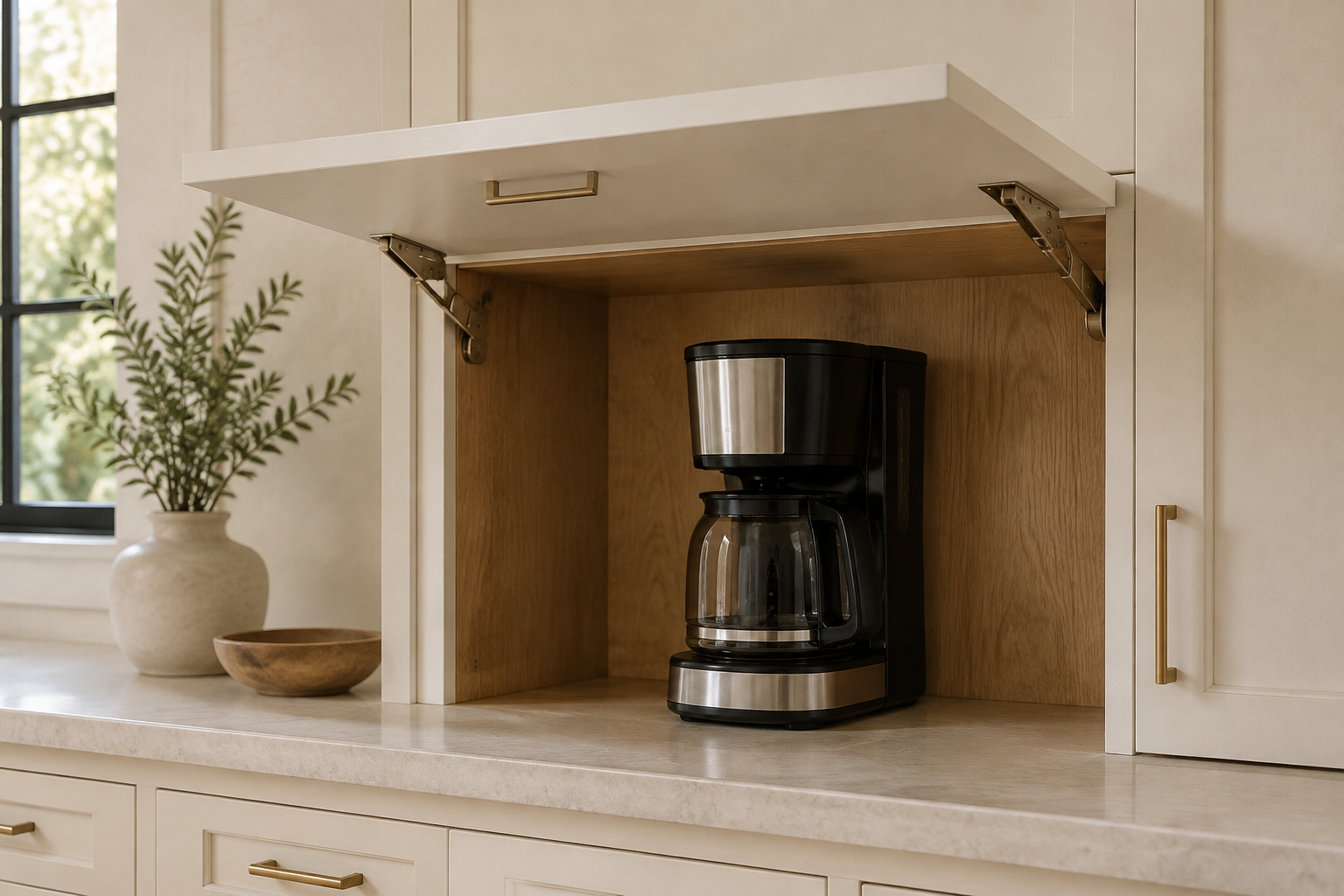
If the station closes, draw the complete door, hinge or lift mechanism, handles, tracks, open position, counter footprint, and the sequence for using the appliances. The common mistake is choosing a beautiful pocket or lift door without enough cabinet depth or side space for its real hardware. Another is leaving the door projecting at face height or blocking the outlet while the machine runs. Ask whether the door can remain safely open throughout the routine and whether the interior can be cleaned and serviced. Use the cabinet supplier's actual mechanism and approved appliance conditions rather than copying a hidden-door photograph.
8. Put mugs and supplies where one hand can reach them
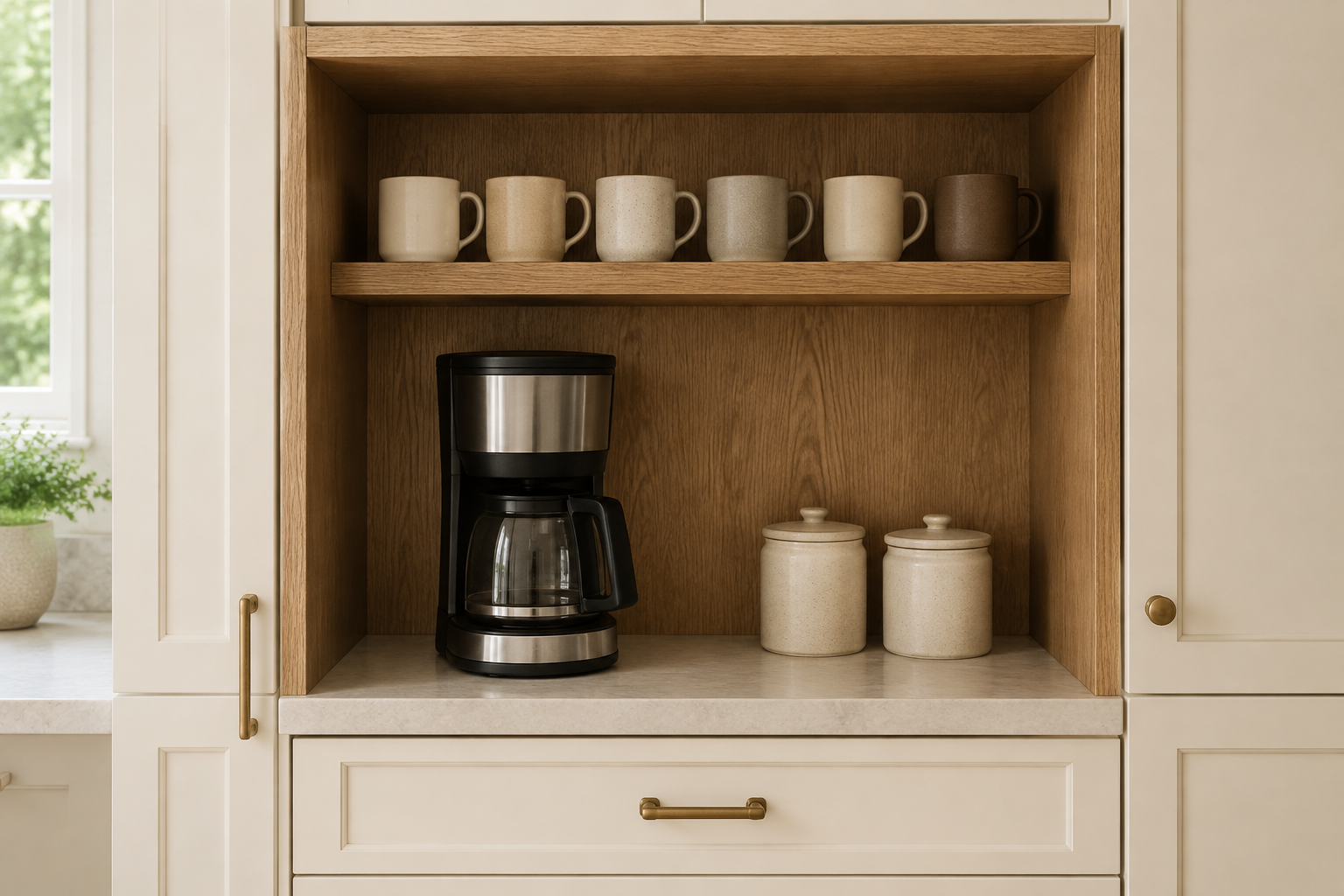
Group everyday mugs, tea, coffee, filters, spoons, sweeteners, towels, and backup supplies by frequency and reach. Heavy or breakable items deserve stable shelves and comfortable lifting positions; small packets and tools may work better in a shallow drawer. A common mistake is devoting the entire upper cabinet to display mugs while daily supplies stay across the room. Another is stacking mugs too high because the elevation looks balanced. Set the actual objects on a temporary shelf, make the drink with one hand occupied, and notice what is awkward. Your routine will reveal a more useful storage order than a styled photograph.
9. Connect filling, grounds, rinsing, and waste
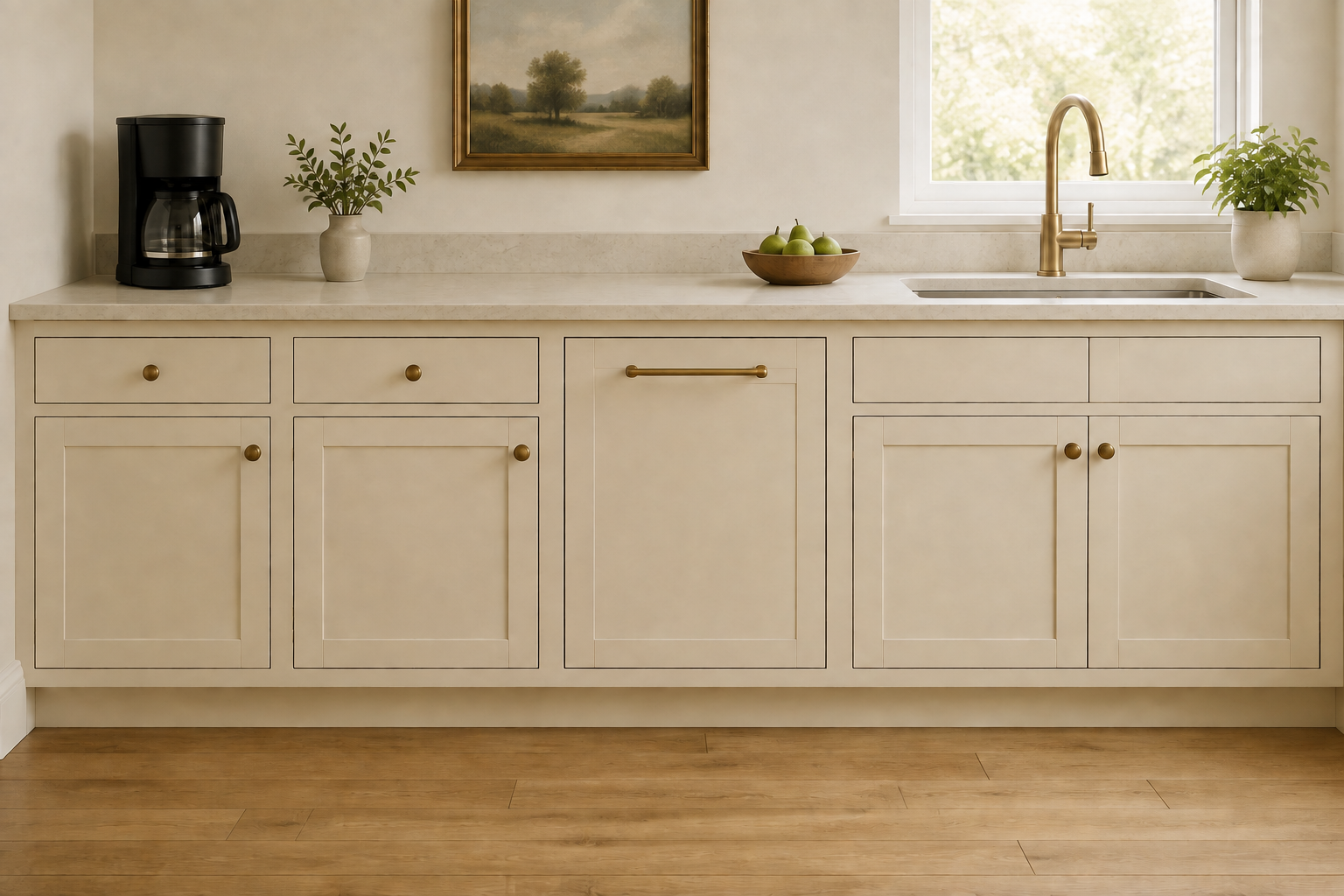
Trace clean water to the machine, used grounds or tea to waste or compost, removable parts to the sink, and wet pieces back to a drying place. A station does not need to sit directly beside the sink, but the cleanup path should not cross the cook or drip through the whole room. A common mistake is creating a remote beverage hutch with no practical water or waste routine. Another is adding a plumbed machine late without coordinating filtration, shutoff, drainage, cabinet access, and service. Keep the first version simple unless the exact product and responsible trades have verified a more involved installation.
10. Leave the cabinet useful when the appliance changes
Record the current appliances, niche and counter, open movements, landing, outlets, steam conditions, storage, cleanup route, doors, shelves, and responsible approvals in one set. Then ask what remains usable if the machine becomes taller, shorter, wider, or unnecessary. The final common mistake is creating a highly specific decorative enclosure around a product that may not last as long as the cabinets. Adjustable shelves, a conventional counter, accessible power, removable organizers, and restrained trim can protect flexibility when approved for the actual installation. You do not need to predict every appliance; avoid making ordinary replacement impossible without a clear benefit.
Connect the coffee station to storage and kitchen traffic
A comfortable station depends on actual appliances, a clear landing, reachable supplies, safe power, manageable steam, simple cleanup, and a location outside the busiest route. These guides support the surrounding plan.
Plan Cabinet Storage Clear the Main CountersPlace the complete morning routine before fixing the cabinets
Use StilePath to test the coffee station, storage, refrigerator, sink, preparation counter, island, and household routes together. Start free with the appliances and measurements you have, then bring the plan into product, cabinet, electrical, installation, and professional review.
Start Planning Free