
Green cabinets can be calm, dramatic, or playful
Green works especially well in kitchens because it can behave like a neutral while still giving the room a point of view. The useful decision is not simply sage versus forest. It is how the green relates to wood, floor pattern, counters, light, and the surfaces you see from adjoining rooms. These ten examples show different ways to build that relationship.
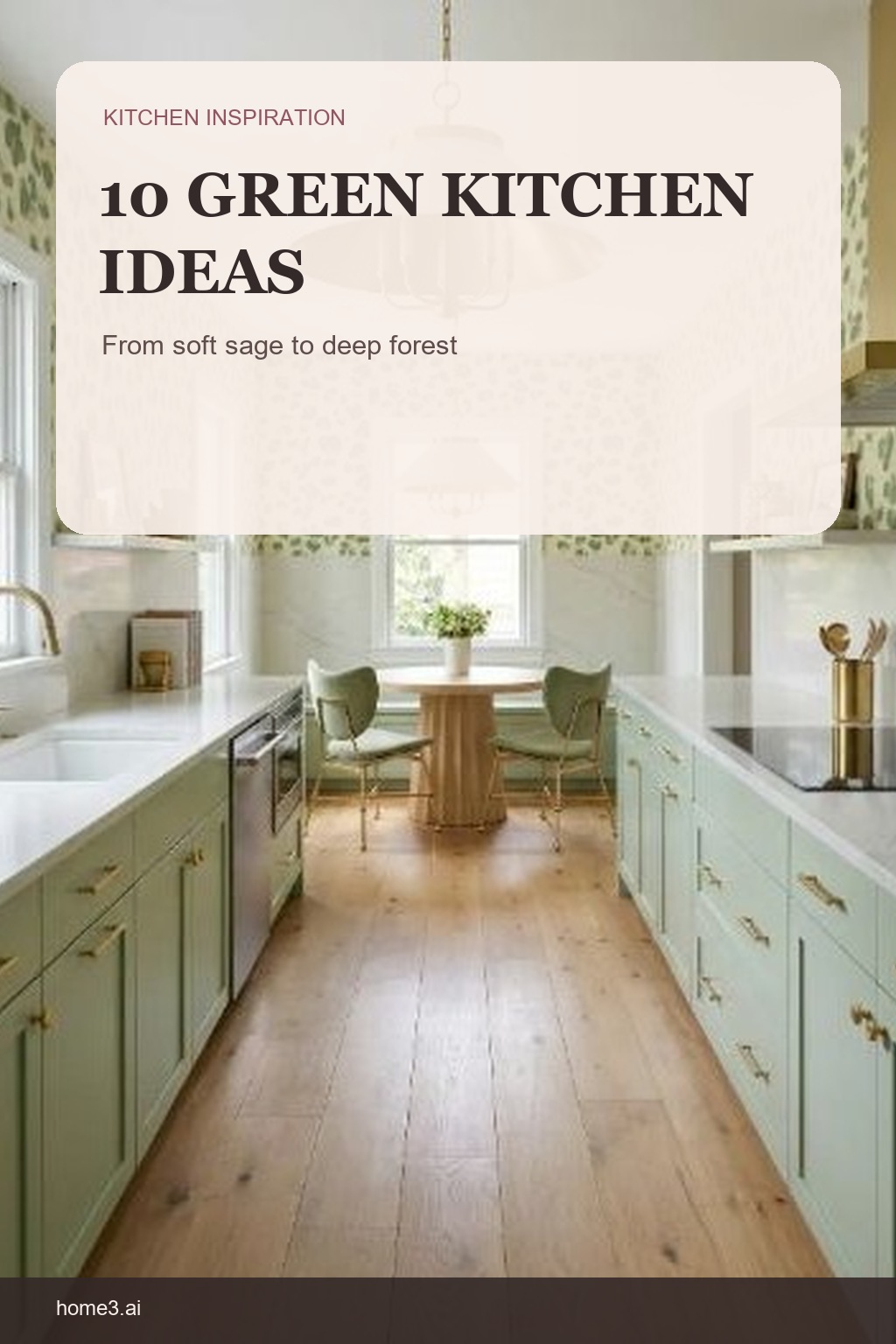
1. Pair olive green with clean-lined shapes
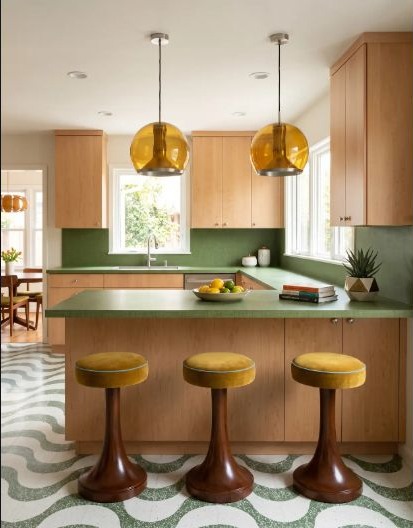
A slim green counter and backsplash can give warm wood cabinets a midcentury rhythm without making every surface green. Keep the cabinet fronts simple, then let sculptural lighting or stools add personality. A common mistake is repeating the green on too many other surfaces once the first pairing works. Protect the wood as a substantial counterweight and add smaller accents only after viewing the whole room.
2. Let the floor sharpen a dark green palette
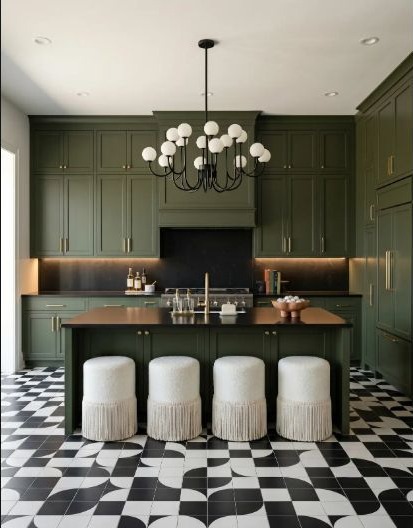
Deep green cabinetry gains definition beside a black-and-white floor. Because both choices are strong, use a quiet counter and restrained hardware to give the room a visual pause between them. The easy mistake is adding another graphic backsplash because each sample seems manageable by itself. Mock up the floor and cabinet areas at their real proportions before deciding whether the room needs any more pattern.
3. Make black granite feel intentional
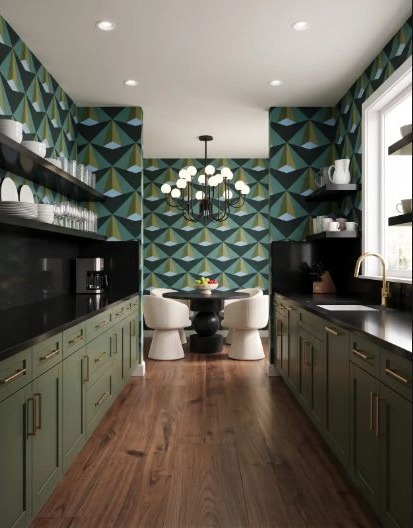
Black stone can make muted green cabinets feel grounded rather than heavy. Repeat the black in a few structural places, then preserve daylight and some open wall so the dark surfaces read as a clear frame. A common mistake is approving the stone under bright showroom lights and missing how much visual weight it gains at home. Review a large sample beside the green in the darkest part of the day.
4. Lighten a green galley with warm checks
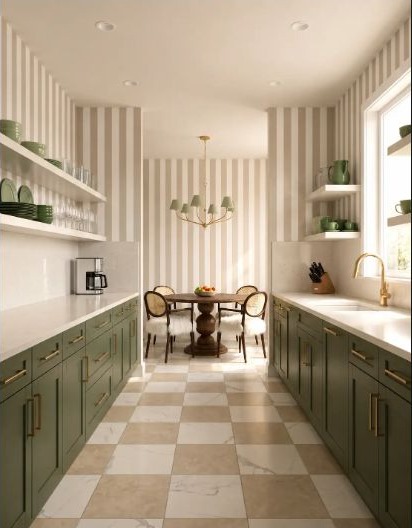
In a long galley, beige checks and vertical stripes can pull light through the room while green lower cabinets anchor the run. Keep upper storage visually lighter so the narrow space does not close in. The common mistake is putting the strongest finish on both facing walls, which can make the aisle feel tighter. Sketch the view from the entrance and decide which plane should lead before repeating the color.
5. Let wallpaper warm up green cabinets
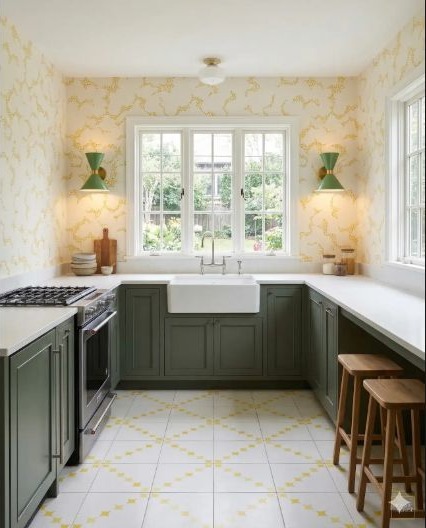
A soft yellow print brings sunlight to gray-green cabinetry, especially in a smaller room. Pull one understated green from the wallpaper rather than trying to match its brightest note. People often chase an exact match from a tiny printed detail and end up with cabinets that feel more saturated than expected. Compare several greens beside a full repeat and choose the one that supports the overall field.
6. Mix checks with softer textures
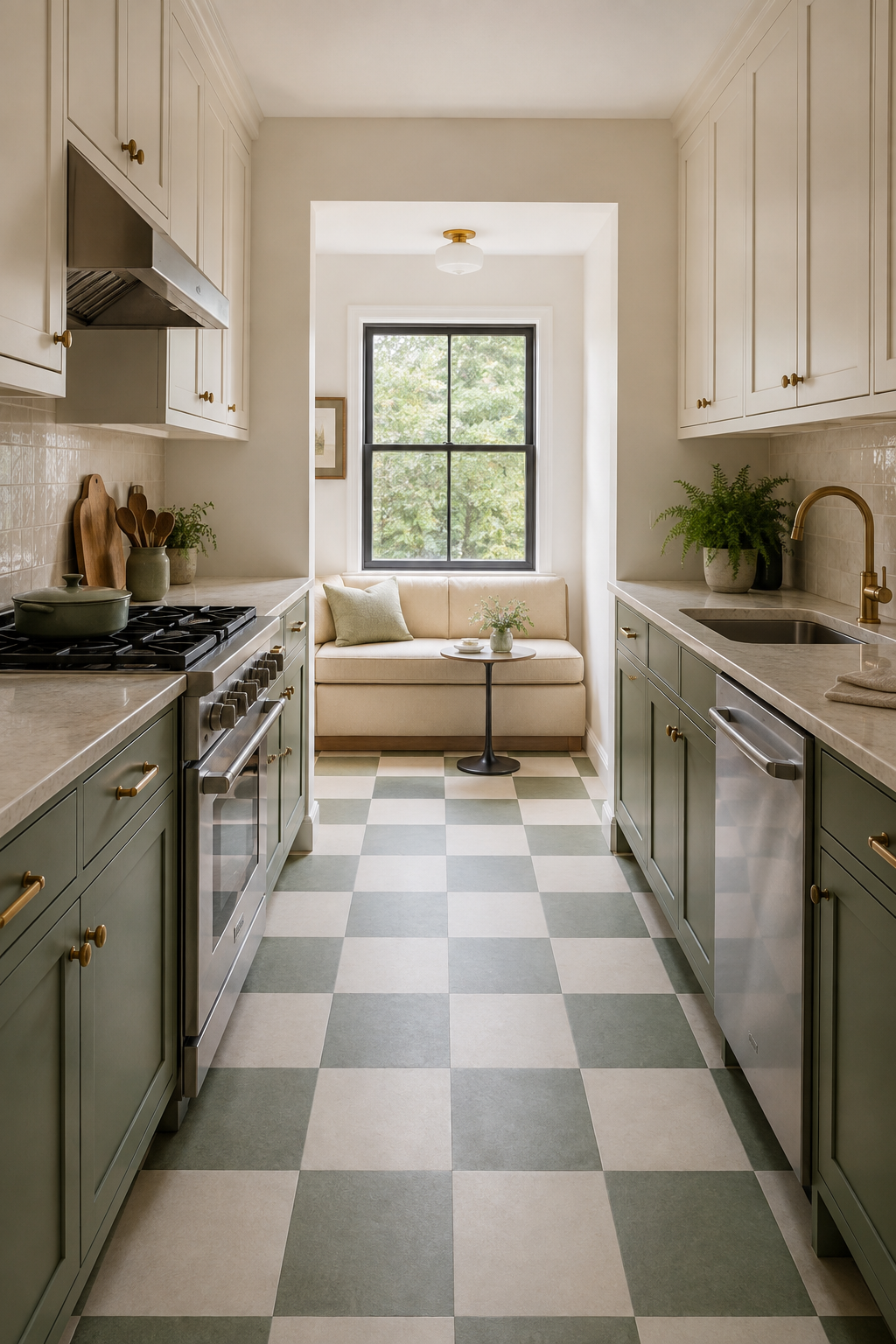
A checked floor adds crisp geometry, so balance it with rounded seating, a diffused pendant, and cabinet colors that stay close in value. The contrast can feel tailored without becoming severe. A common mistake is choosing the check from a hand-size sample and missing how many repeats fill the room. Map several tiles across the floor plan so the scale and cuts make sense around cabinets and doorways.
7. Keep animal pattern in one controlled zone
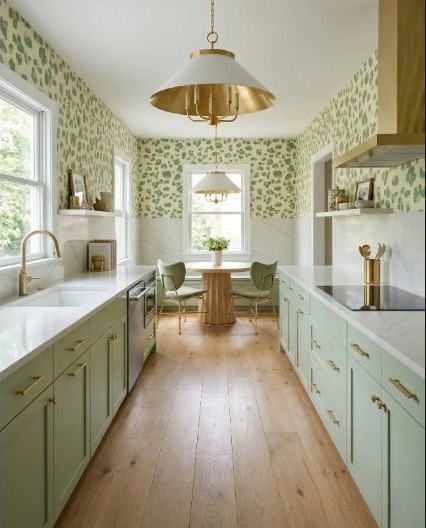
A small-scale animal print can work as a full wall treatment when the cabinets, counters, and floor remain simple. Repeat its sage color below the pattern so the wallpaper feels connected to the room. The easy mistake is adding themed accessories that repeat the motif too literally. Let the wall carry the personality and use quieter materials where everyday objects will already add visual detail.
8. Repeat gingham without wrapping the room
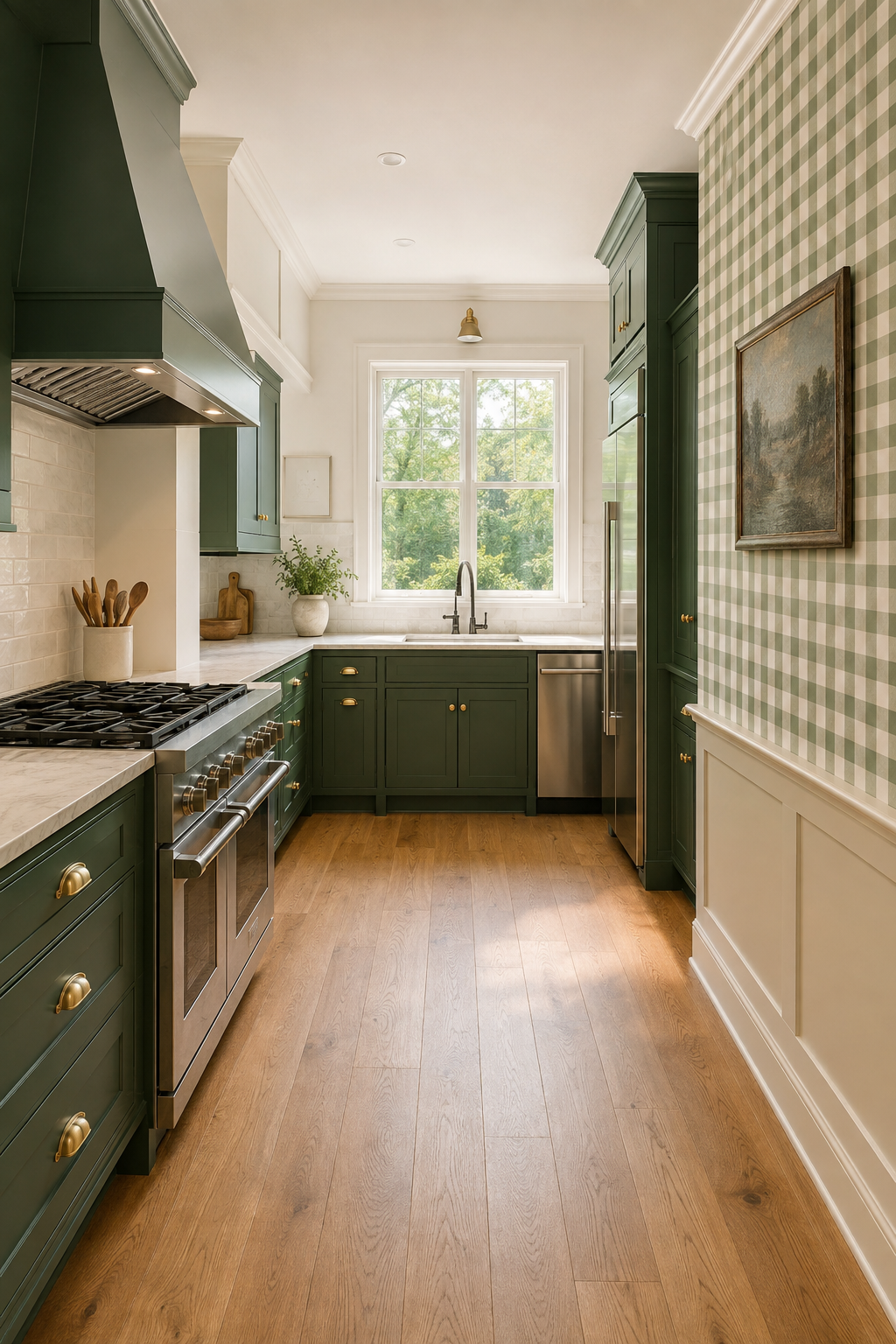
Gingham creates a strong grid. Use it on the main wall and let solid green cabinets and counters carry the same palette elsewhere; the repetition stays visible without covering every plane. A common mistake is ending the grid at an awkward corner or narrow strip. Draw the exact start and stop lines around windows, uppers, and doorways before ordering the material.
9. Pair green seating with dusty pink
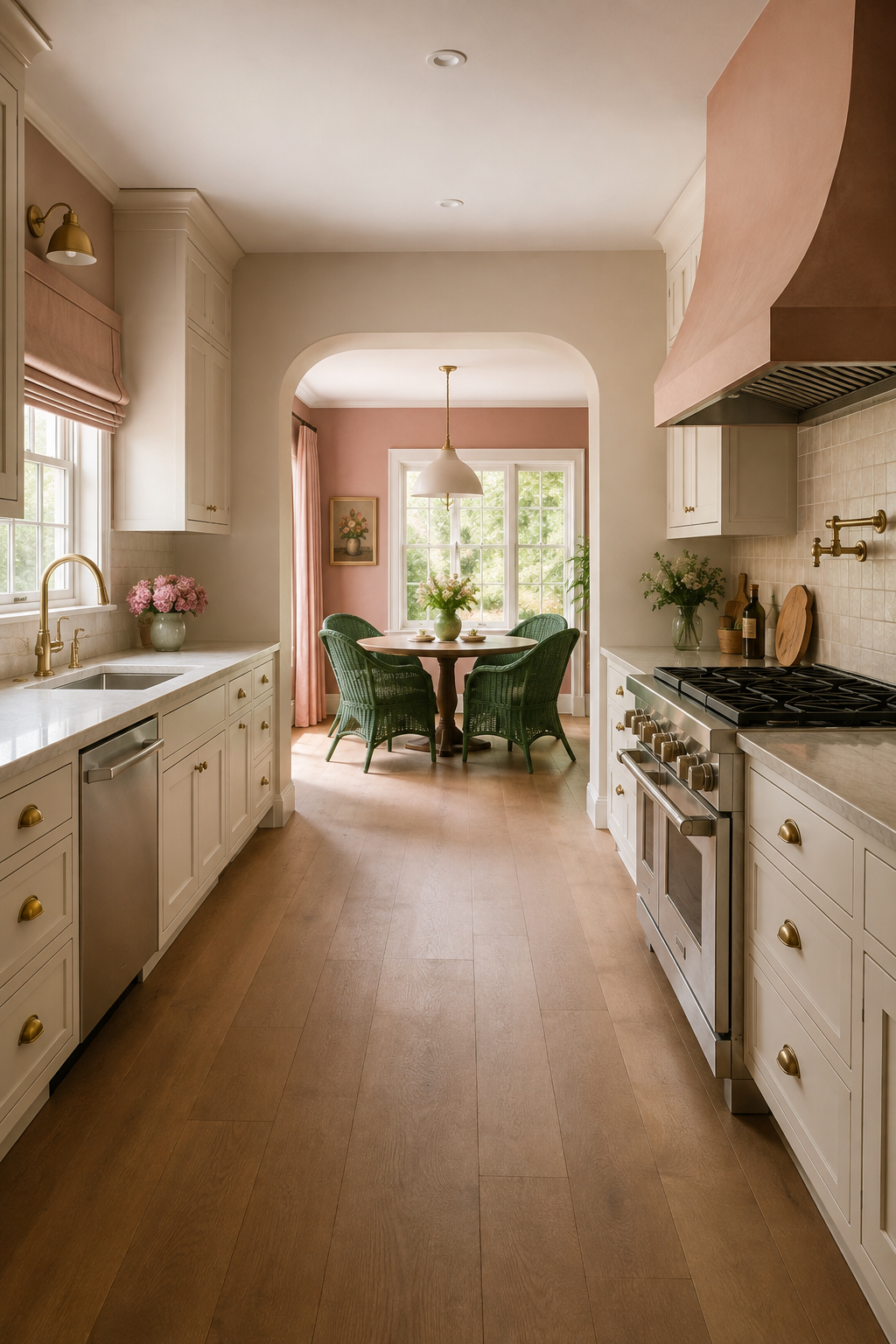
Dusty pink flooring warms a mostly white kitchen, while green wicker chairs keep the palette lively. Limit both colors to clear zones so the combination looks planned rather than scattered. The common mistake is trying to balance them by buying many small objects in both colors. Let one color occupy a broad surface and the other appear in a recognizable group; the room will feel calmer and more intentional.
10. Ground a playful print with deep green
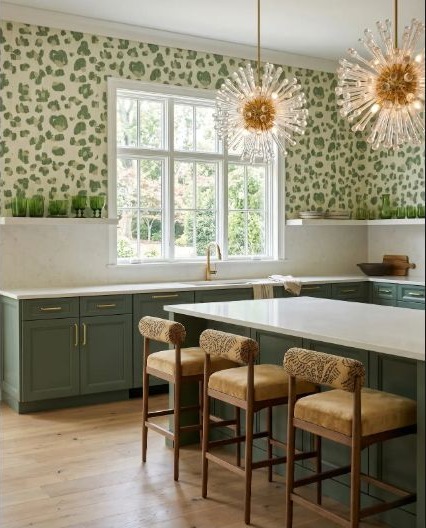
When wallpaper carries movement, deep green cabinets can act like a baseboard for the whole composition. Natural wood and pale stone then give the eye somewhere quieter to land. A common mistake is letting the cabinet color and pattern become equally detailed. Keep the cabinet fronts and hardware simple, then view the full elevation from the normal standing distance before adding another decorative layer.
Test the whole green palette together
Place the cabinet green beside the actual floor, counter, wall treatment, and wood tone. Then review the combination in morning and evening light. A balanced palette depends on those relationships more than the paint name on its own.
See More Livable Color IdeasWant to see how green might work in your room?
StilePath can help you sketch the kitchen and compare a direction before treating the finish as final.
Explore a Green Kitchen Direction