
Eclectic works best when the mix has a reason
An eclectic kitchen can combine eras, patterns, colors, and furniture without feeling accidental. The key is to repeat a few visual ideas and leave some surfaces quiet. These ten rooms show how a clear palette, a recognizable shape, or one controlled focal point can hold a more personal composition together.
1. Repeat one classic shape
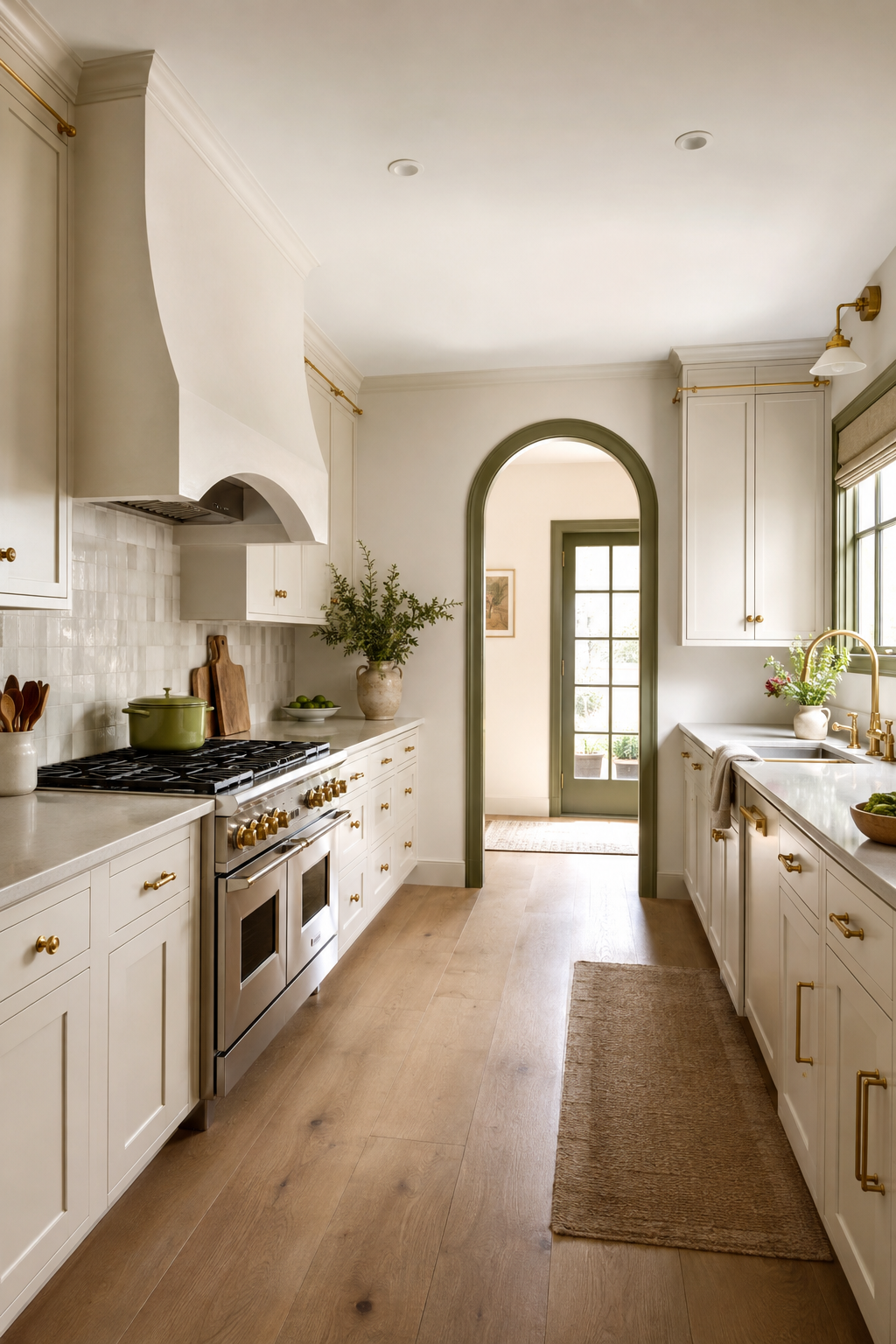
Traditional cabinet frames, a round table, and curved chairs create a shared language even when the floor pattern and lighting are more playful. Repetition gives the mix a backbone. A common mistake is choosing every feature for contrast, leaving nothing that relates from one side of the room to the other. Pick one shape to repeat quietly and let it do the organizing work.
2. Give a funky feature a clean surround
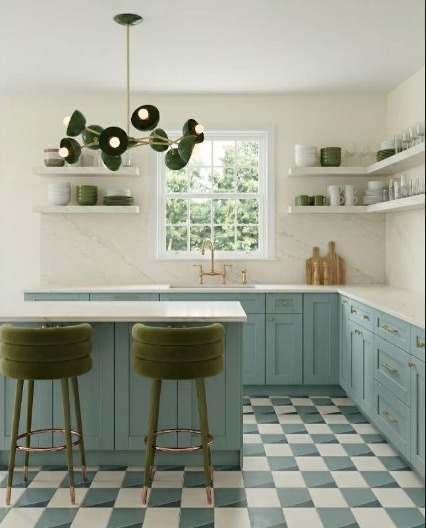
A sculptural green light feels deliberate against pale walls, open shelves, and straightforward blue cabinetry. One expressive object needs enough calm space around it to stay legible. The easy mistake is adding a second and third conversation piece because the first one works. Protect its surrounding view and allow useful everyday objects to stay visually quieter.
3. Let cottage details create continuity
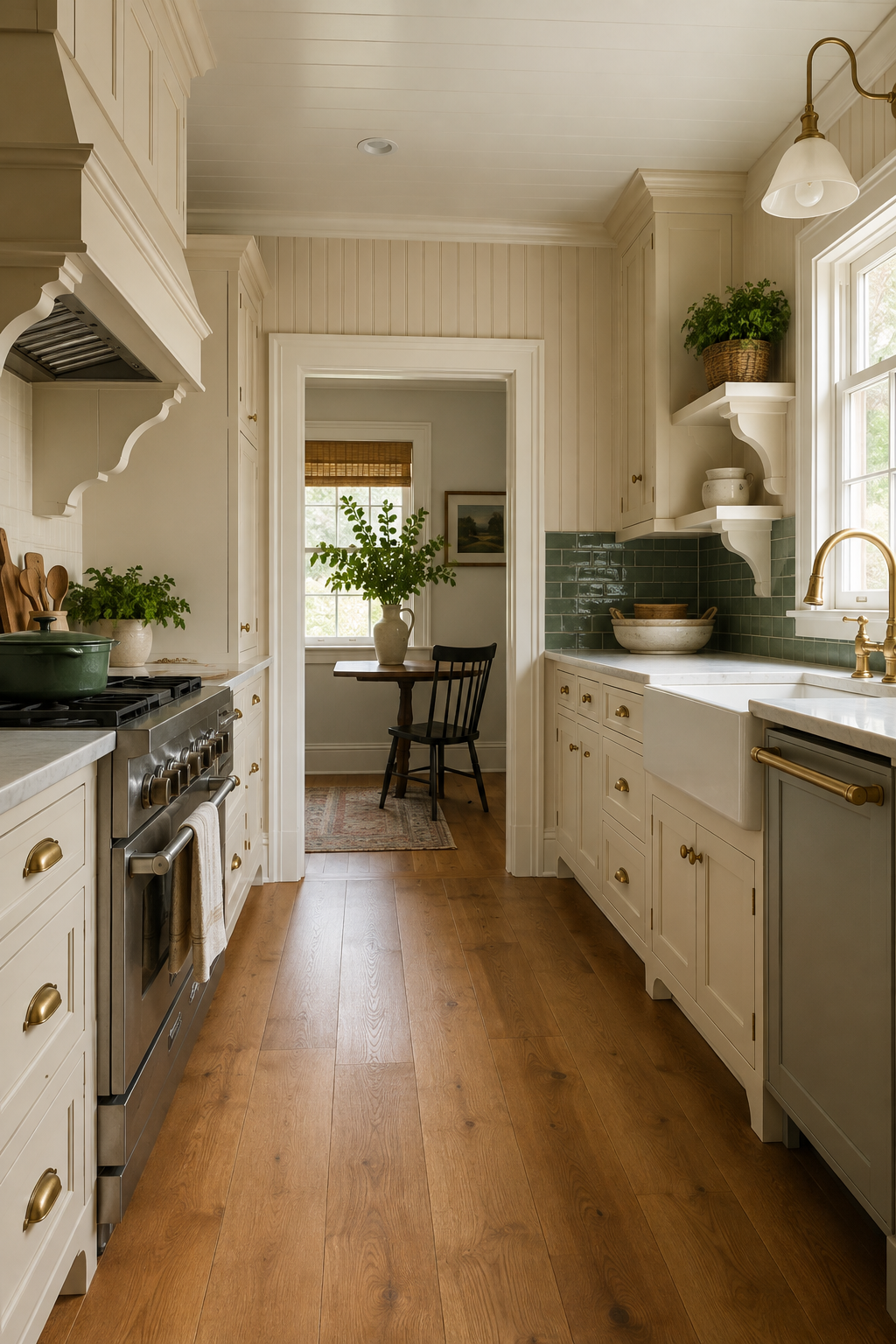
Beadboard, warm cream cabinetry, a simple wood table, and familiar chair shapes can connect a modern artwork or unusual light to the room. Keep the supporting details consistent enough to make the surprise feel chosen. A common mistake is trying to make every unusual item belong through another matching accessory. A stable background often creates a stronger connection than literal repetition.
4. Edit a country kitchen around daily life
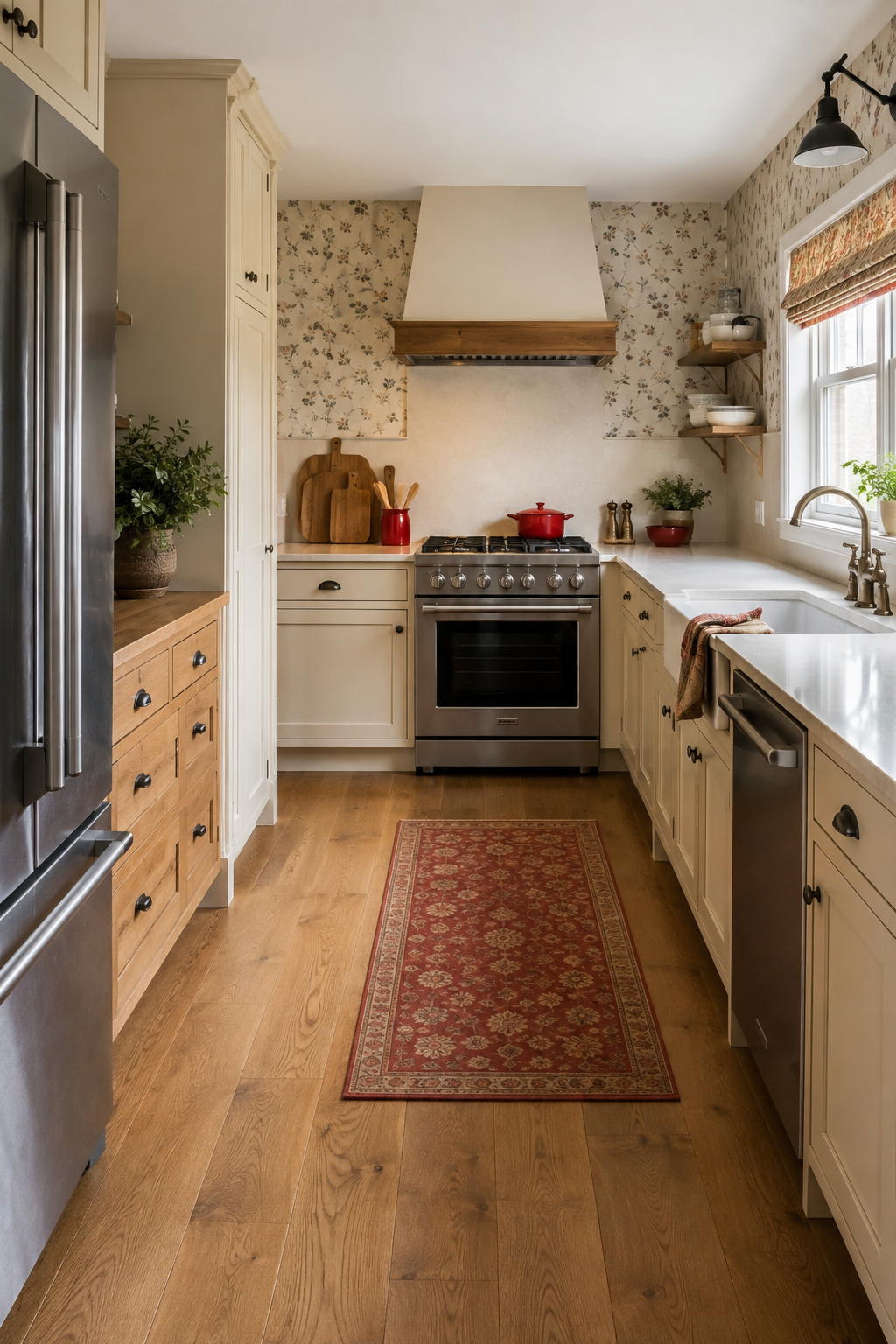
Floral paper and collected objects feel welcoming when preparation, cooking, and seating still have clear space. Start with the routine, then place decorative layers where they will not compete with everyday work. The common mistake is styling the counter before protecting a practical preparation area. Mark the surface needed for cooking and cleanup first; the remaining shelves and walls can carry the collection without making daily use feel cluttered.
5. Use a small motif to tell the story
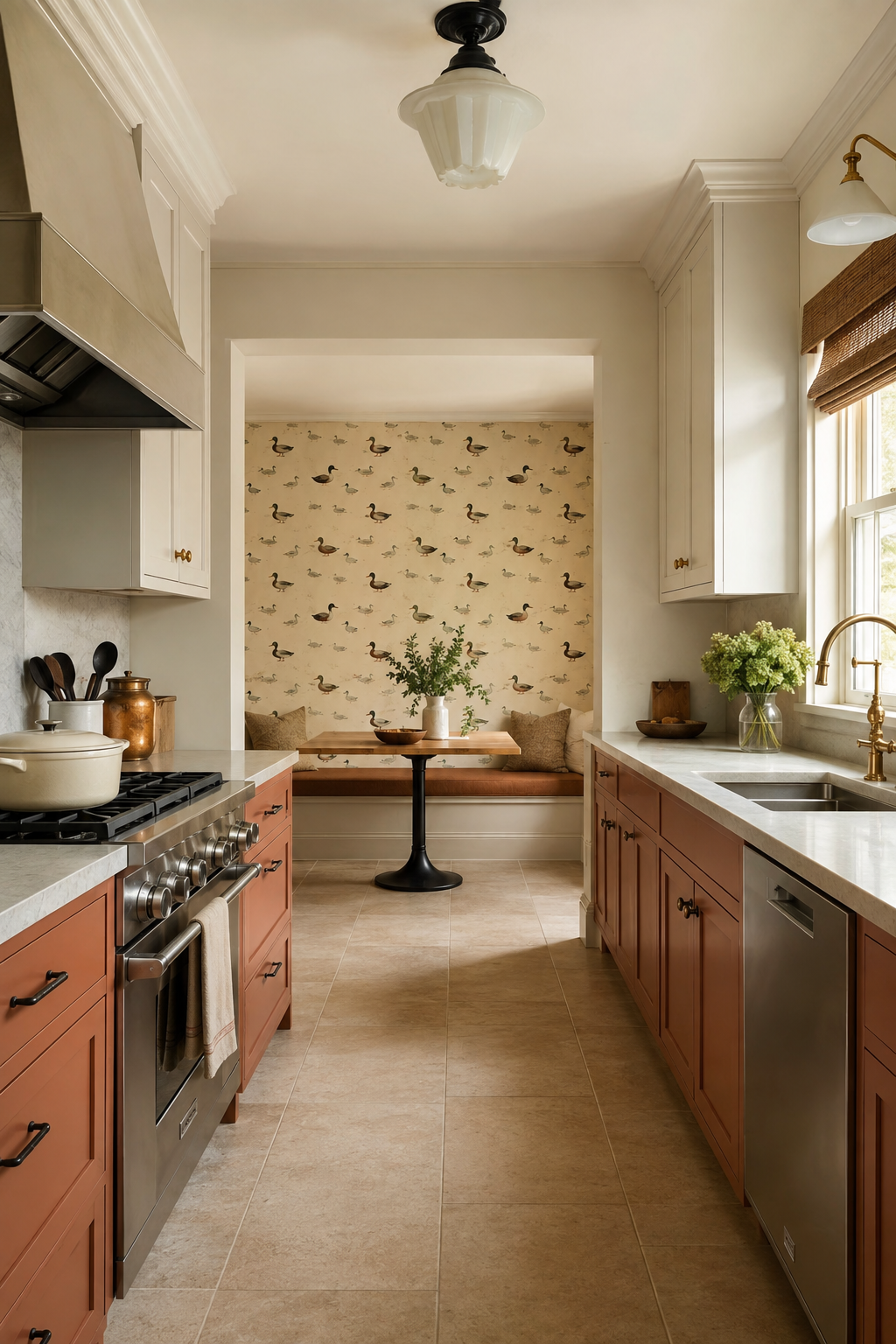
A repeated bird or animal motif can make a room memorable without becoming its only idea. Pull a few earthy colors from the print into the cabinets, floor, or breakfast nook. The easy mistake is repeating the motif itself on art, textiles, and accessories. Repeat the palette instead; the original pattern will feel connected while keeping its sense of discovery.
6. Let white cabinets calm the composition
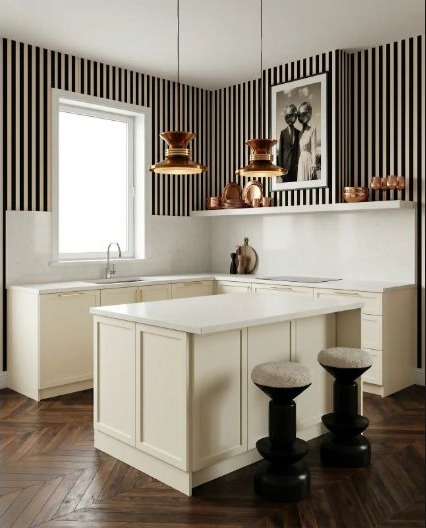
White cabinets can provide structure for striped walls, dark wood floors, sculptural stools, and warm metal lighting. The quieter cabinet field keeps those stronger elements readable. A common mistake is assuming any white will disappear. Compare warm and cool whites beside the wood, metal, and pattern, because the wrong undertone can become one more competing color.
7. Connect purple and green through intensity
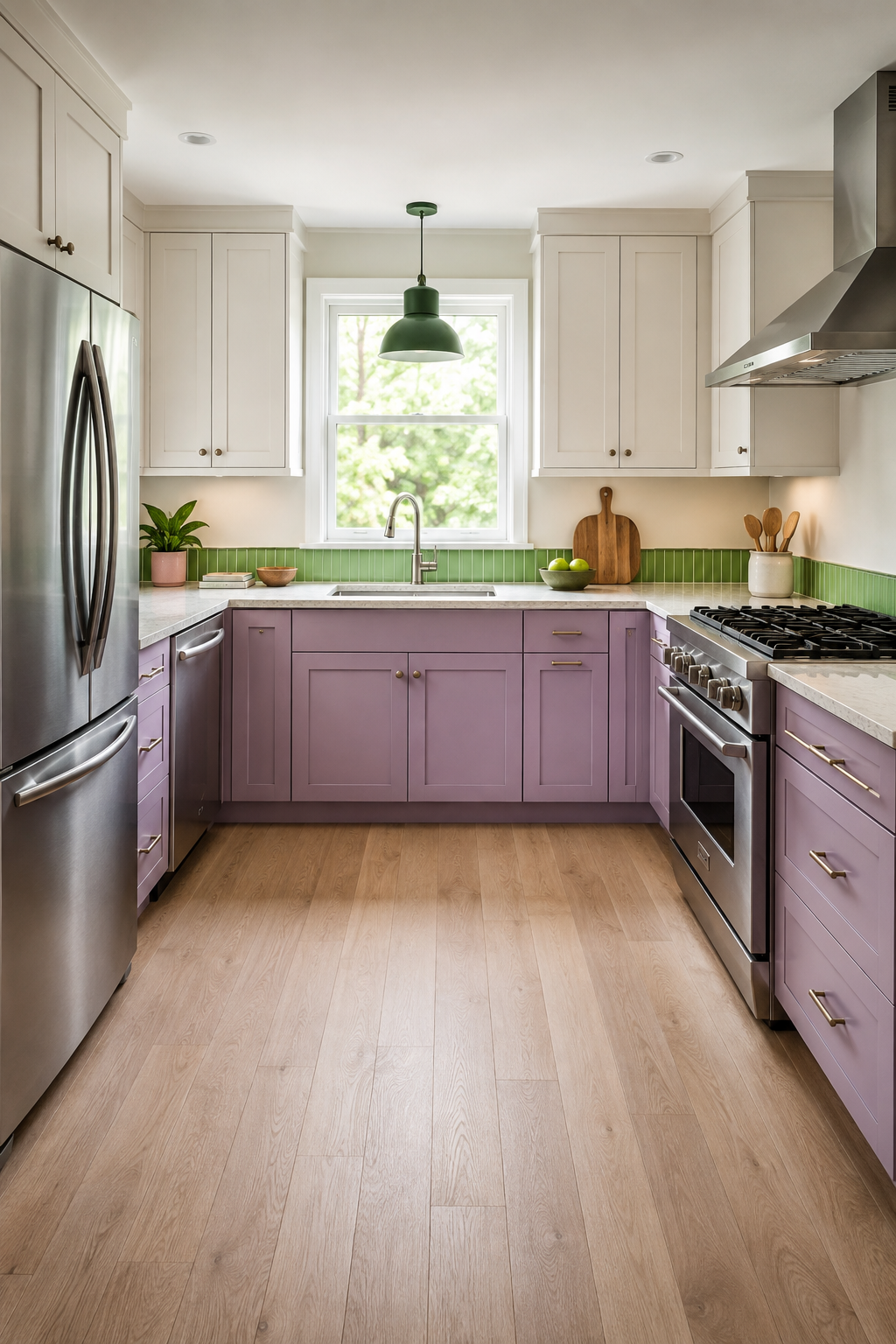
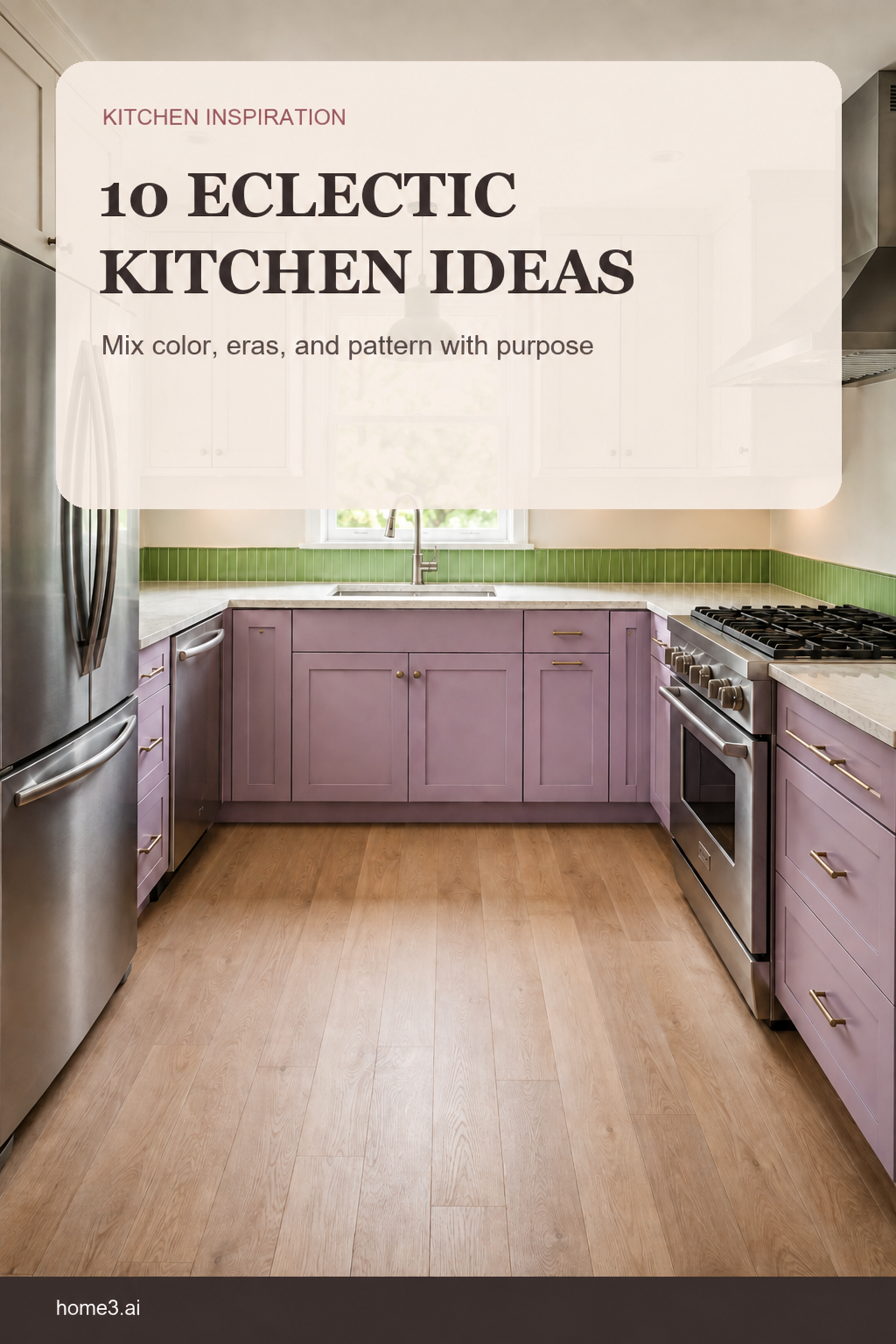
Lavender cabinets and bright green walls can work together when both colors are equally clear and repeated in a few details. Keep counters simple so the palette remains the focus. The common mistake is trying to soften the pairing with several unrelated pastels, which can make the room busier rather than calmer. Test the two main colors at room scale before deciding whether a third is needed.
8. Balance softness with strong geometry
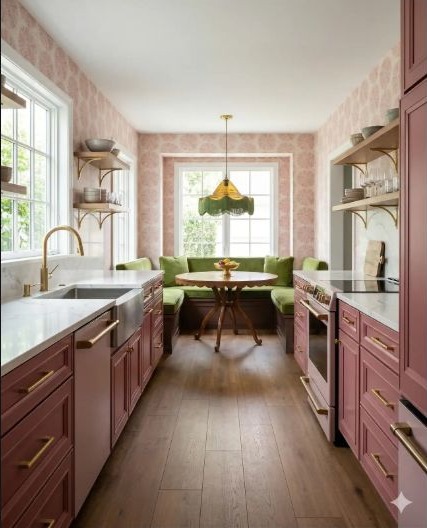
Dusty pink cabinetry feels less delicate beside long cabinet lines, open metal shelving, and a centered dining table. Substantial forms keep a soft palette from feeling visually weightless. A common mistake is surrounding pink with only small decorative details and losing the architecture of the room. Draw the major cabinet, table, and shelf lines first, then let the color soften that structure.
9. Make black feel glamorous rather than severe
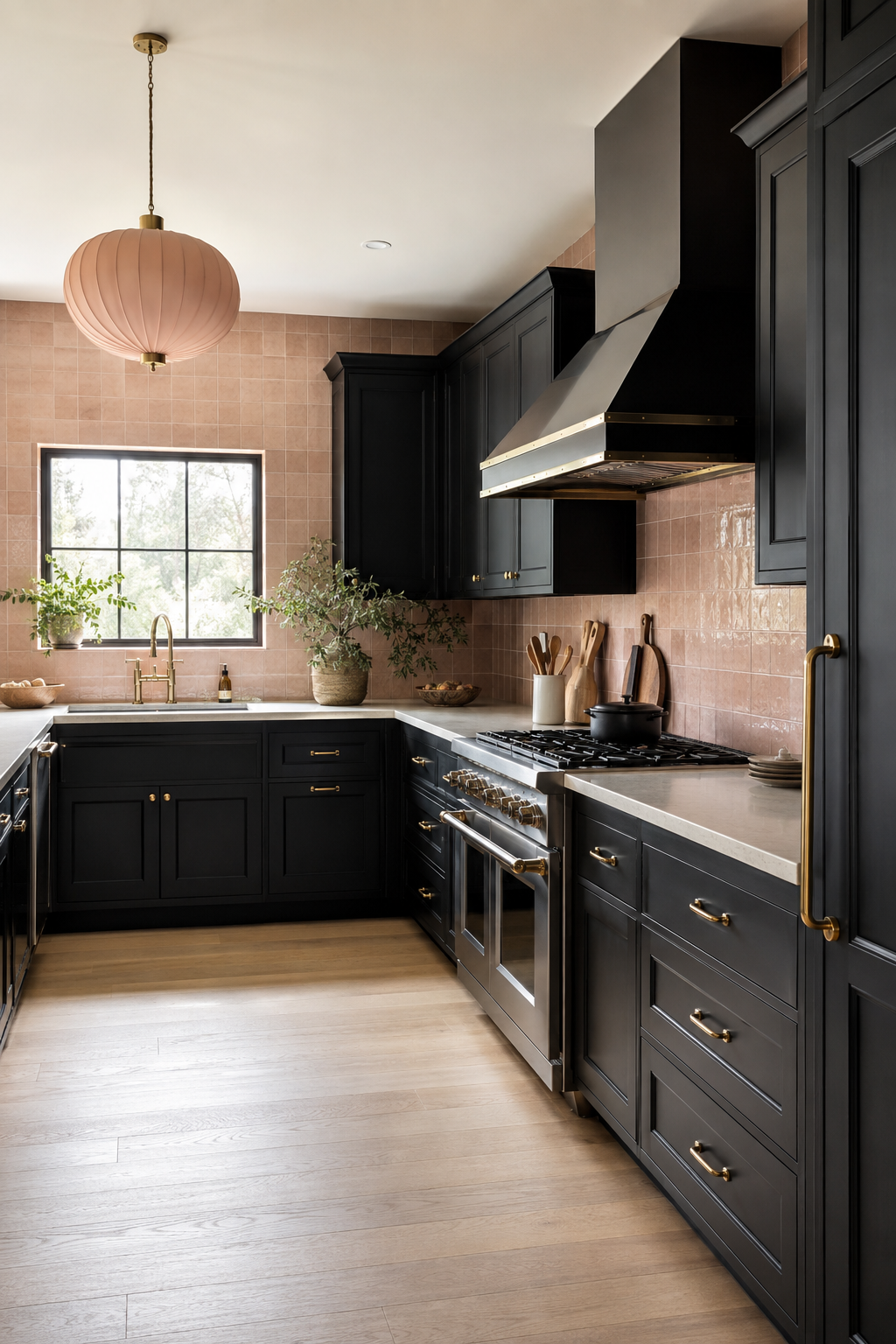
Black lower cabinets can anchor blush, pattern, stripes, and sculptural lighting. Repeat the dark color at the floor or a fine line in the wall treatment, then add warm wood to soften the contrast. The easy mistake is adding black to every frame, fixture, and accessory until the anchor becomes a cage. Repeat it selectively and check that the lighter materials still connect across the room.
10. Let blonde wood quiet expressive walls
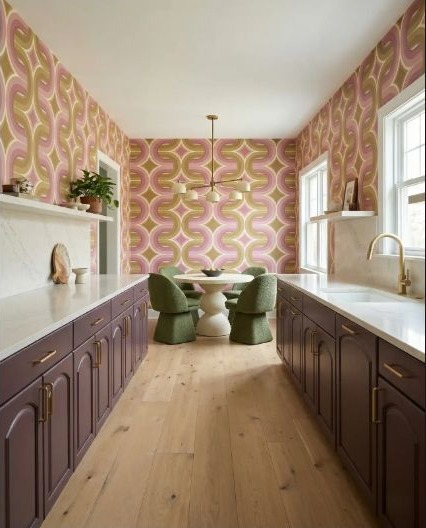
A groovy wall pattern and plum cabinetry already bring movement. Blonde wood floors and pale counters create a broad, quiet base that keeps the room bright and usable. A common mistake is choosing wood with a pronounced grain that competes with the wall repeat. Compare broad samples and select the surface whose movement is quieter at the distance you normally see it.
Give the mix one organizing rule
Choose a rule you can state plainly: repeat the same green, keep all patterns small-scale, use one era for the furniture, or leave the work surfaces quiet. That rule makes editing easier without removing the personality that drew you to the room.
Learn How to Control PatternHave a personal mix you want to test?
StilePath can help you organize the room first, then compare an expressive direction without rushing the decision.
Explore an Eclectic Direction