
10 Colorful Home Library Ideas for Cozy Reading Corners
A reading corner becomes inviting when the bookcase, chair and pattern feel chosen together. These ten home library ideas range from raspberry cabinets and tiger-striped seats to smoky teal, dusty pink and dark wood. Each uses color a little differently. Save the room that draws you in, then borrow its most useful relationship: a chair color repeated in wallpaper, a warm fabric beside wood, or a quiet rug beneath busy shelves.
Images are AI-created design concepts from Anna’s authorized collection. They illustrate color, pattern and furnishing ideas, not completed Home3 projects or measured construction plans.
1. Frame a wild print with raspberry cabinetry
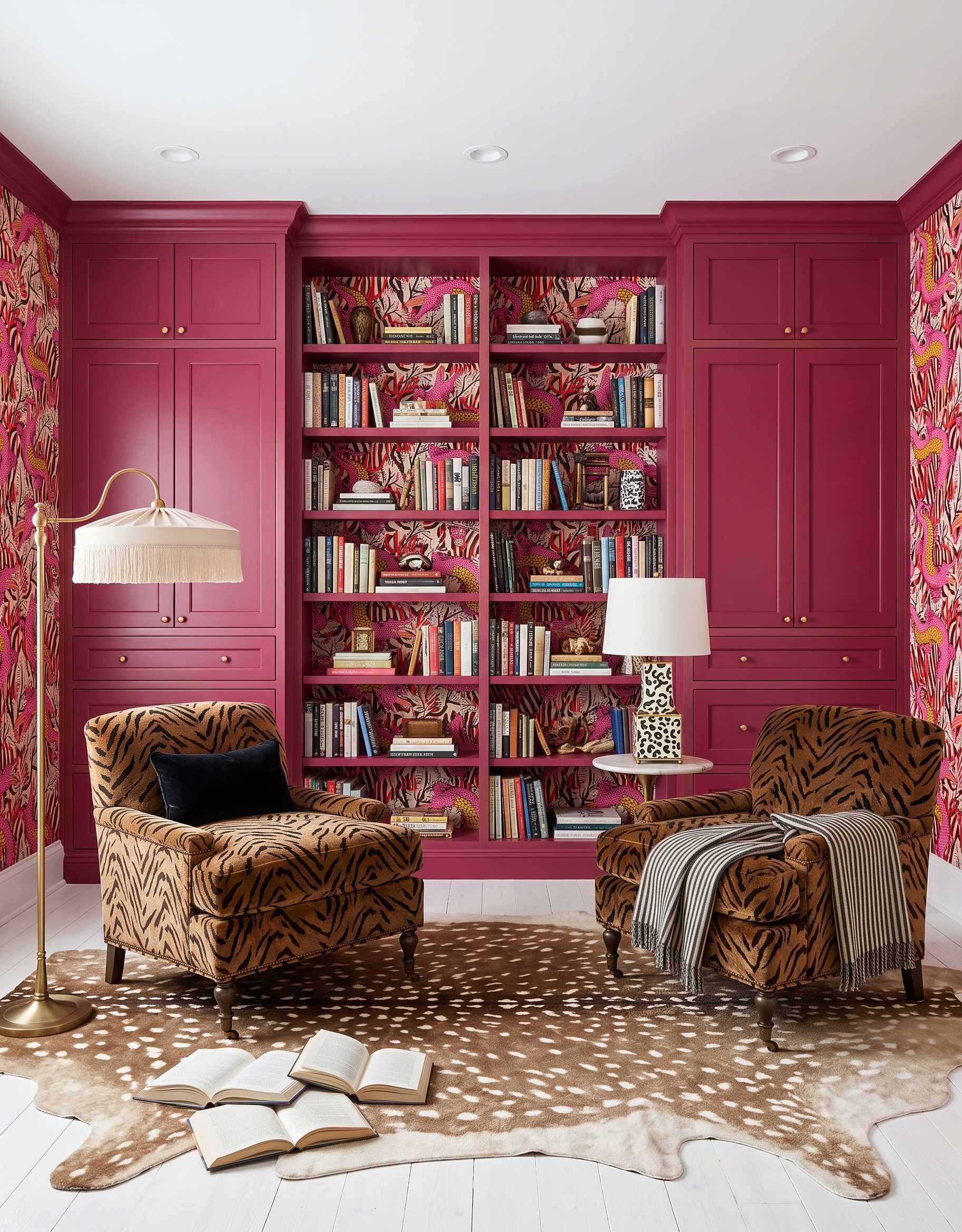
The cabinetry gives this exuberant reading corner its shape. Broad raspberry doors surround a narrower band of patterned shelving, so the eye can still separate storage from decoration. Warm brown connects the tiger-striped chairs to the spotted rug, while black markings add contrast to the upholstery. Borrow the relationship before copying every print: put the cabinet sample beside one patterned fabric and one wallcovering. Then step back and see whether the solid painted areas are large enough to frame them. A warm, softened berry can carry a lot of pattern without needing an electric pink finish.
2. Pull a chair color from the wallpaper
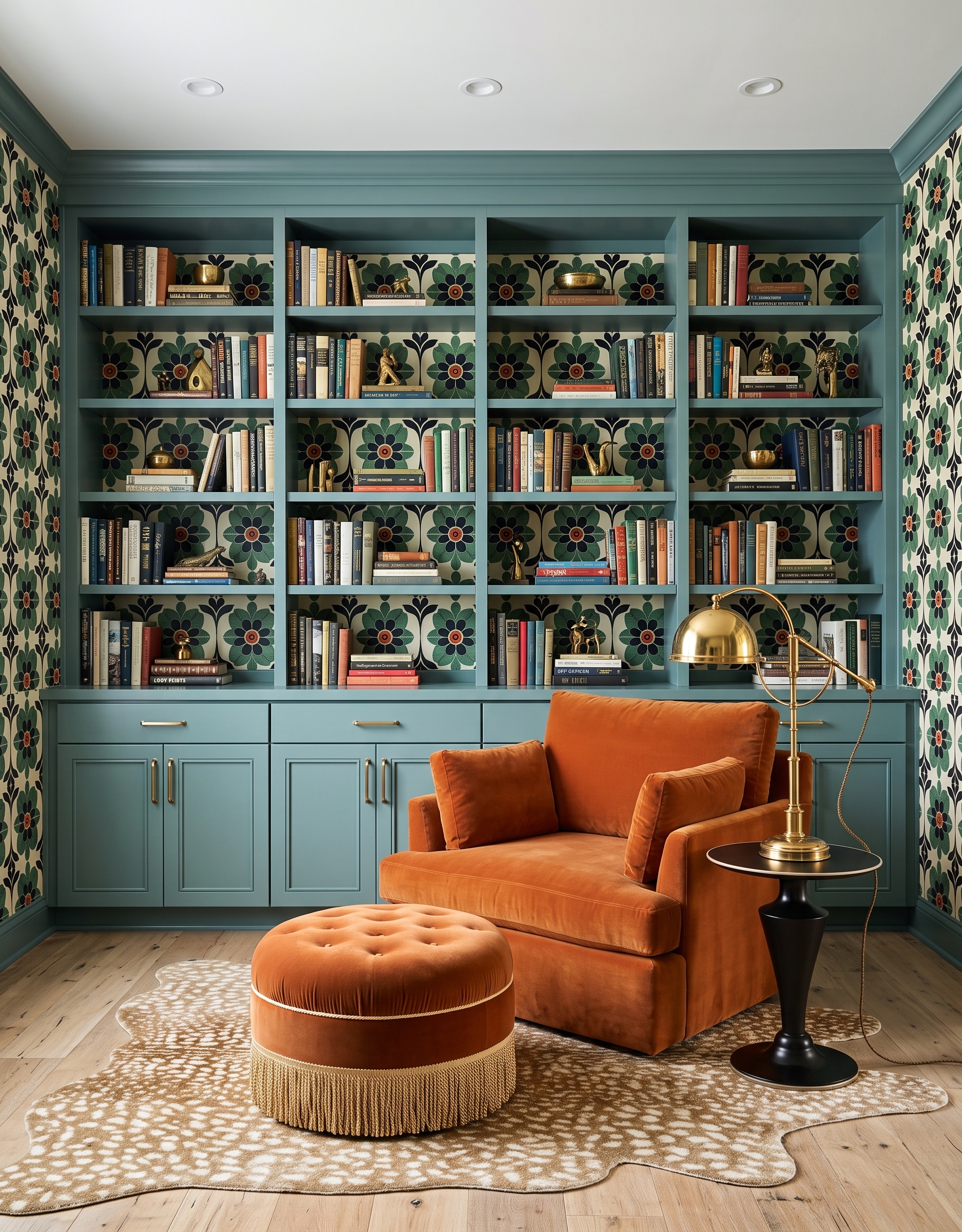
A small warm detail can become the room’s most memorable piece. Here the orange centers of the flowers connect to a much larger burnt-orange chair and ottoman. The smoky-teal shelves pick up the cooler petals, tying the furniture to the wall. For a similar pairing, lay a fabric sample over part of the wallpaper rather than comparing their colors from memory. Check the fabric in both its light and shaded folds. You want the chair to look rich in ordinary room light, with the wallpaper providing a clear reason for the contrast.
3. Pair powder blue with a deep green reading chair
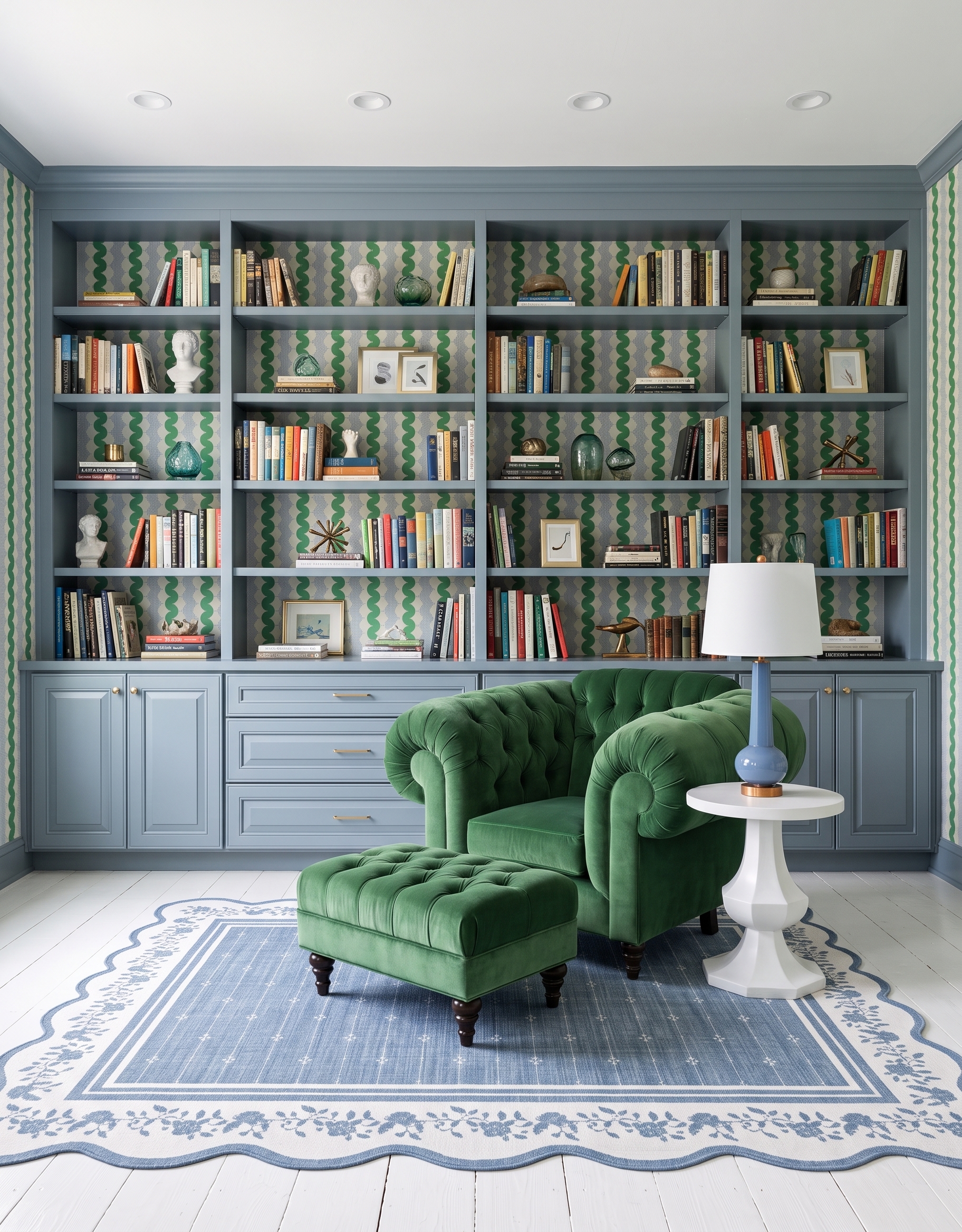
The pale blue cabinetry is the quieter half of this pairing. Deep green repeats in the wavy wallpaper and tufted chair, while the blue lamp and scalloped rug return to the cabinet color. The room feels coordinated without making the shelves and seat identical. Start with the element you are keeping: a favorite chair, a rug, or the existing floor. Compare two or three cabinet samples against that piece. A blue that looks subtle on its own may become clearer beside green, so judge the pair together at the scale you will actually see.
4. Give woodland wallpaper a terracotta frame
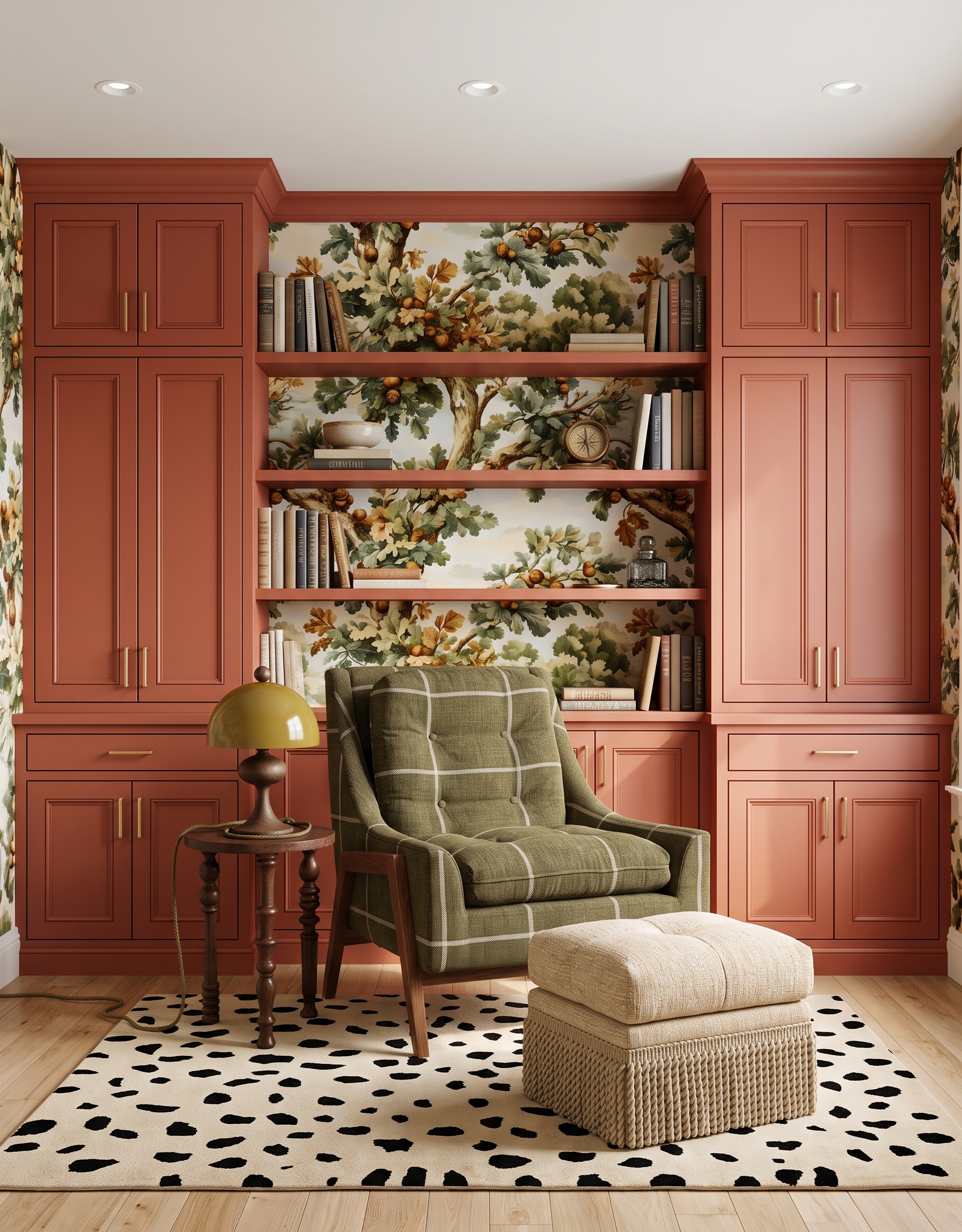
Terracotta cabinetry brings out the warm leaves and acorns in this woodland print. The olive chair contributes a second pattern, but its broad, simple check is easy to read beside the detailed foliage. A pale ottoman gives the eye a rest. When combining patterns, compare more than their colors: look at the size of the marks and how much plain ground each contains. Tape up enough wallpaper to see a full repeat, then hold the chair fabric in front of it. The botanical should remain recognizable through the open shelves, even after you add books.
5. Let dusty pink carry a cream bookcase
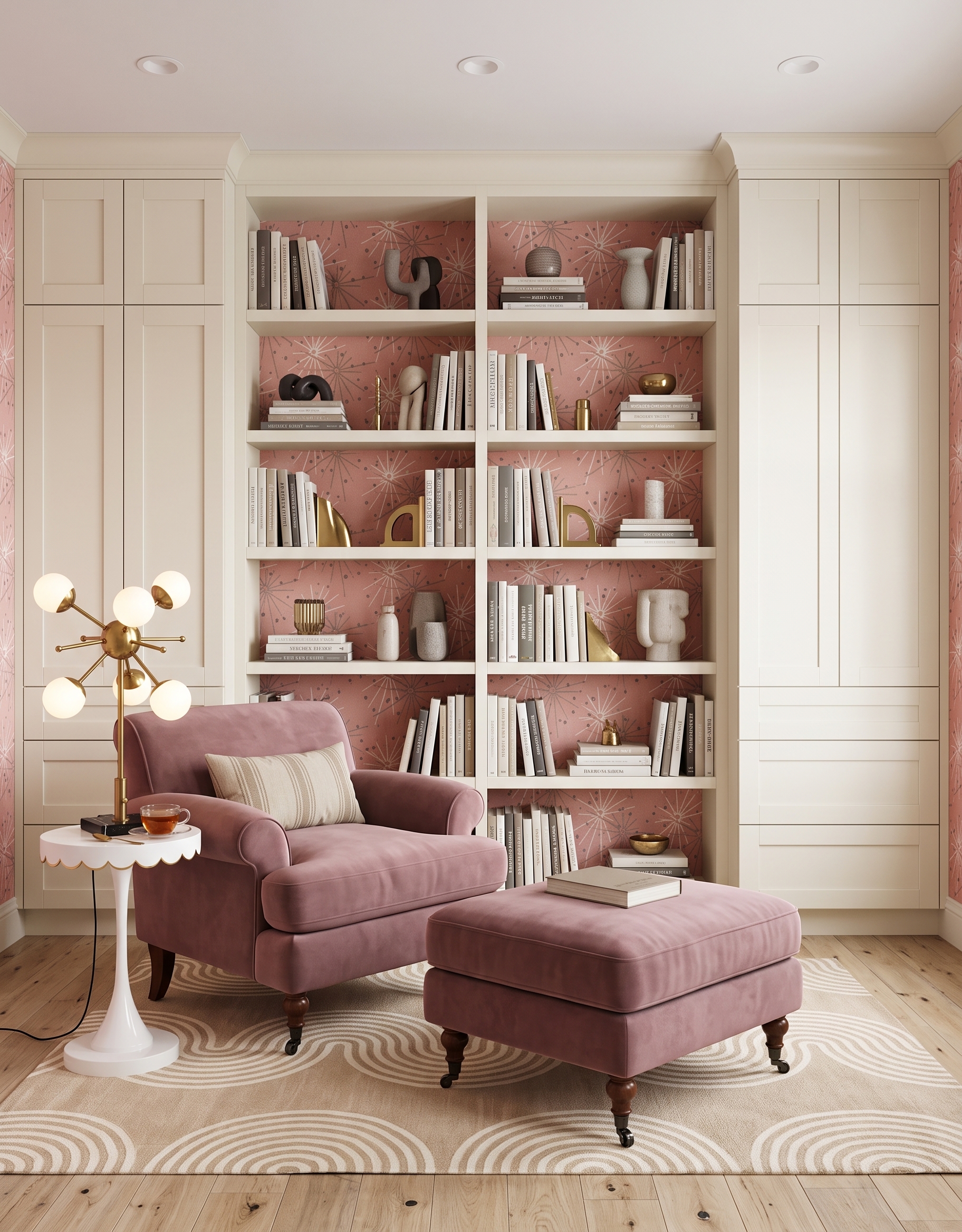
This library keeps the cabinetry light and puts the color into the shelf backing and upholstery. The dusty-pink wallpaper and mauve chair are related without being an exact match. Cream book spines and the pale rug keep the starburst pattern visible. Try this if you like your existing light cabinets but want a more expressive reading corner. Compare the wallpaper’s background with the cabinet finish first; two warm neutrals can still fight each other. Then add the chair fabric. Leave enough uncovered backing to see the pattern rather than hiding it behind a wall of books.
6. Use green velvet against a graphic black-and-white room
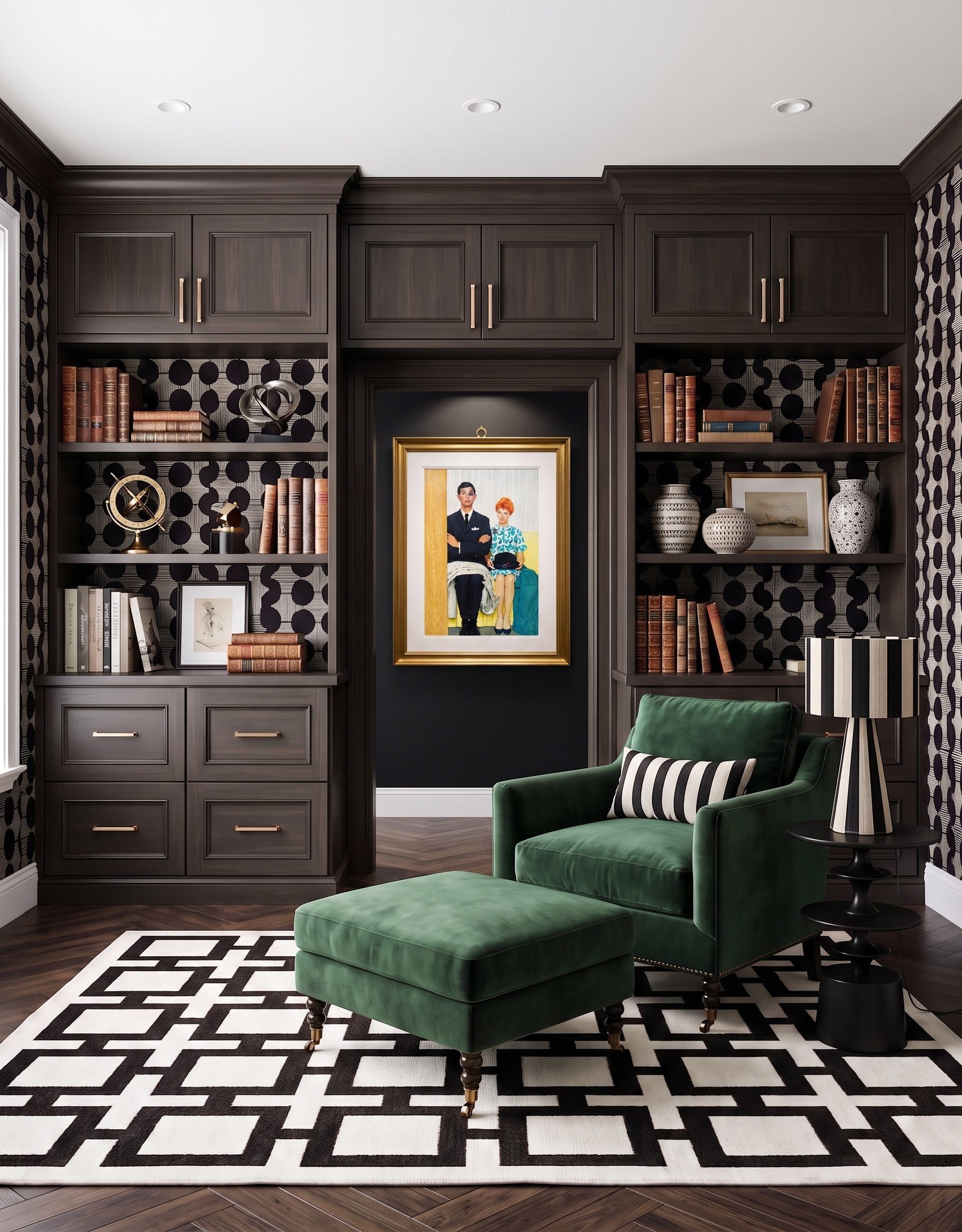
Dark wood anchors the black-and-white patterns in this room, while green velvet gives the reading seat a clear identity. The central framed artwork provides a different kind of focal point from the books. The useful lesson is restraint within a bold palette: most of the surrounding pattern stays in two colors, so the green does not need to compete with several bright accents. If you are keeping dark wood, compare its undertone with the black in your wallpaper and rug. Make sure the wood grain remains visible in your room’s evening light before choosing an equally dark background.
7. Add softness to a wood library with blush upholstery
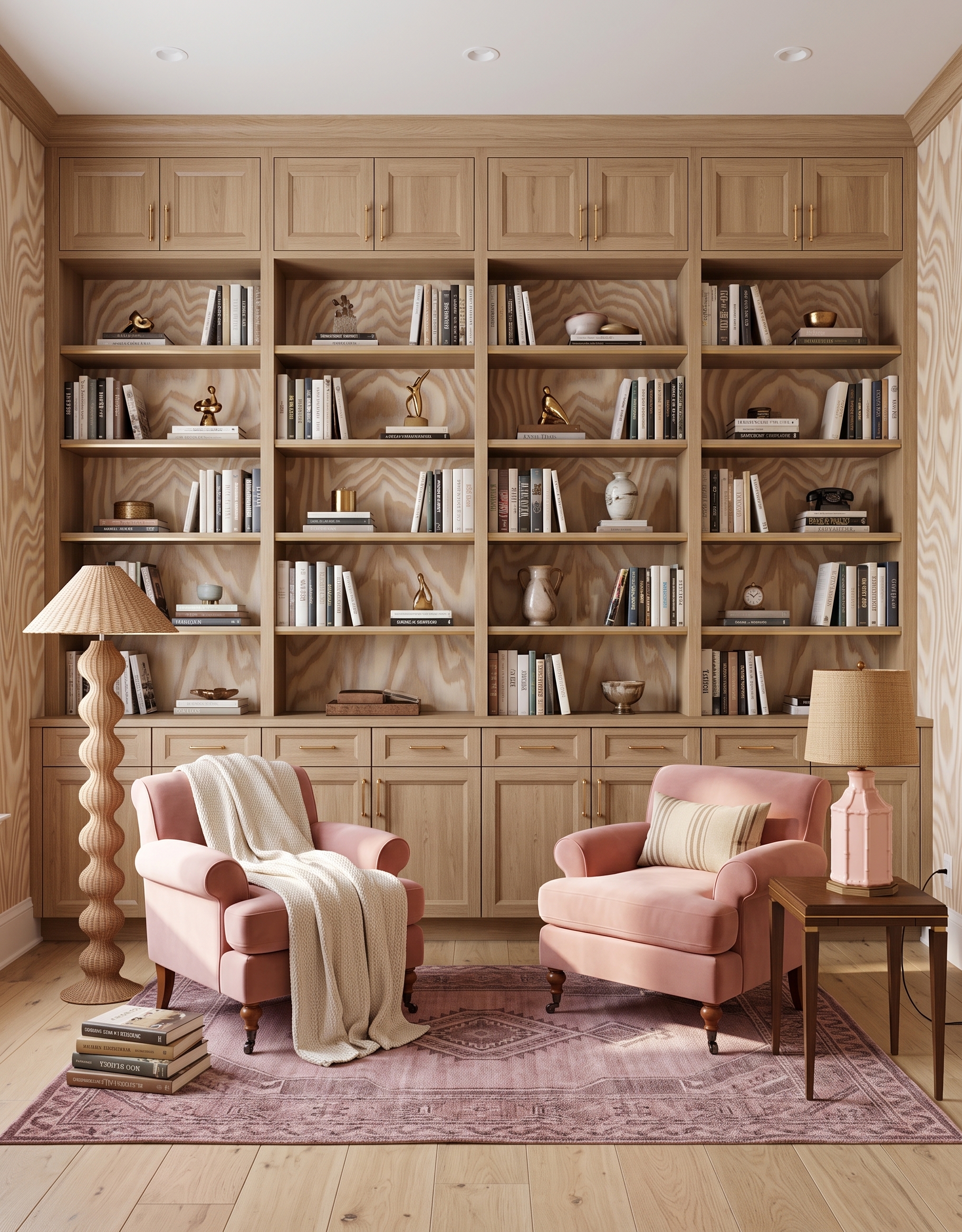
Colorful does not have to mean painted cabinetry. Here the warm wood shelving stays natural, while blush chairs and a muted rose rug change the room’s mood. The flowing beige wall pattern adds movement without a sharp new color. This is a helpful direction when the built-in is already the finish you want to keep. Gather the wood, rug and fabric samples in one place and compare their warmth. A pink with a dusty undertone can sit comfortably beside honey-colored wood; a much cooler pink will create a different contrast. Choose that relationship deliberately.
8. Mix warm colors with a black-and-cream accent
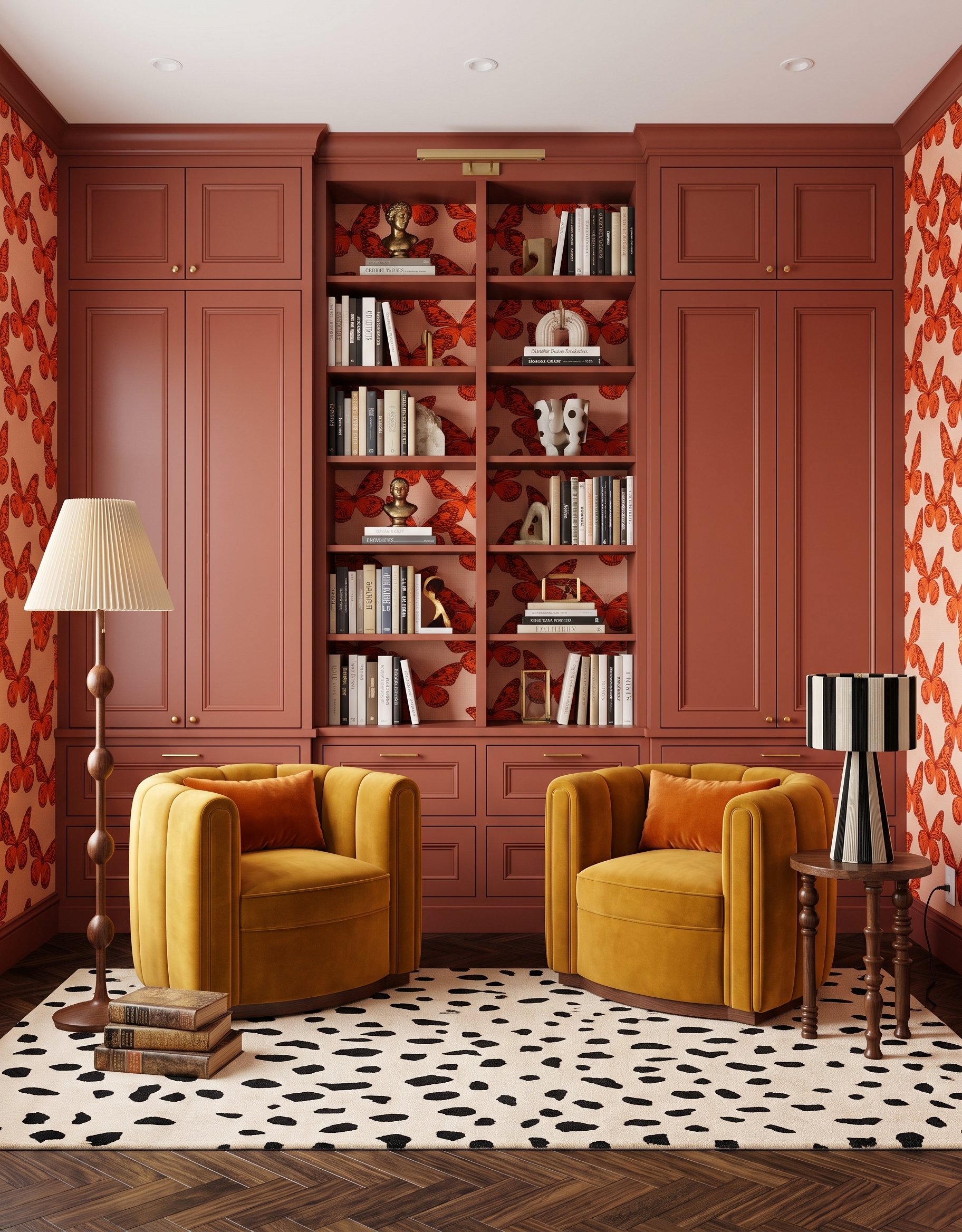
Terracotta, orange and mustard make a warm family, but the black-and-cream accents keep this reading room from becoming one uninterrupted warm color. The striped lamp and spotted rug introduce a crisp outline around the softer upholstery. Use this approach when a favorite print already contains several nearby colors. Pick one for the cabinetry, another for the chair, and keep a neutral sample beside them as a reference. A simple stripe can give a detailed butterfly print a crisp partner; compare the two patterns together before adding another accent.
9. Repeat an abstract palette across shelving and seating
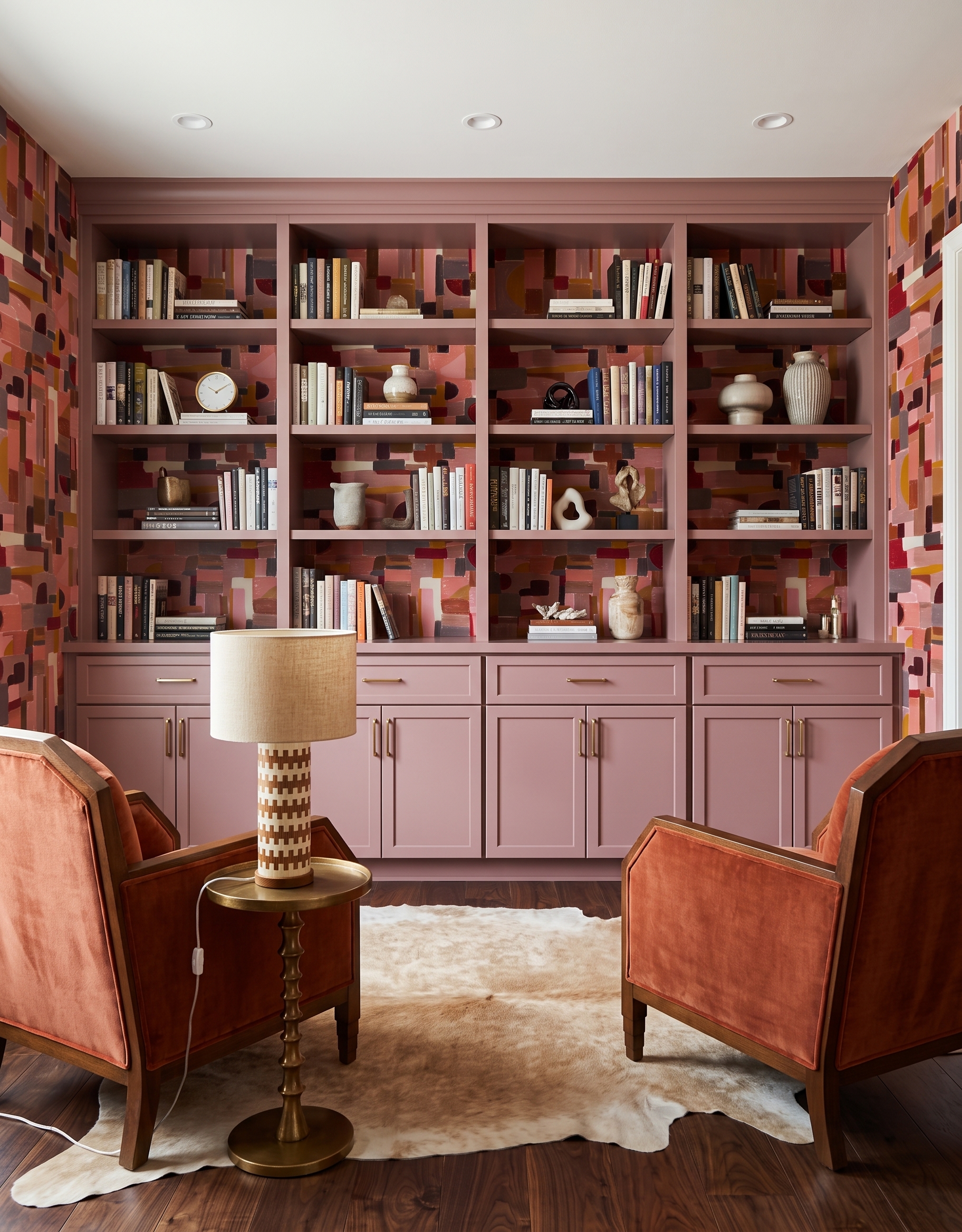
The abstract wallpaper brings together rose, rust, cream and darker accents. Dusty-rose shelves extend one of those colors across the wall, while the rust chairs pick up another. The plain cream rug gives the busy backdrop space to stand out. To borrow the idea, place your cabinet sample over the wallpaper and imagine it covering the shelf edges and trim. Check whether the pattern still has enough contrast to show through. Keep the seating arrangement separate from the color decision: mark the chair footprints in your own room and test access to the lower cabinets before settling on positions.
10. Build a moody reading corner around blue and green
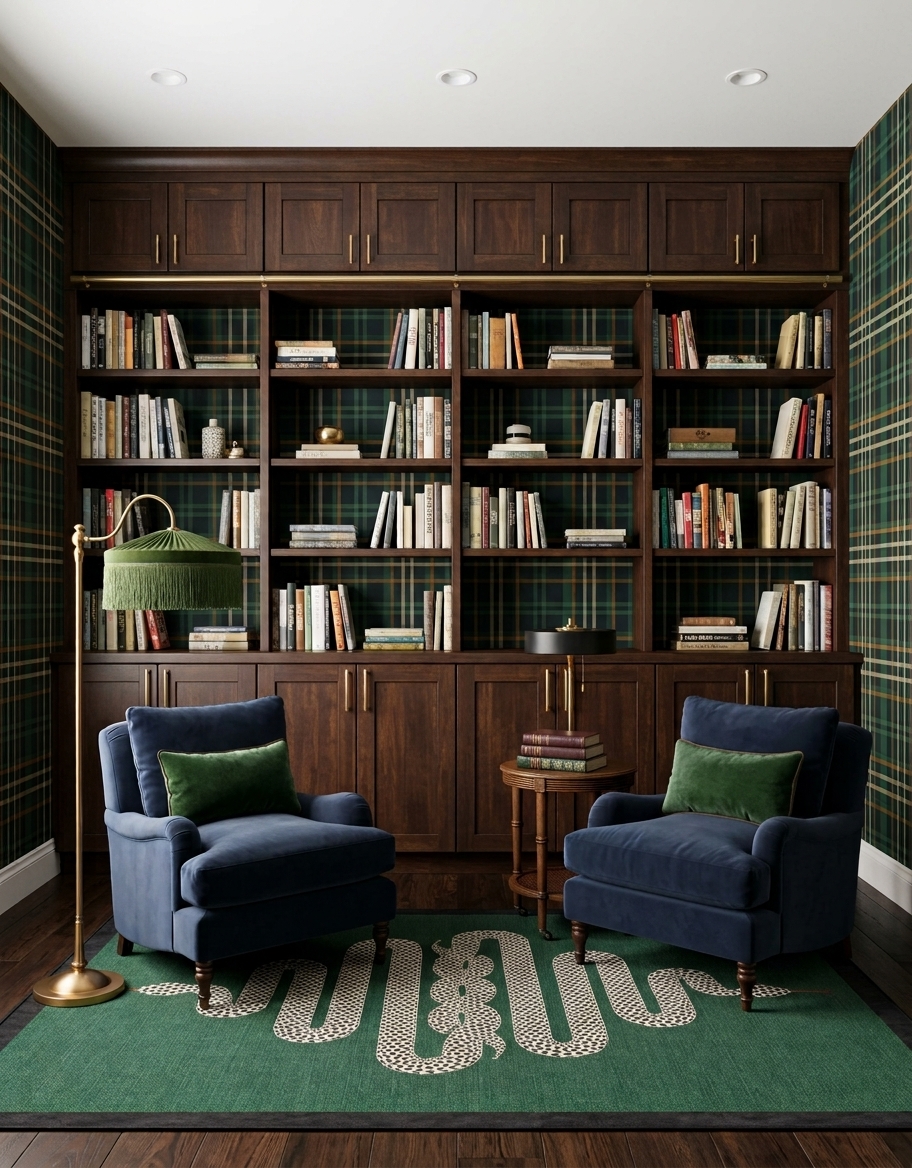
Green plaid links the dark wood shelving to the cushions and rug, while the navy chairs keep the palette cool and settled. The fringed floor lamp adds a softer shape against the grid. Dark rooms still need visible material differences: in this concept you can distinguish the wood, velvet and wall pattern instead of seeing one black mass. Try your samples at the time you usually read. Sit in the actual chair with an open book and check the lamp position, rather than assuming the ceiling lights will make the corner comfortable. Keep a surface nearby for the book you are reading now.
Turn your favorite room into a short design brief
Write down the three things you want to borrow before collecting more images. Name the cabinet or wood finish, the main pattern, and the upholstery color. Add a photograph of your room and a list of the books, keepsakes and equipment the shelves must hold. A beautiful empty bay is not useful if your everyday books have nowhere to go.
Next, compare full-size material samples beside the things that are staying. Mark the chair, ottoman and side-table footprints on the floor. Check the route into the room and open the lower cabinet doors with the furniture positions marked. Ask your cabinet provider to work out shelf spans, supports and fixing details for the books you actually own.
Explore more built-in cabinet ideasPlanning a kitchen as well? Explore StilePath for the kitchen-planning part of your project. Keep this library brief to discuss with your cabinet provider.
Explore StilePath for your kitchen