
Choose the layout by what the room and routine need
Kitchen layout names are useful starting points, not answers. The best arrangement depends on the room's walls and openings, the paths through it, the appliances and services, the people using it, and the work that happens there.
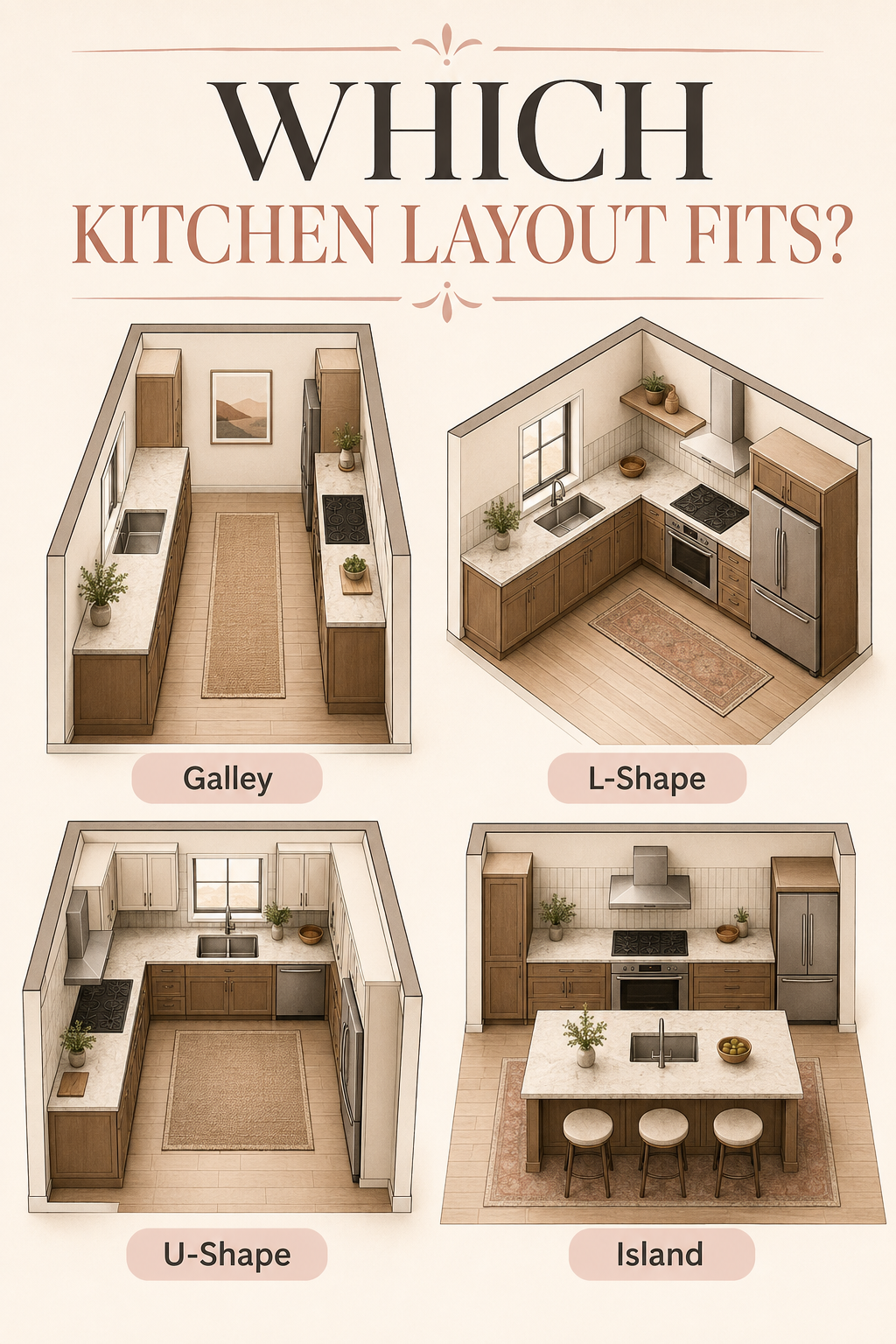
Galley kitchen
A galley uses two facing runs. It can connect work efficiently and use a narrow room well, but it needs careful door planning and a clear decision about whether the center aisle is a work zone, a through-route, or both. A common mistake is counting the aisle as clear circulation while open appliances and active cooks occupy it. Test the galley during cooking and passing traffic before deciding its narrow footprint is automatically efficient.
L-shape kitchen
An L-shape uses two connected walls and can open the kitchen toward another room. It often creates a natural preparation corner, but the corner cabinet and the distance between end points both need a purpose. The common mistake is stretching the two legs simply because wall space exists, creating a long walk between related tasks. Keep the busiest work connected and decide whether the far end supports pantry storage, serving, or something else specific.
U-shape kitchen
A U-shape surrounds the main work area on three sides and can offer useful surface and storage. It can also create two corners, crowded entry points, or long routes if related tasks are placed at opposite ends. A common mistake is filling all three walls first and solving corner access afterward. Place the major tasks and entry path before assigning every cabinet, then check whether the added storage is worth the tighter enclosure.
Kitchen with an island
An island adds a freestanding work element rather than defining the whole layout by itself. It earns its place when its job is clear and the surrounding room still supports movement, open doors, seating, and more than one person. The usual mistake is choosing the island size from an inspiration photo before testing the space around it. Start with the clear paths your room needs and let the remaining footprint determine what the island can responsibly do.
Start with room shape
Use the actual walls, openings, fixed conditions, and connections to nearby rooms. A layout that depends on moving a constraint should show that work clearly rather than pretending the constraint is gone. You can measure and sketch these conditions yourself for early comparison; simply label uncertain dimensions and proposed changes. The common mistake is building the favorite plan on an assumption that a window, vent, or service can move without first understanding the consequence.
Follow the traffic
Trace the ordinary routes through the kitchen and between food storage, preparation, cooking, cleanup, and dining. Notice where a layout turns passing traffic into work-zone traffic. People will usually choose the shortest route, even when a drawing suggests another one. Add open doors and someone standing at the counter, then ask whether a child, guest, or pet can pass without squeezing through the busiest task.
Test the routines
Compare what happens during groceries, breakfast, cooking, serving, cleanup, and unloading. The strongest layout reduces repeated conflicts across the routines that matter most to the household. A common mistake is testing one idealized cooking sequence and missing the morning when coffee, lunches, dishes, and the refrigerator all compete. Choose two overlapping routines and walk them together; the conflicts they reveal will help you compare layouts honestly.
Compare tradeoffs, not labels
Build more than one arrangement in the same measured room. Compare useful surface, accessible storage, appliance relationships, door conflicts, walking paths, and what happens when several tasks overlap. Do not worry if neither version fits a textbook label perfectly; those labels are tools, not rules. The winning plan may borrow from several familiar types, and a quick alternative often exposes an improvement the first plan could not show.
Read the Kitchen Island Guide