
10 Reading Room Ideas With Bold Shelves and Cozy Study Corners
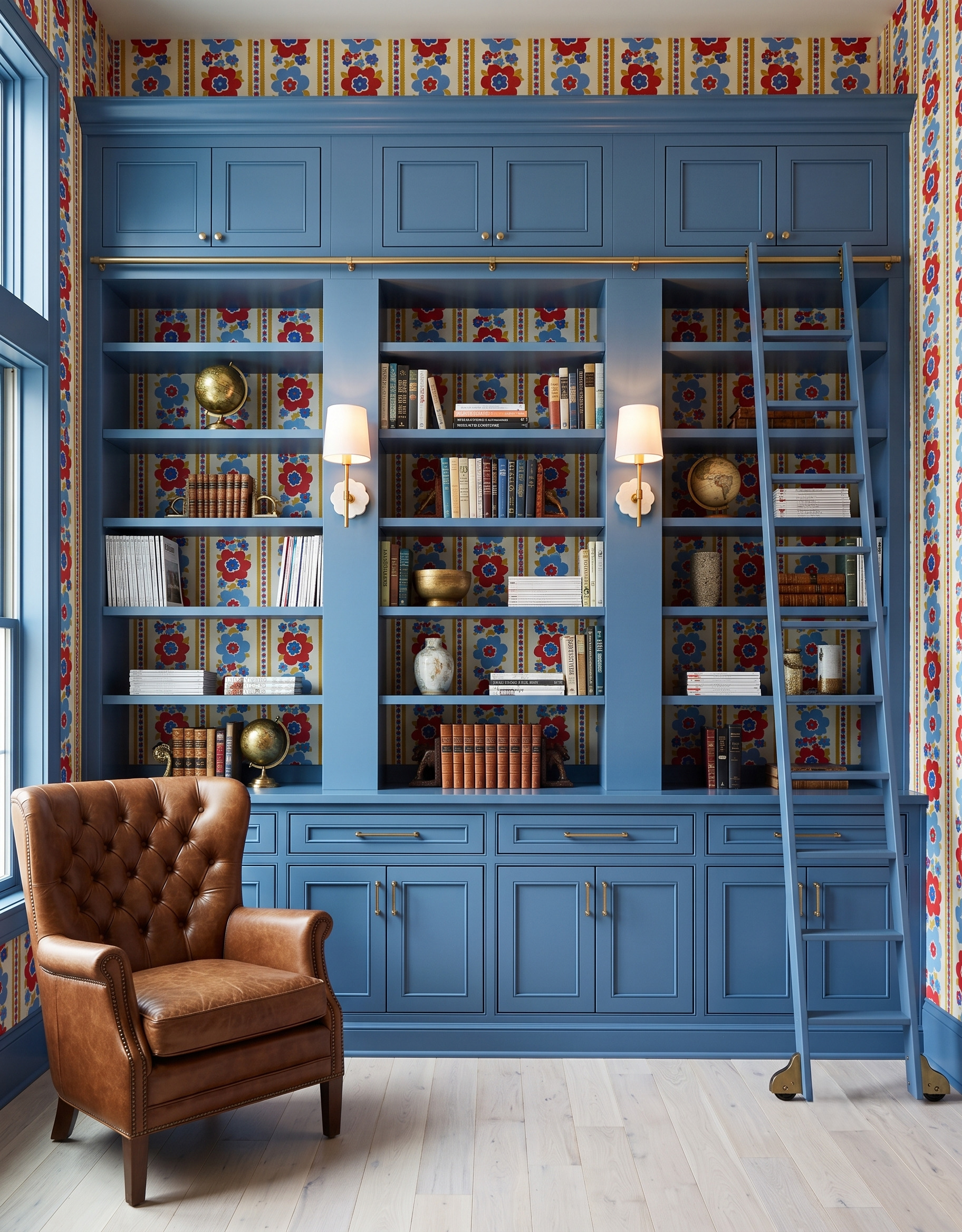
A reading room should make it easy to pick up a book and settle in. That might mean an armchair beside a window, a table for taking notes or a wall that keeps your growing collection in order. These ten reading rooms and study corners combine those everyday needs with expressive wallpaper, textured seating and shelves worth looking up from the page to enjoy.
Images are AI-created design concepts from Anna's authorized collection. They illustrate decorating ideas, not completed Home3 projects or measured construction plans.
1. Warm a blue book wall with a leather chair
The tufted caramel chair gives this blue library a warm place to land. Its broad leather surfaces also provide a pause from the floral stripes behind the shelves. Start with the chair you enjoy sitting in, then test the cabinet color beside its upholstery. Keep a little open floor around the seat so the room still feels inviting when the bookshelves are full.
2. Make room for two different reading habits
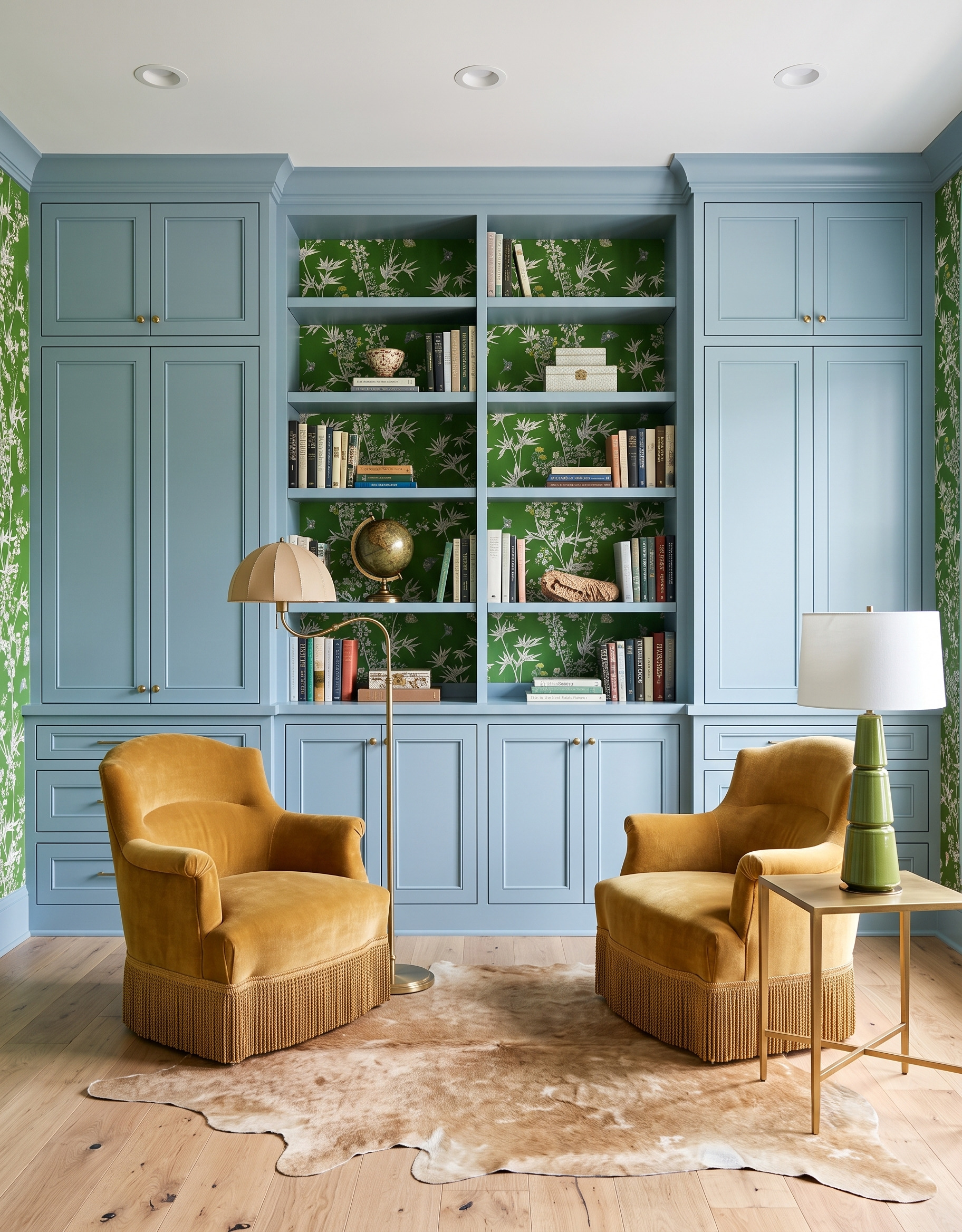
Two golden chairs turn a bookcase wall into a place to spend time together. A floor lamp serves one side, while a table lamp anchors the other. Borrow the arrangement by planning a comfortable seat and a useful light for each reader. Before settling on furniture, check that both people can reach the shelves and move through the room without shifting a chair.
3. Give your current book a place beside the chair
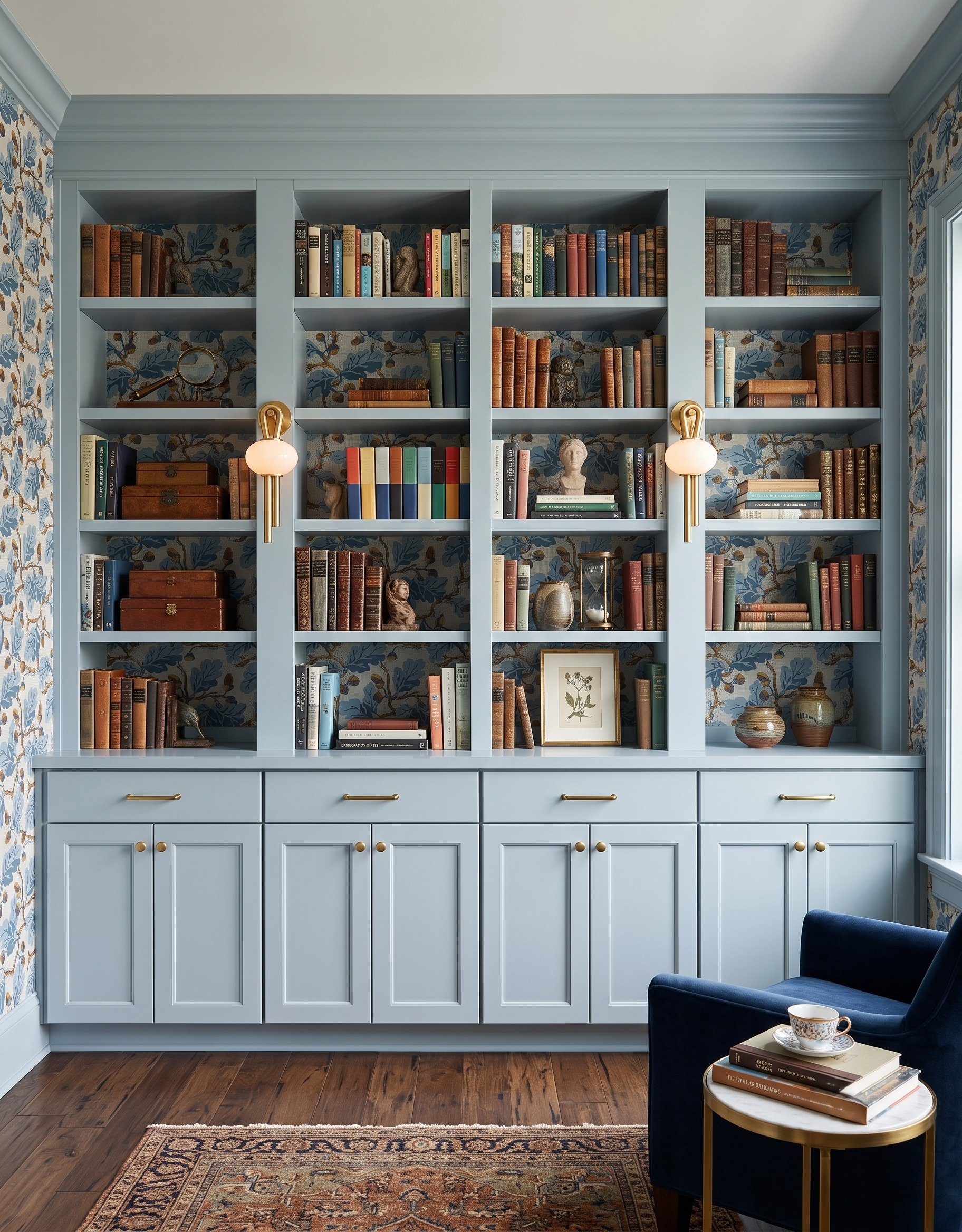
A small round table completes this blue reading corner. It brings a book and cup close to the chair while the larger collection stays on the wall behind it. When planning your own corner, sit down and test where your hand naturally reaches. Leave enough tabletop clear for the things you actually use instead of turning the entire surface into a permanent display.
4. Add a desk for reading that turns into note-taking
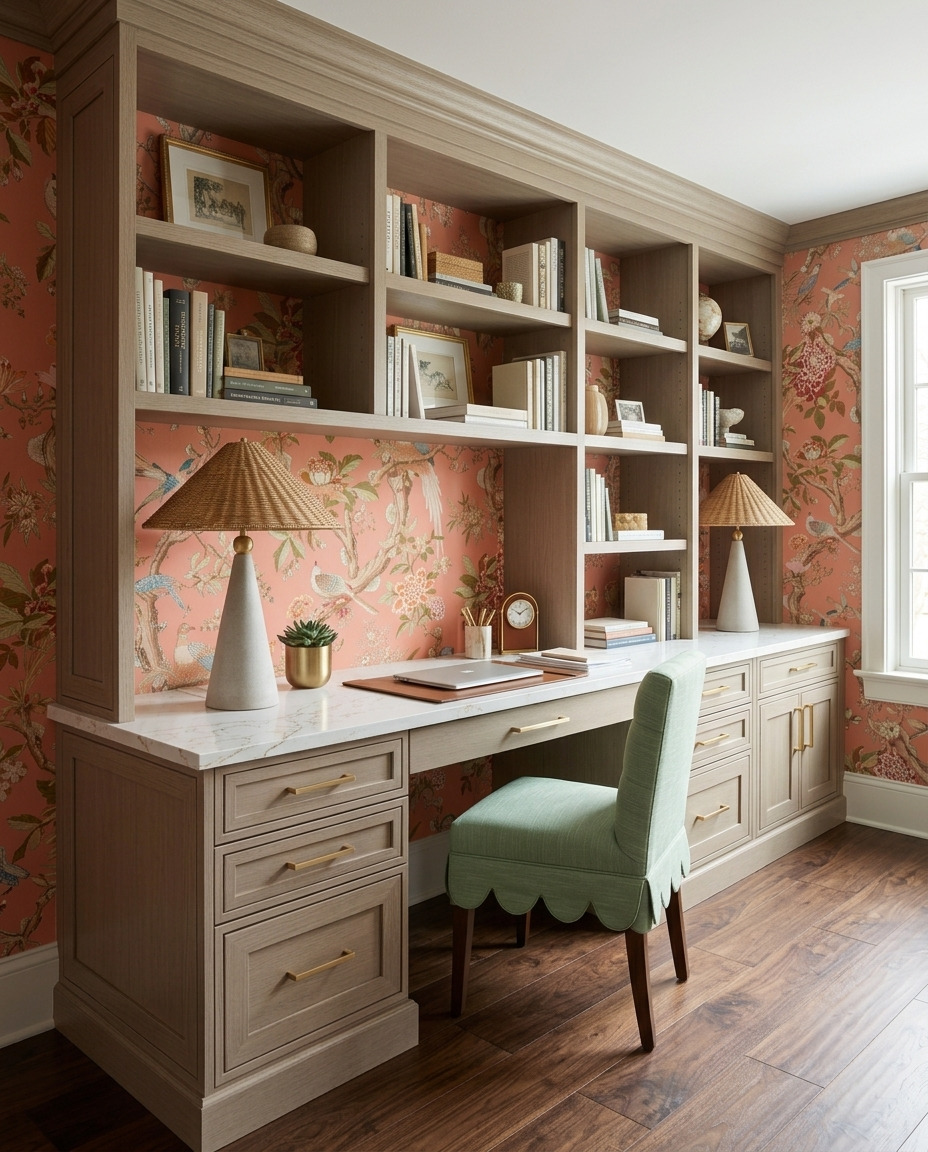
Some reading calls for a notebook, a reference book and somewhere to set them side by side. This wood desk creates that kind of spot beneath open shelves, with warm pink wallpaper giving the work surface a softer setting. Decide which books and papers you normally spread out before choosing a desk. Keep the central surface available for them, with decorative lamps toward the sides.
5. Leave room for the pattern behind your books
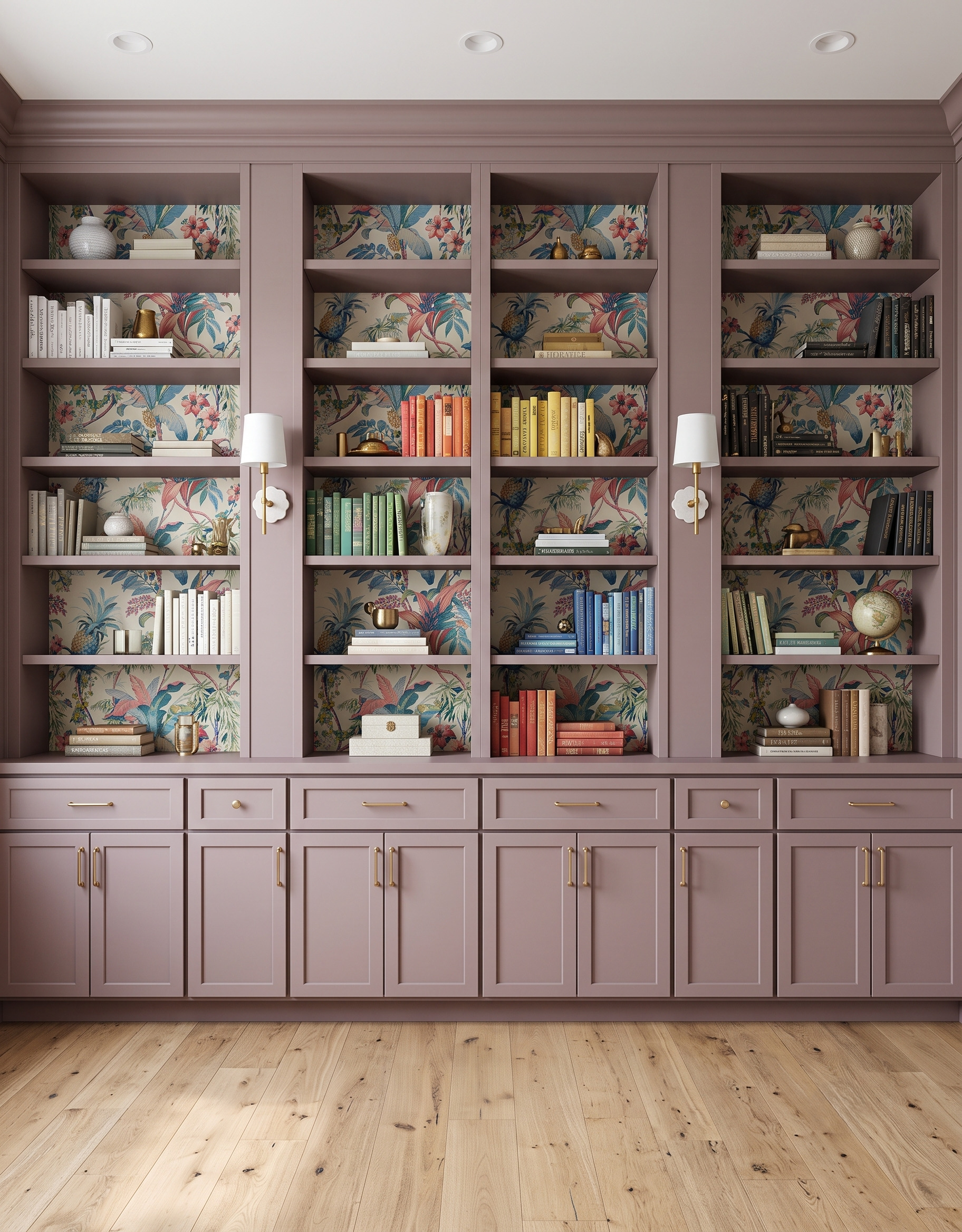
A large tropical print stays visible because the books occupy groups rather than every inch of shelf. The muted plum frame holds those groups together, and a few objects change their height. Try this with one shelf first: keep the books you reach for together, then leave a deliberate opening around a favorite object. The aim is a usable collection with a background you can still enjoy.
6. Use curved seating against a straight shelf grid
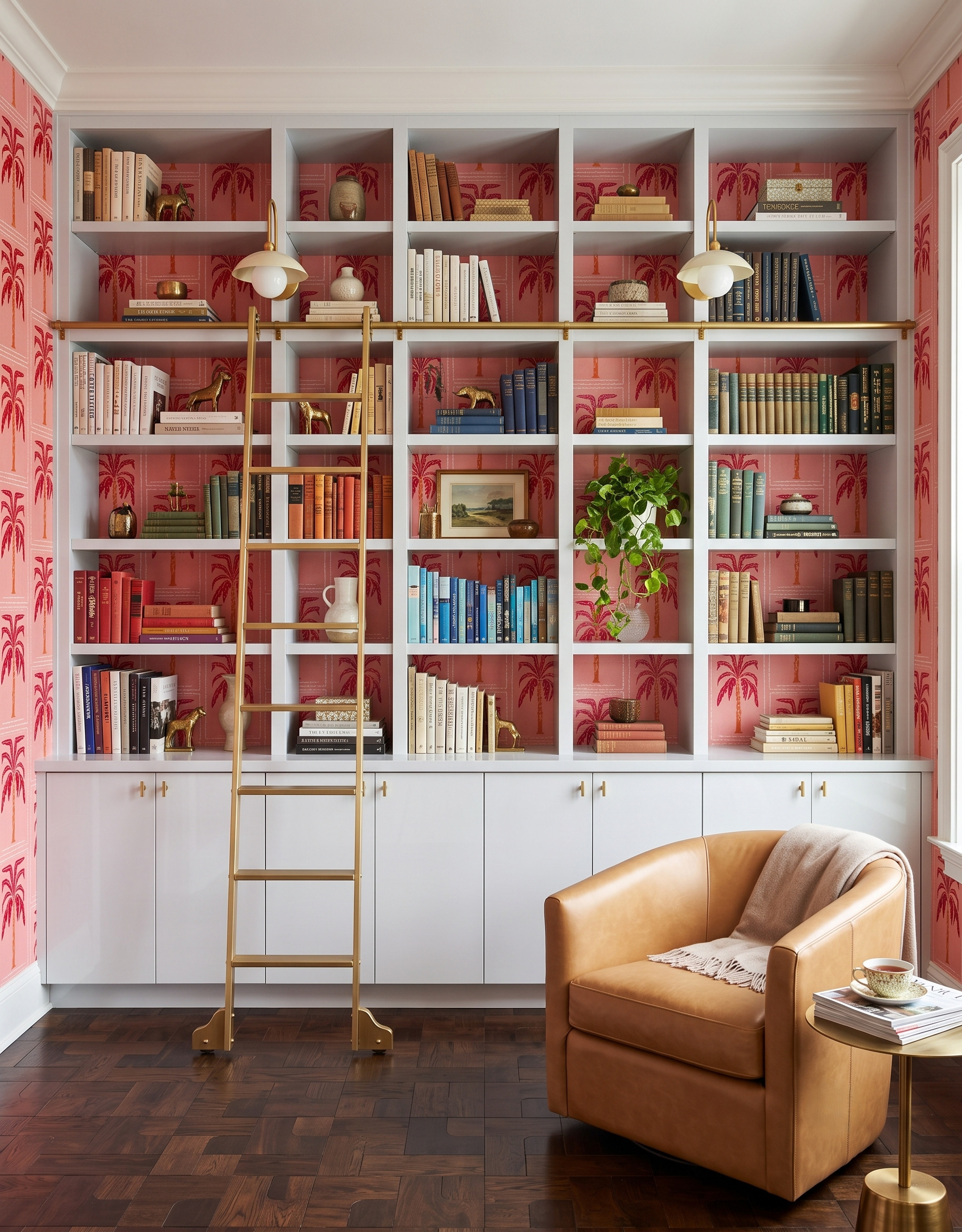
The rounded leather chair breaks up the long horizontal and vertical lines of this white bookcase. Pink palm wallpaper adds another layer, but the broad chair shape remains easy to read against it. If your shelves feel rigid, try a curved seat before adding more small accessories. Compare the chair's depth with the available floor area, and keep the route to the books usable.
7. Frame a compact study corner with closed storage
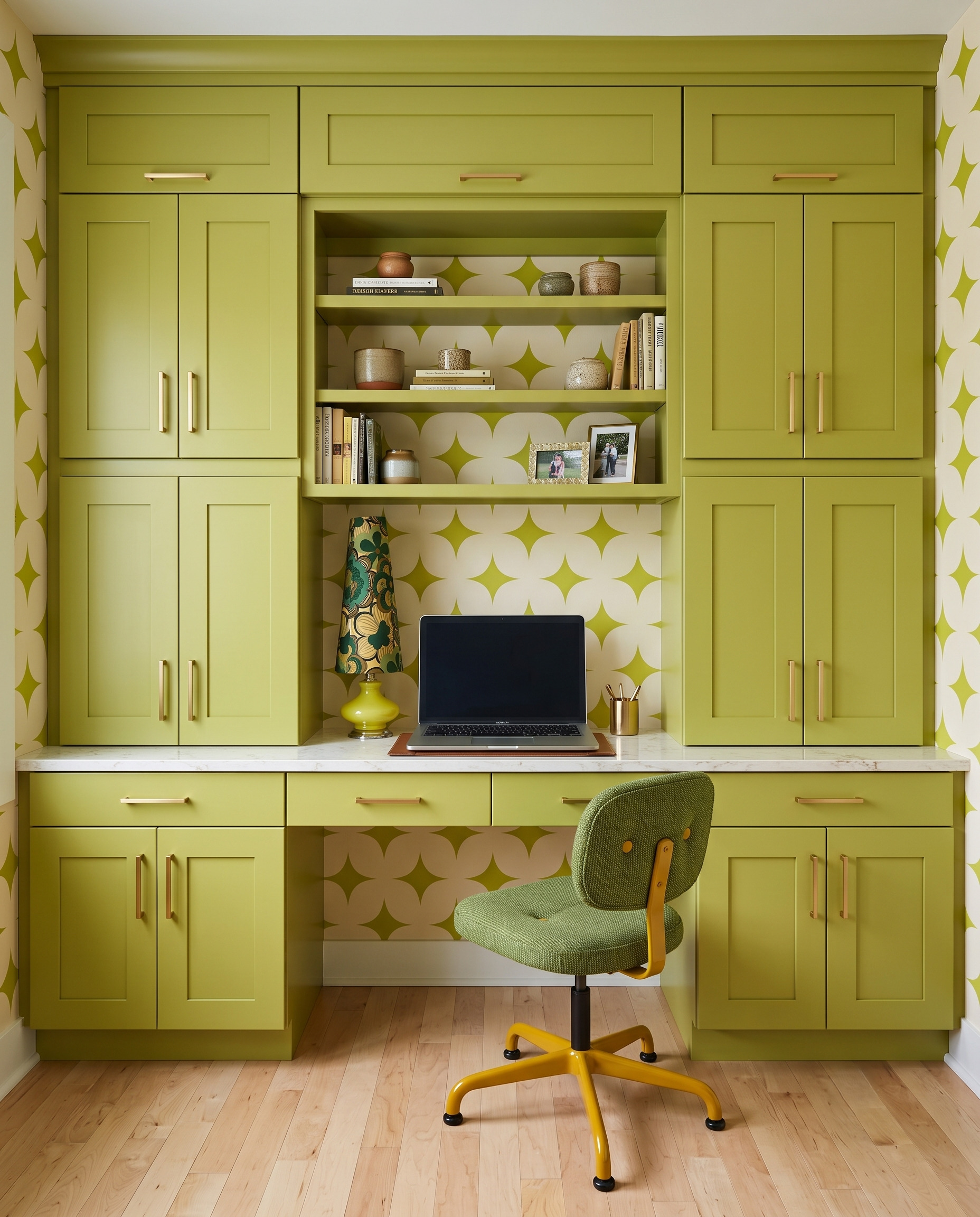
Tall green cupboards surround a small central desk, giving this corner a strong frame. Only the shelves above the work surface remain open, so the geometric wallpaper has a focused place to appear. Use the same principle when a reading area must share space with paperwork: decide what should stay on display, then give the less decorative supplies a home behind closed doors.
8. Reserve a calm wall for closed storage
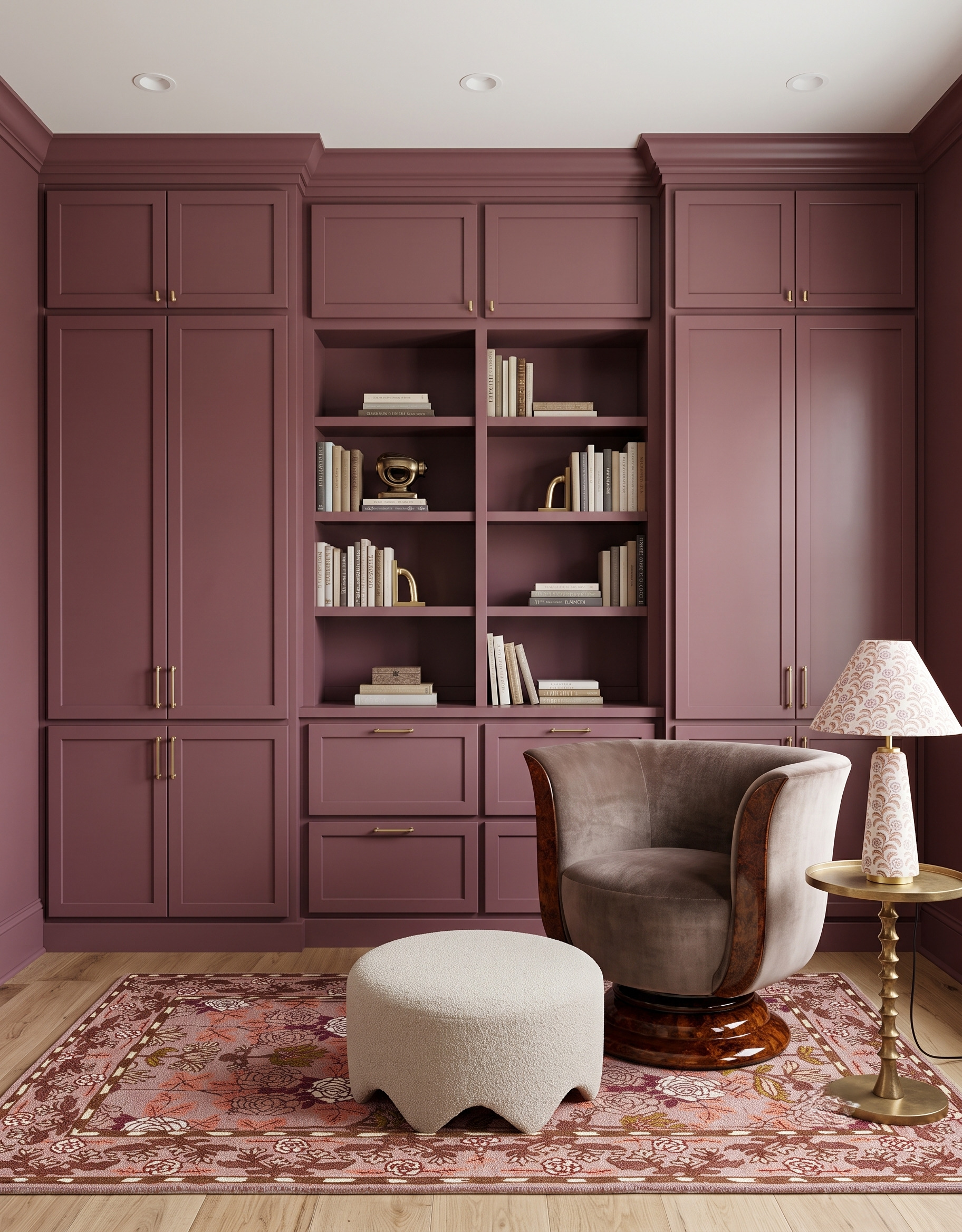
This plum wall puts most of the storage behind doors, leaving a narrower center for books. That balance gives the sculptural chair and patterned rug space to stand out. It can be useful when your reading room also holds games, papers or other household things. List those items before deciding how much open shelving you need, and keep the everyday books in the easiest places to reach.
9. Let patterned wallpaper soften a wood study wall
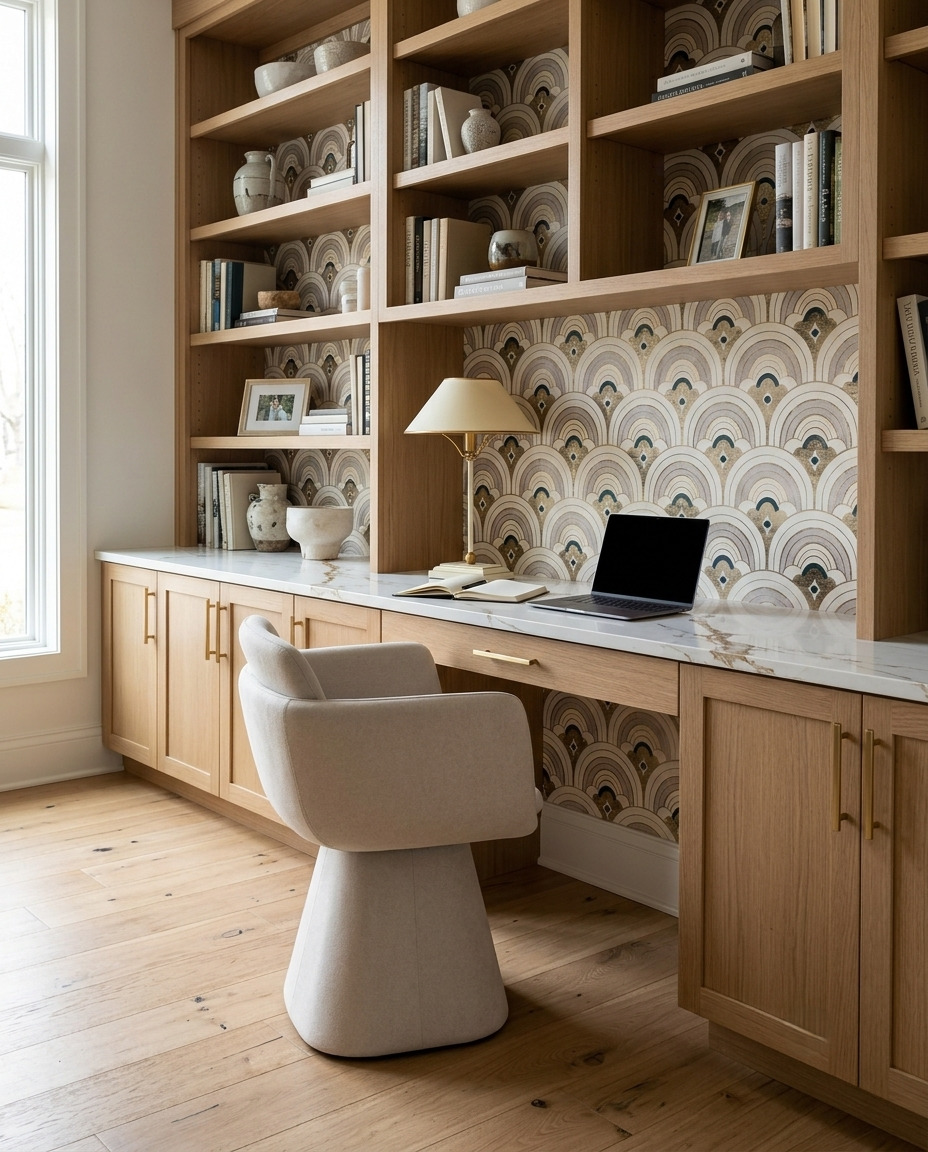
The fan-shaped wallpaper makes this wood desk feel like part of a living space. Its curved pattern contrasts with the shelving, while a shaded lamp creates a clear place to read or write. For a similar balance, compare a wallpaper sample with the wood's grain before adding more patterns. Keep the desk itself simple enough that an open book still has a comfortable place to sit.
10. Build a shelf story around something you love
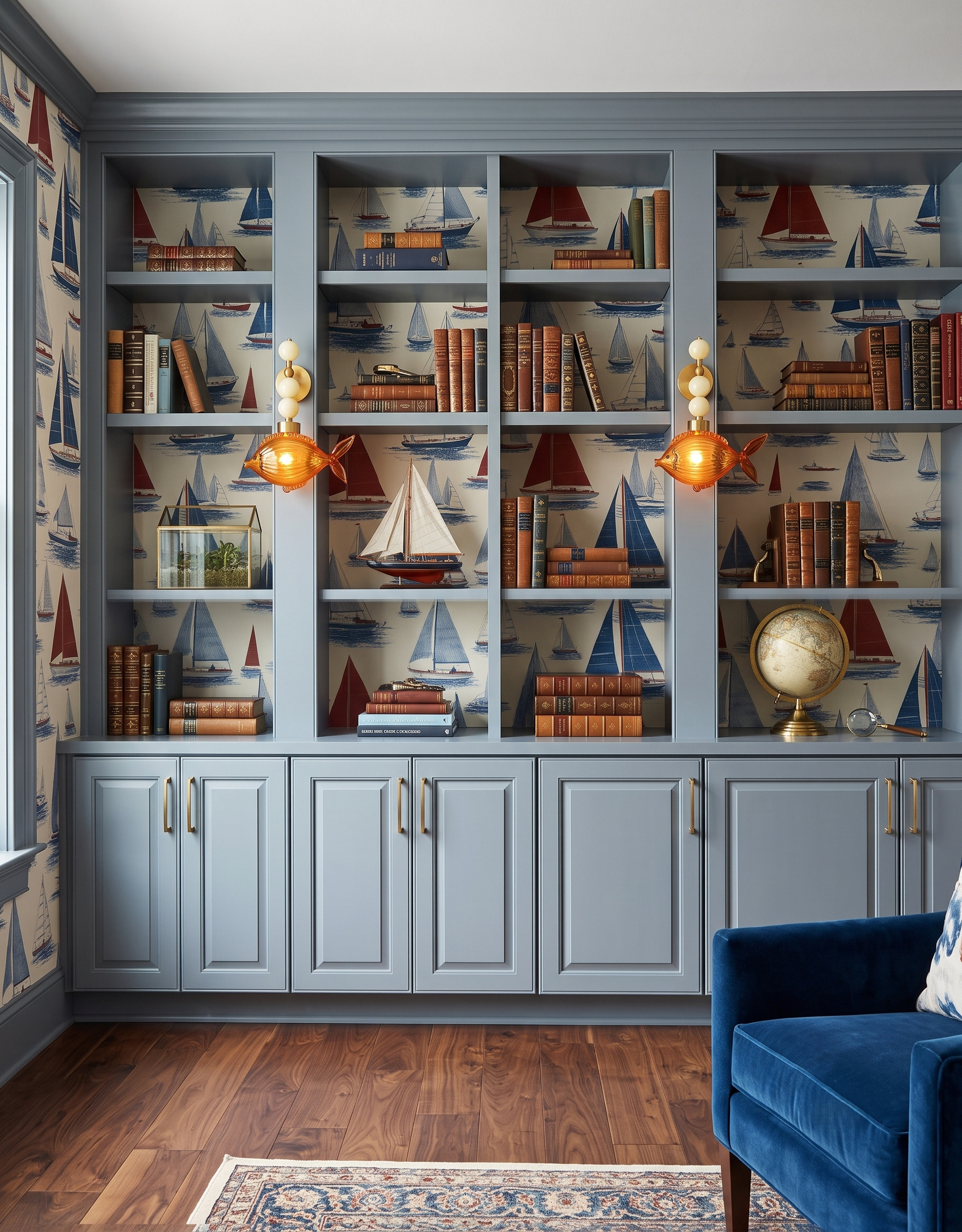
Sailboat wallpaper, a model boat and amber fish-shaped lights give this bookcase a clear personality. The blue-gray cabinet finish keeps those playful details connected. Start with a subject that means something to you, then choose a few objects and one pattern that express it. Leave room for the books themselves so the result still works as a reading room rather than becoming only a display.
Start with the way you like to read
Choose the activity first: curling up alone, reading together or spreading out books and notes. Then gather a seat, a useful light, a reachable surface and enough storage for your collection. Test those pieces in the room before committing to a large wallpaper pattern or a full wall of cabinetry.
If your next project is a kitchen, explore StilePath, Home3's kitchen planning tool. Bring along the color and material combinations you saved here as inspiration for that next room.
Explore StilePath for your kitchen