
10 Closet Rug Ideas With Bold Pattern and Soft Color
A rug can give a closet its own point of view. Shape, pattern and texture change how the floor relates to the cabinetry, whether you love dark wood, dusty pink or pale sage. These ten rooms show distinct ways to make that connection, with bold patterns and softer surrounding finishes. Save the rug idea that catches your eye, then compare its colors and outline with the closet you want to create.
Images are AI-created design concepts from Anna's authorized collection. They illustrate decorating ideas, not completed Home3 projects or measured construction plans.
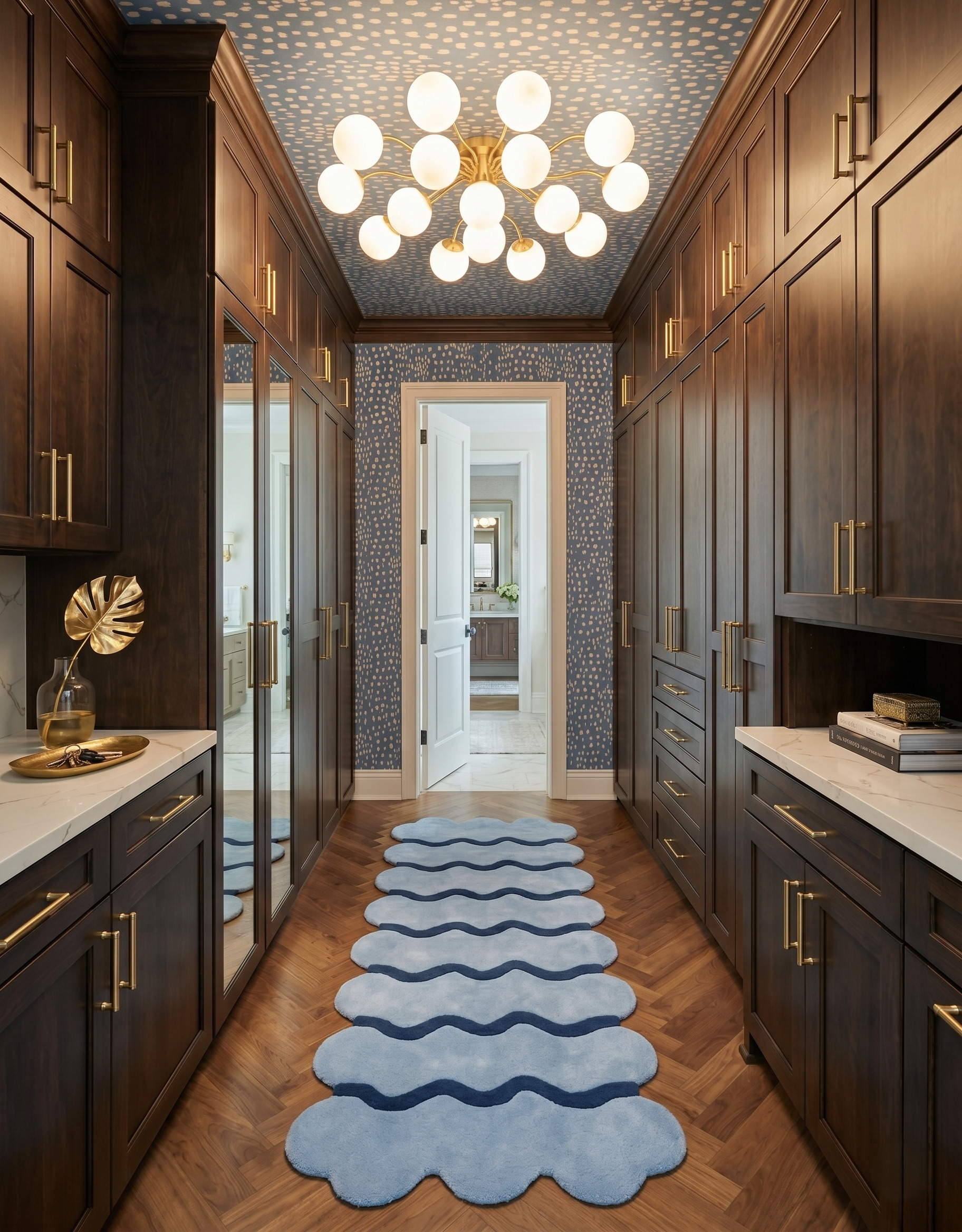
1. Soften a long closet with a wavy runner
The blue runner adds a playful edge to this dark wood passage closet. Its broad waves interrupt the straight cabinet lines, while the soft blue color connects with the patterned ceiling. Leave a visible strip of floor beside an unusual rug shape so its outline stays clear. Here, the herringbone wood remains part of the composition instead of disappearing beneath the textile.
2. Pair soft blue cabinets with green geometry
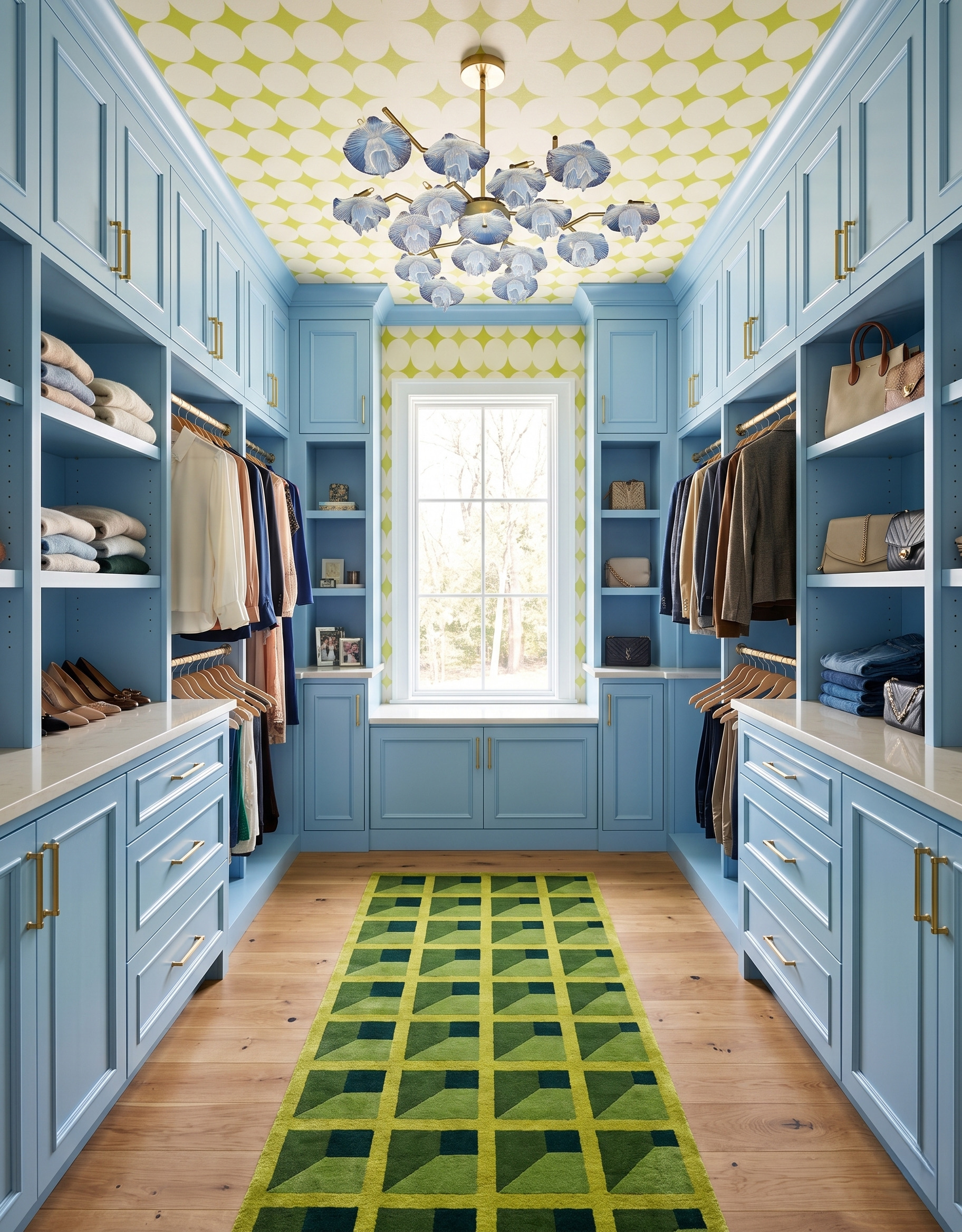
Tonal green shapes give this runner a strong graphic presence beside powder-blue cabinetry. The repeating cubes make the floor feel lively without requiring a brighter cabinet finish. Warm wood around the rug separates the two cool colors and gives the pattern a clear frame. Try this pairing when you want contrasting hues that still feel connected through a gentle, natural palette.
3. Use pale arcs to lift a navy room
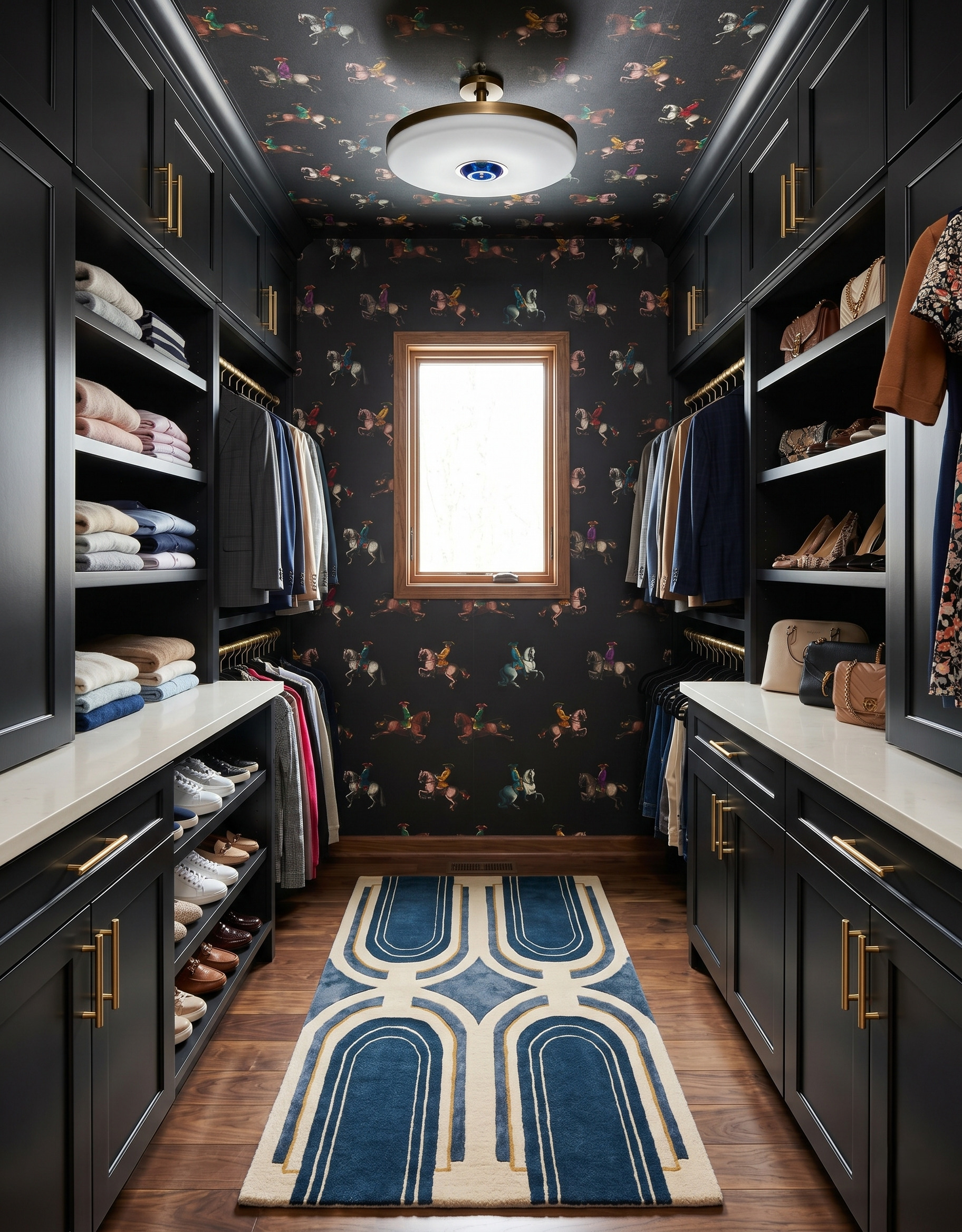
Cream arcs and fine gold lines keep the blue runner legible against this deep navy closet. The pattern introduces curves below the straight storage fronts, while its darker sections repeat the cabinet color. Keeping both light and dark areas in the rug creates a useful bridge between cabinetry and floor. Notice that the rug supplies geometry while the wallpaper supplies the more detailed illustration.
4. Frame blush cabinetry with a botanical border
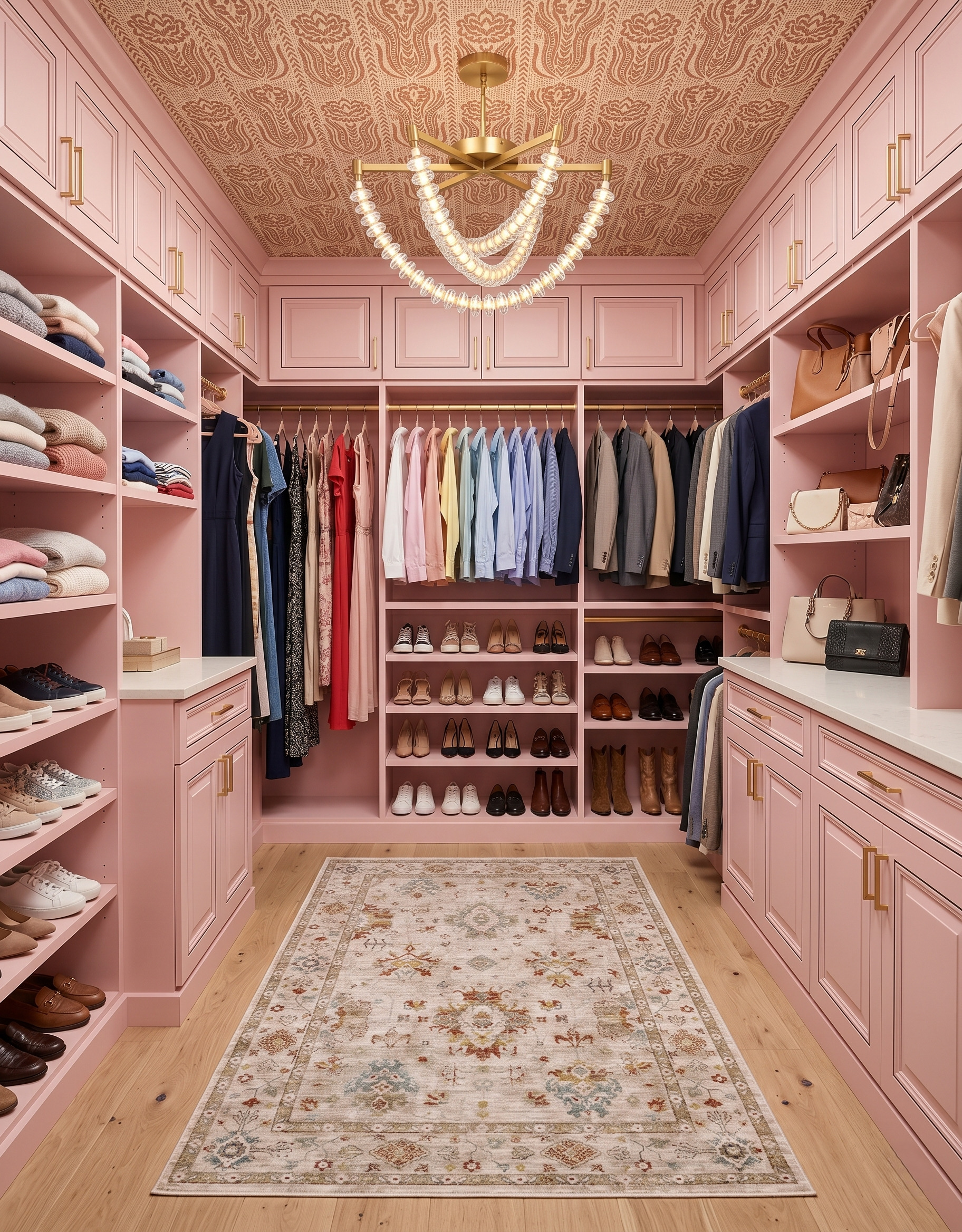
The small botanical motifs on this pale rug give blush cabinetry a delicate companion. A defined border makes the rug feel intentional within the open floor, while the quiet center lets the pink storage remain prominent. This is a useful approach when the cabinets already carry the room's color: choose a patterned edge and leave more breathing room through the middle.
5. Bring spotted texture to cream wardrobes
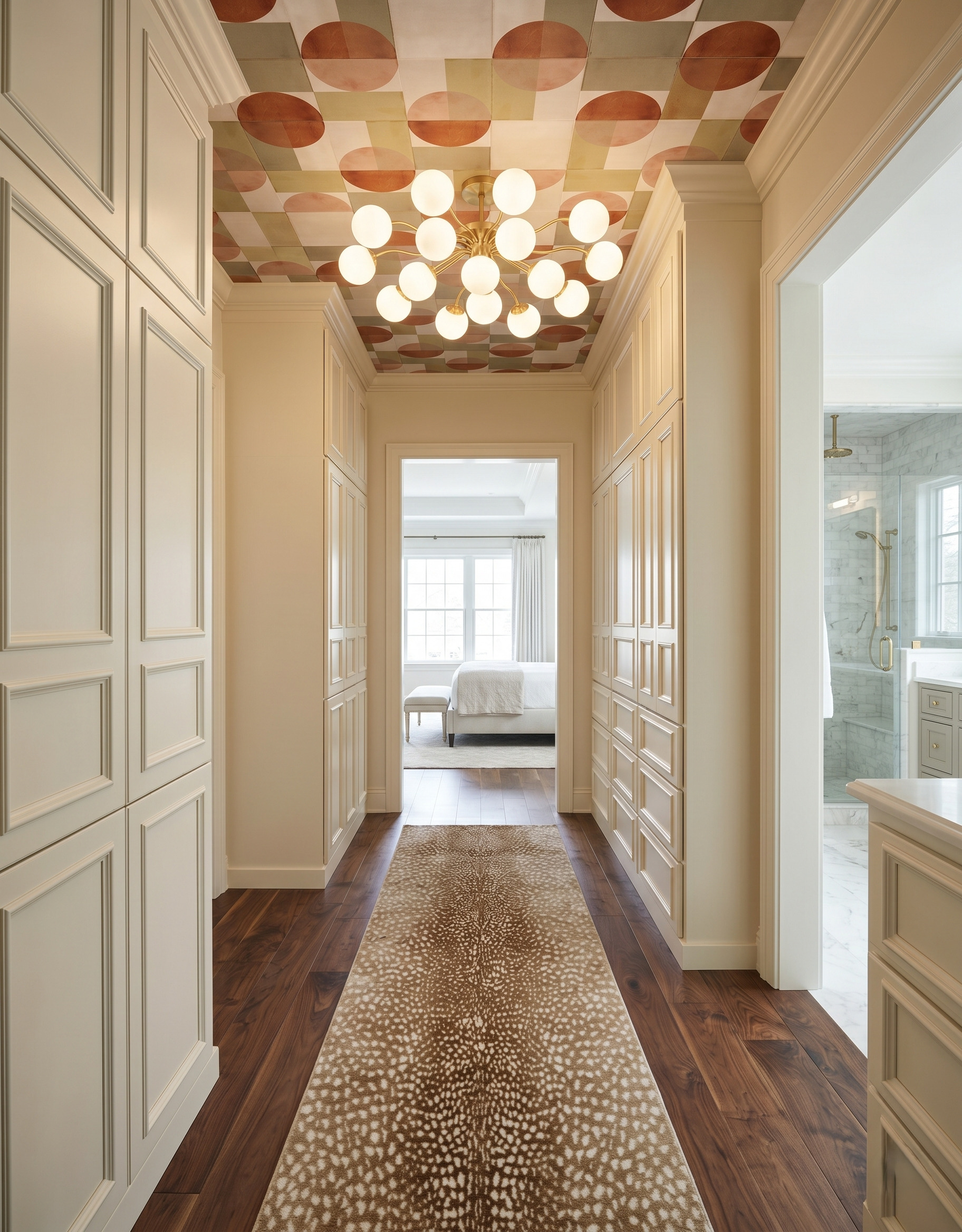
A tan-and-brown spotted runner adds movement along this bank of cream wardrobes. Its small, irregular marks offer a different scale from the large geometric shapes overhead. The warm rug colors also connect with the wood floor, keeping the two patterned surfaces from feeling unrelated. Pair a fine floor pattern with a larger ceiling motif when you want both to have a clear role.
6. Give dark wood a warm yellow border
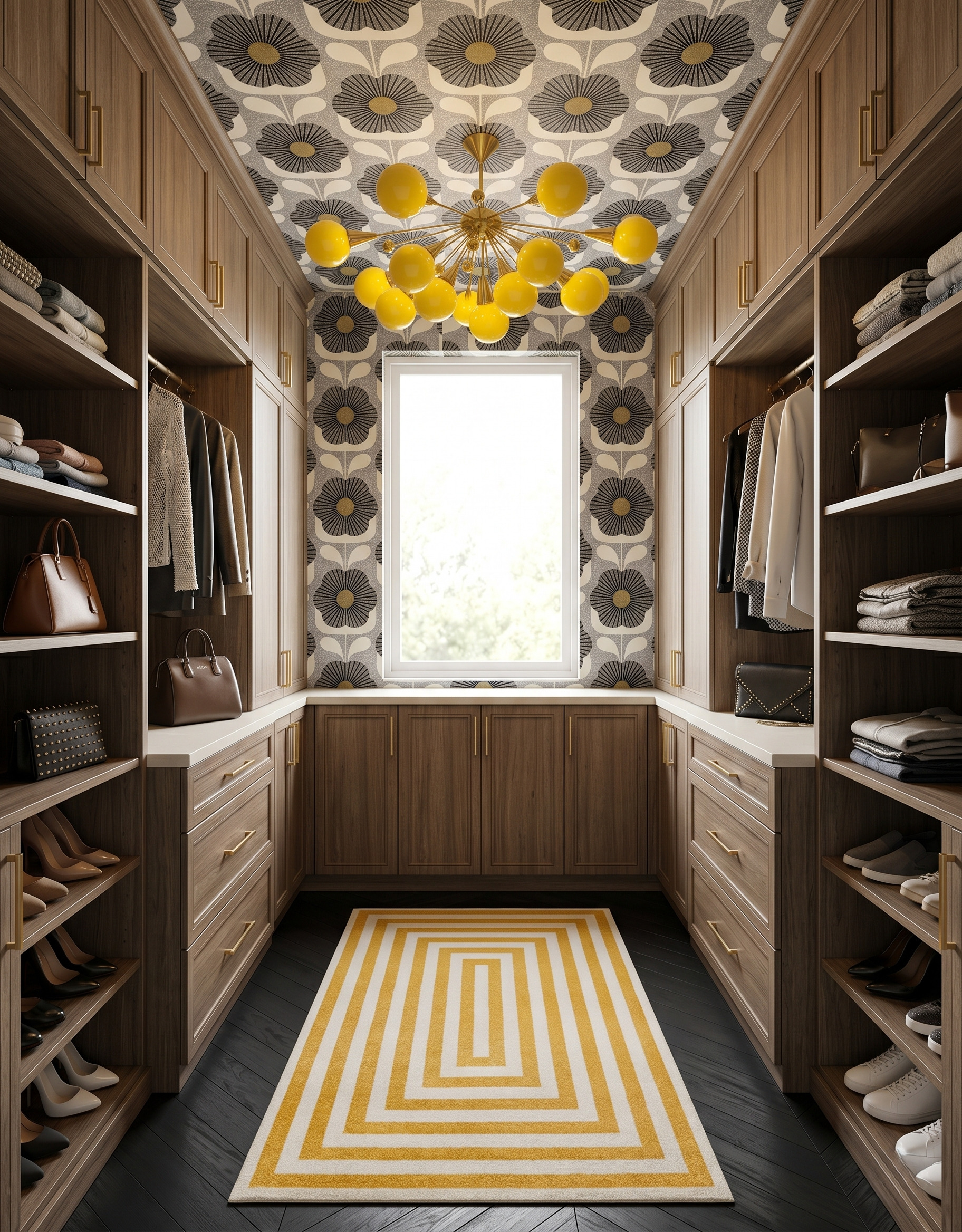
Nested yellow-and-cream borders give this runner a strong outline against the dark herringbone floor. The yellow glass light repeats that warm accent higher in the room, while the wood cabinetry keeps its natural depth. Use a bordered rug when you like bold color but want a simpler pattern underfoot. The repeated rectangles also relate neatly to the surrounding cabinet fronts.
7. Let one multicolor rug connect the accents
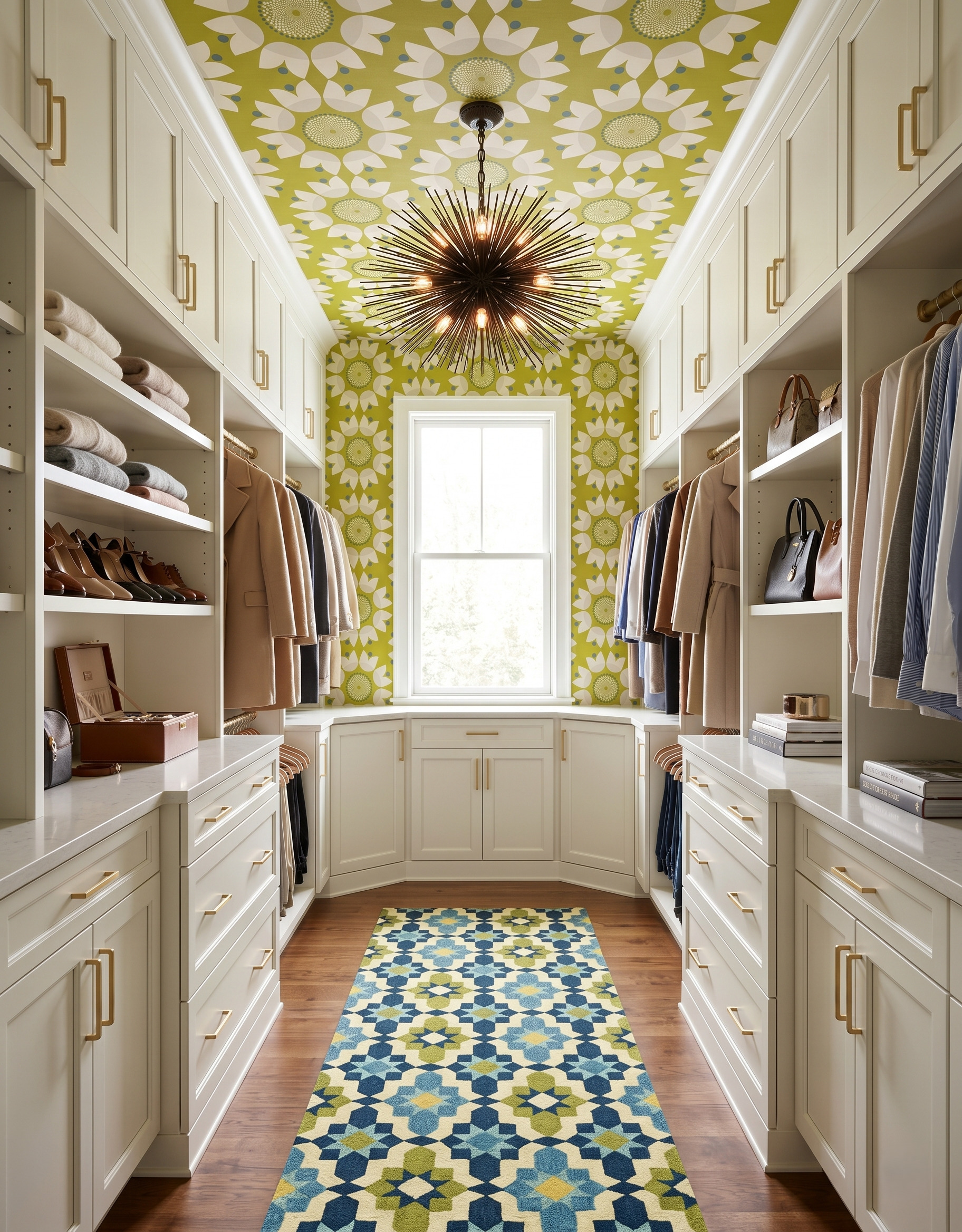
Teal, navy and citron motifs give this white closet a colorful starting point. The rug picks up the yellow-green wallpaper while adding deeper blue shapes closer to the floor. White cabinetry leaves room for those accents to stand apart. If you are combining a patterned rug with wallpaper, look for one shared color and let the remaining shades add contrast.
8. Keep bold geometry within a quiet palette
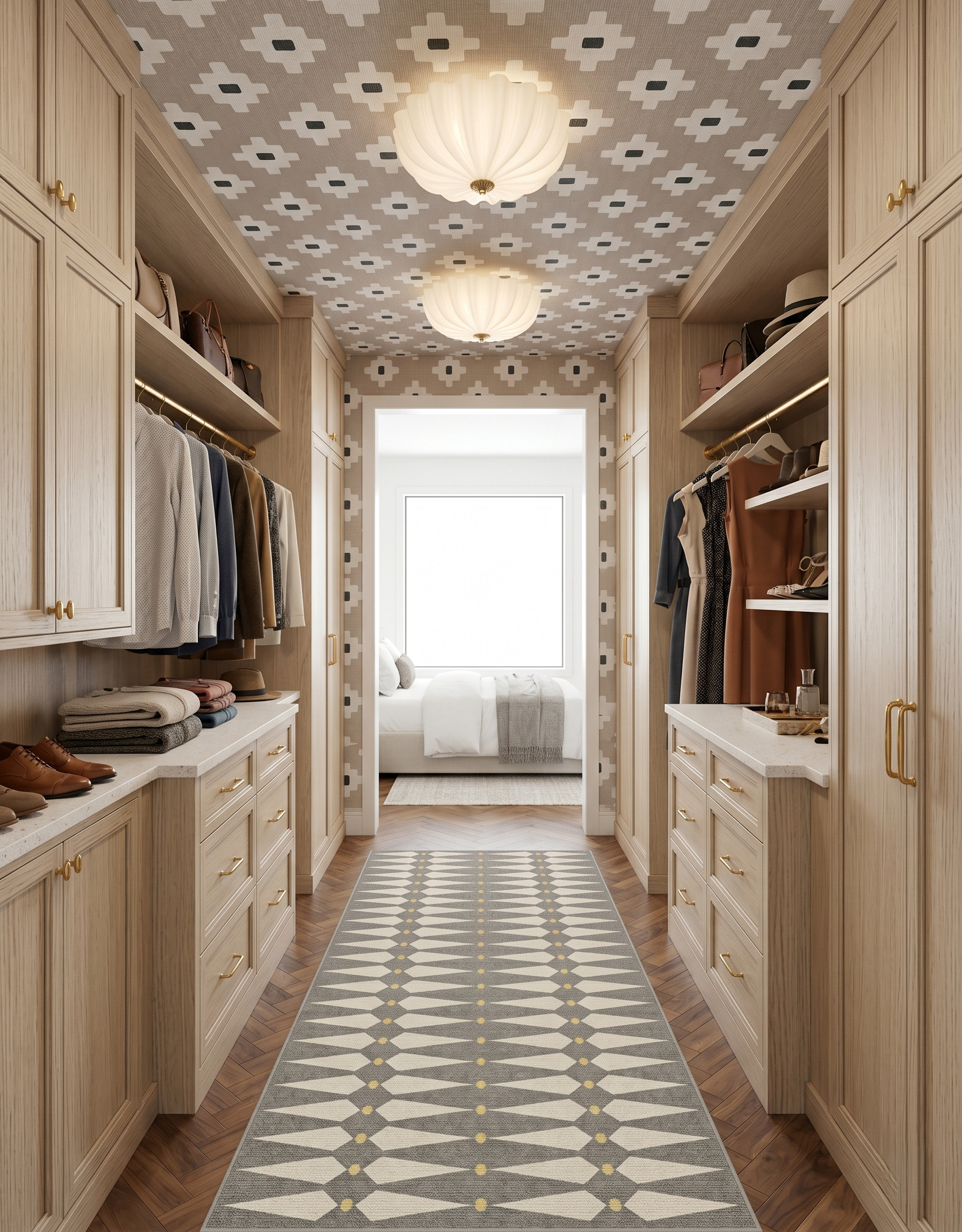
A cream-and-gray runner brings crisp pattern to this pale wood closet without adding another large color field. Small ochre details provide a warmer note, tying the textile back to the cabinetry and floor. This shows how much character a limited palette can carry. Compare the pattern size with nearby wood grain so both remain visible rather than blending into one busy surface.
9. Echo wine cabinets in a softer rose rug
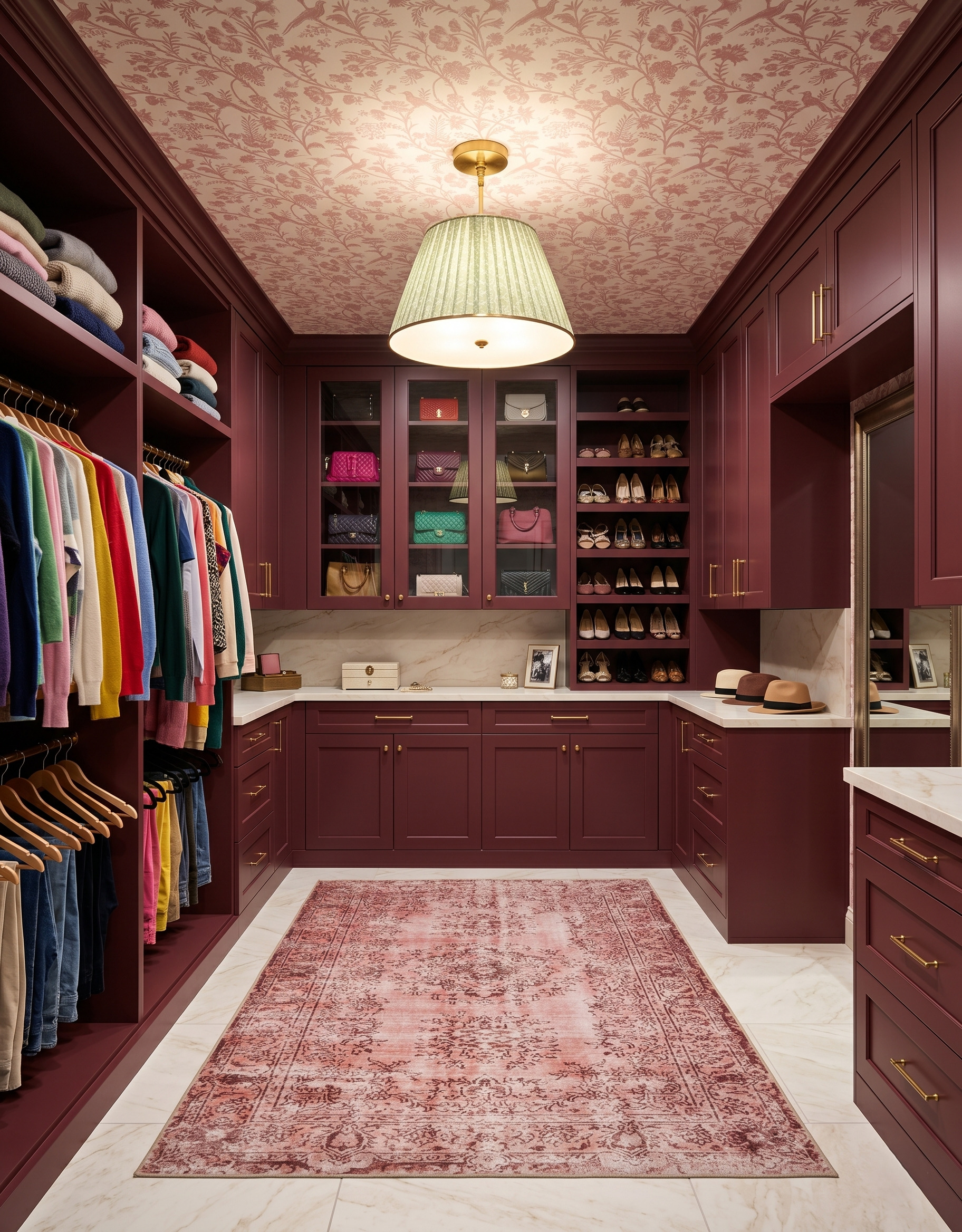
The pale rose rug takes the deep wine cabinet color and softens it into a worn-looking floral pattern. That change in intensity connects the two surfaces while keeping the floor lighter. Pale tile makes the rug's border easy to see. Try a quieter version of your cabinet color in a textile when you want a coordinated room with more depth than an exact match.
10. Make texture the statement against sage
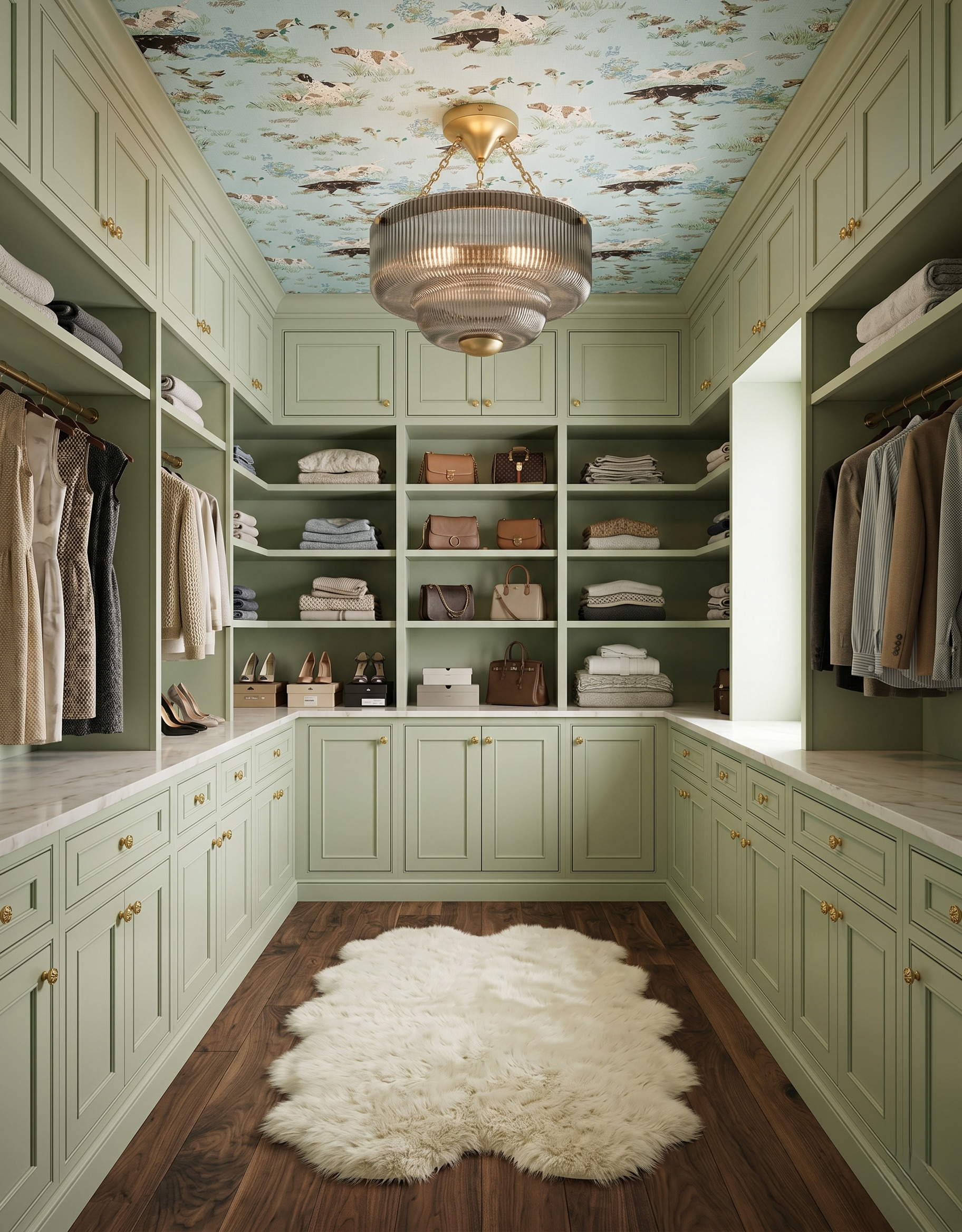
An irregular white shag rug changes the mood of this pale sage closet through texture and shape. Its soft outline contrasts with the orderly drawers and hanging bays, while warm wood remains visible around every side. A nearly solid rug can still be a strong design choice. Let the pile and silhouette supply the detail when the surrounding cabinetry and ceiling already feel complete.
Choose the rug in the context of the room
Compare the rug with your cabinet and floor samples, then decide whether color, pattern or texture should lead. Mark the intended footprint before buying and check the doors and drawers that open nearby. Keep its edges flat and secure, and choose a care routine suited to your room. The right rug should be enjoyable to look at and easy to live around.
If your next project is a kitchen, explore StilePath, Home3's kitchen planning tool. Bring the color and material relationships you saved here into that next room.
Explore StilePath for your kitchen