
10 Closet Lighting Ideas for a Bold Dressing Room
Lighting gives a dressing room another opportunity for personality. The shape of a shade, its underside and the way it sits against wallpaper all influence the room you see from the doorway. These ten closet ideas pair distinctive fixtures with clear material relationships, from dark wood and brass to mint cabinetry and white glass. Start with a light you enjoy looking at, then consider how its shape fits the whole room.
Images are AI-created design concepts from Anna's authorized collection. They illustrate decorating ideas, not completed Home3 projects or measured construction plans.
1. Make a sculptural brass pendant the focal point
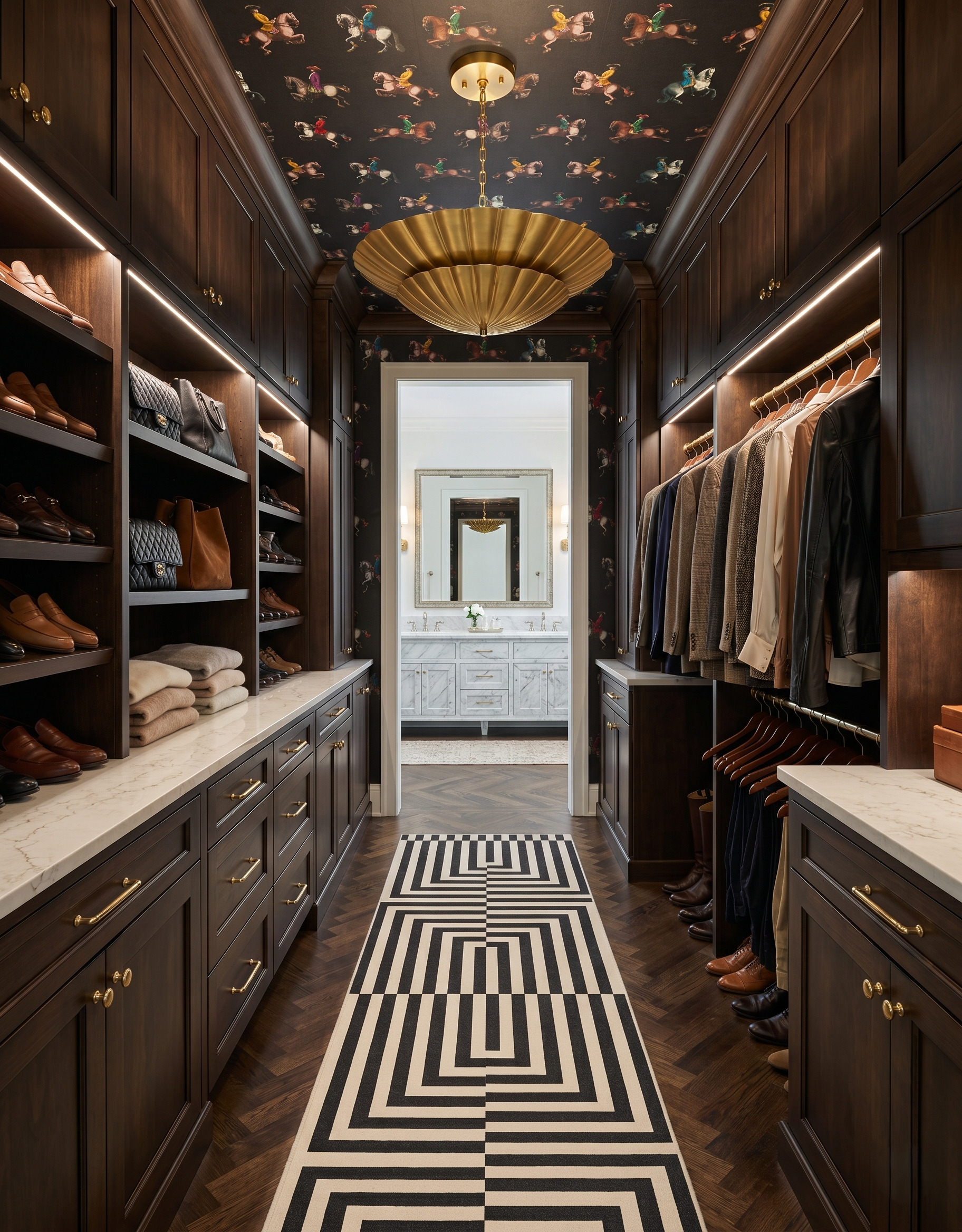
Two scalloped metal tiers give this pendant a strong silhouette against the dark ceiling. Warm wood cabinetry keeps the room grounded, while slim lights inside the wardrobe bays reveal the clothing and shelves. A substantial fixture can bring drama without adding another bright color. Compare its shape with the ceiling pattern so both remain readable when you look into the room.
2. Choose a shallow shade with one colored detail
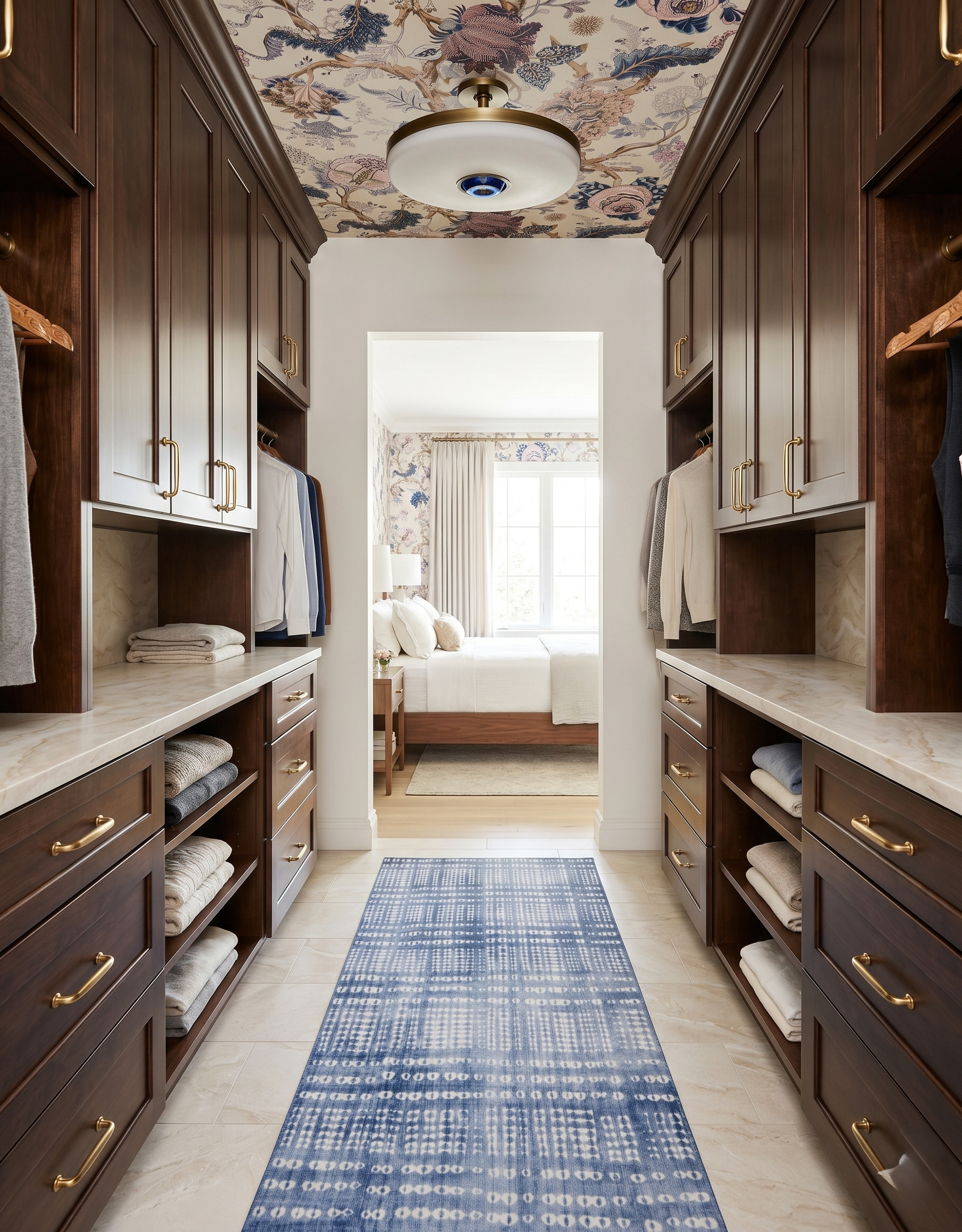
The round white shade gives this floral ceiling a quiet center, with a small blue detail connecting it to the rug below. Its brass rim relates to the cabinet hardware without covering much of the wallpaper. Try a shallow fixture when you want the ceiling treatment to stay visible. The overall silhouette can be simple while one small detail makes it personal.
3. Set clear glass spheres against strong stripes
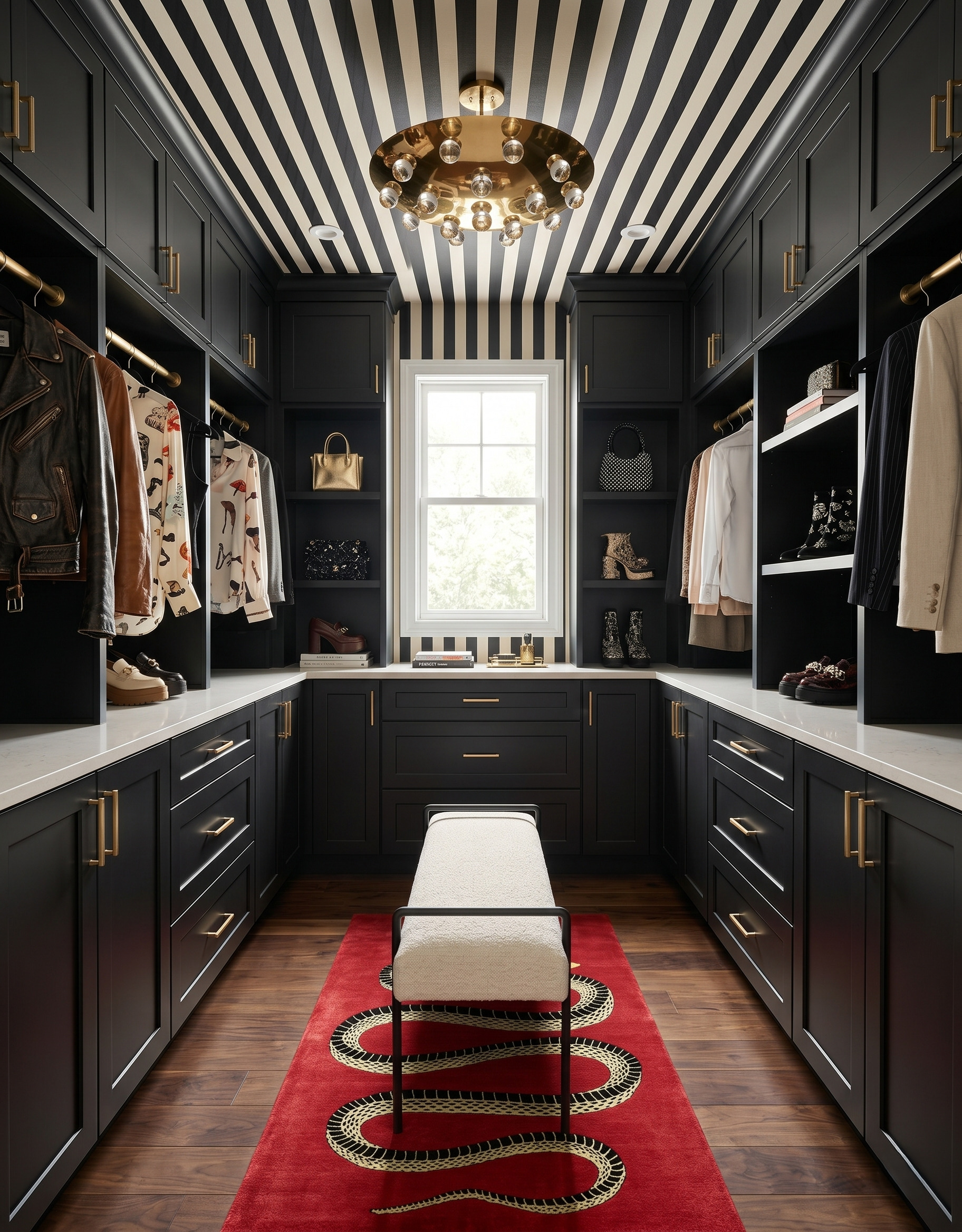
Clear glass spheres punctuate the broad brass plate above this charcoal closet. Their round shapes break up the long black-and-cream stripes, giving the light a distinct role in the composition. The red rug supplies the strong color accent farther down the room. When a ceiling pattern is this graphic, look for a fixture whose outline is easy to distinguish from it.
4. Repeat the ceiling's dark tone in a scalloped shade
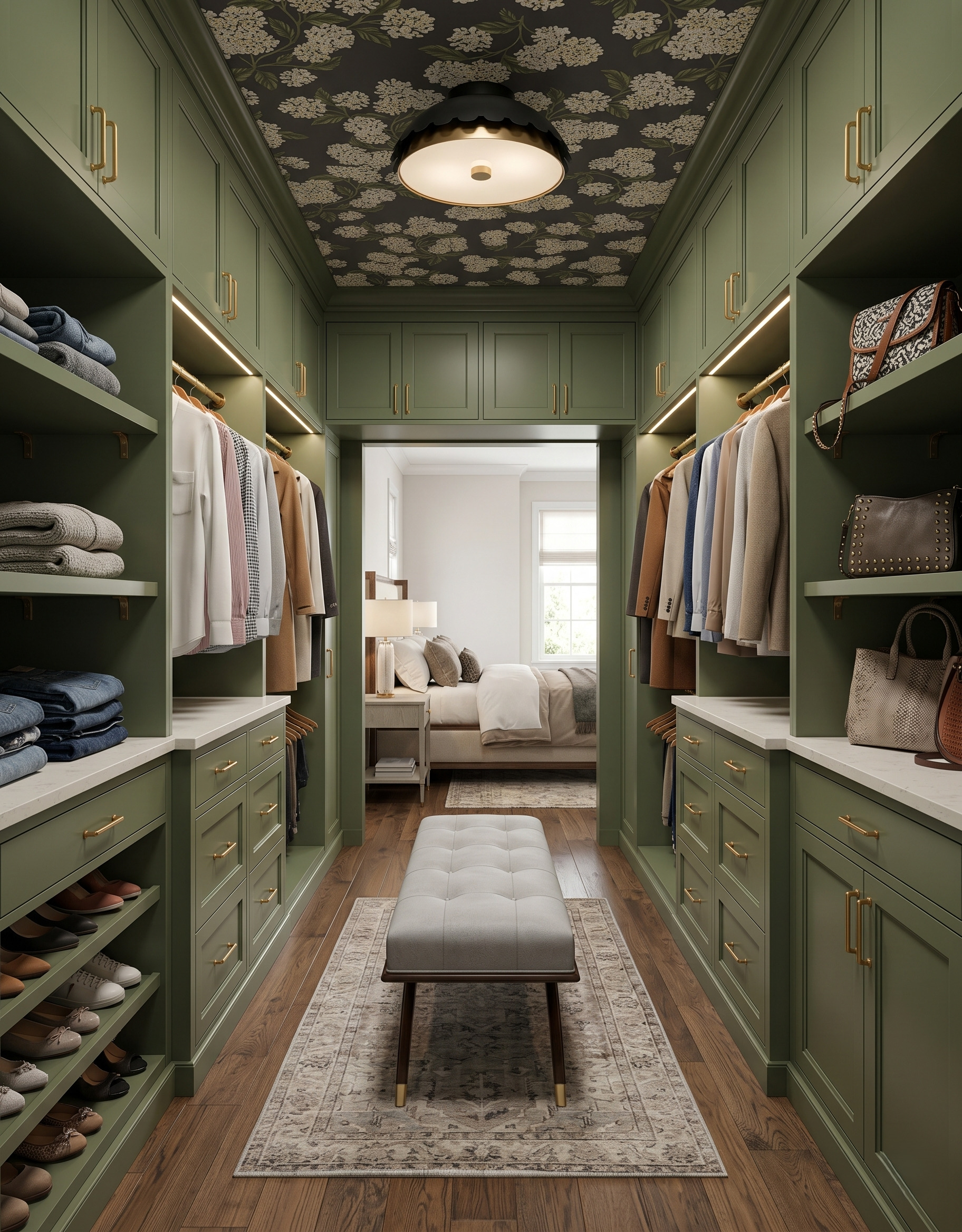
A black scalloped rim gives this compact light a crisp edge against the floral ceiling. The pale diffuser remains visible within it, while olive cabinetry picks up the wallpaper's green. Notice the separate light along the wardrobe bays: it adds definition without another decorative shape. Repeating a dark tone in the fixture can connect it to the print while preserving a clear outline.
5. Add fine texture with perforated metal
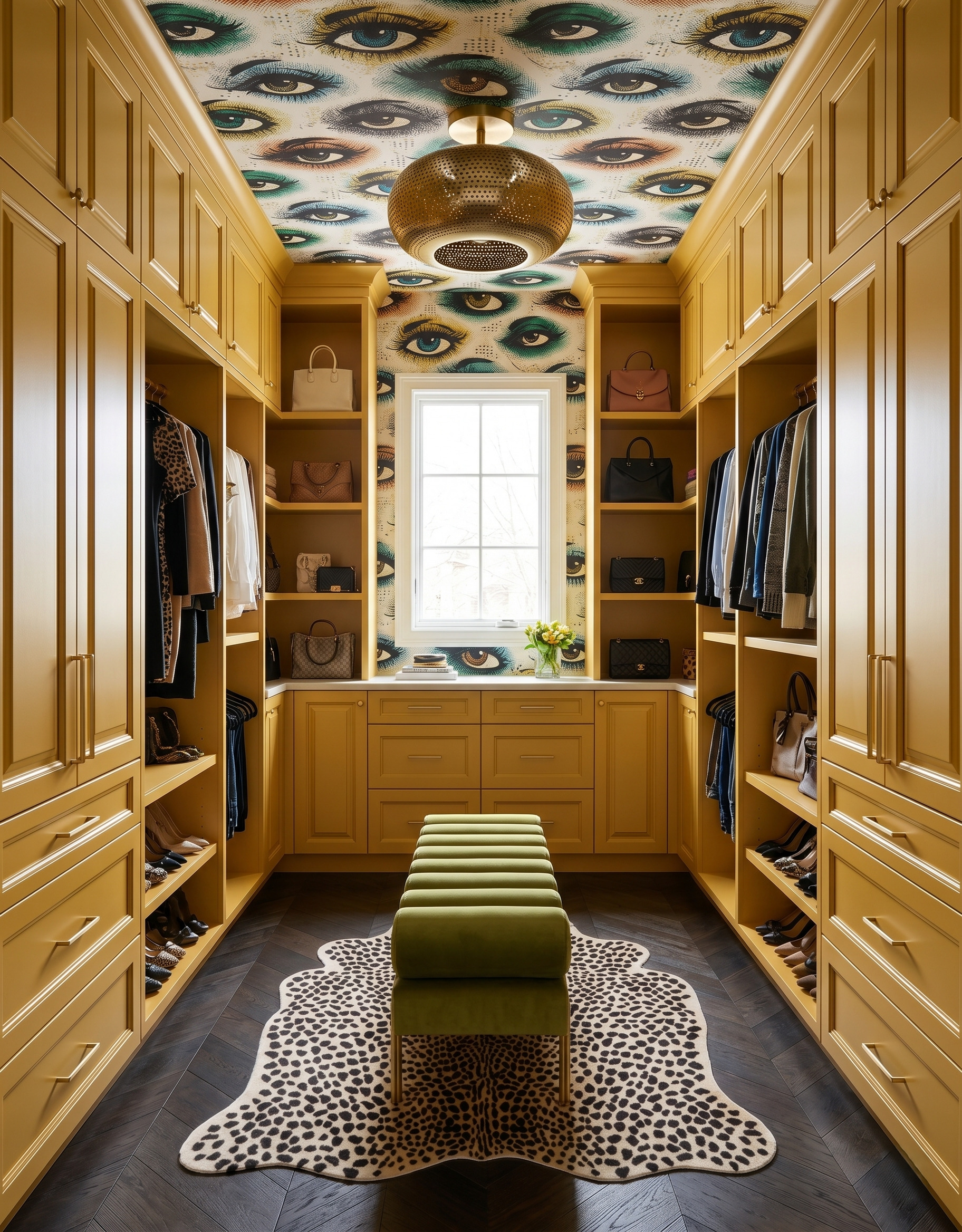
The small perforations give this rounded metal shade a finer texture than the large eyes printed overhead. Warm gold relates to the ochre cabinets, while the olive bench introduces a softer green below. This combination shows how two patterns can work at different scales. Keep the fixture's overall form simple when its surface already contains detail and the ceiling has a strong motif.
6. Give a cream shade a warm metal underside
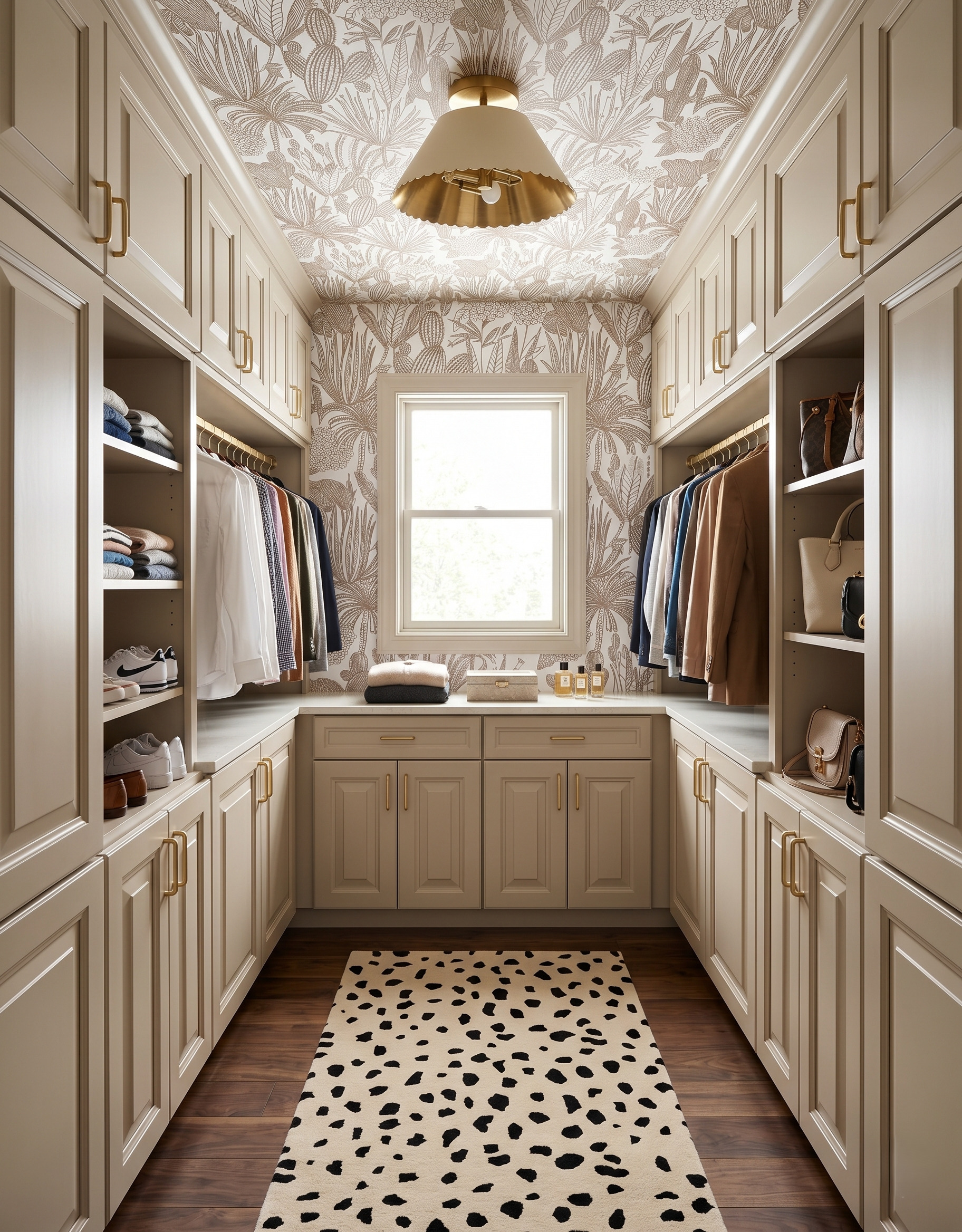
A cream exterior lets this shade sit comfortably with pale cabinetry, while its gold interior adds a warmer note when viewed from below. The scalloped edge brings a small curve to the botanical ceiling. Consider both sides of a shade when choosing a ceiling fixture: the underside is part of the room's everyday view, particularly when the light sits above an open walkway.
7. Use a sculpted white light with playful wallpaper
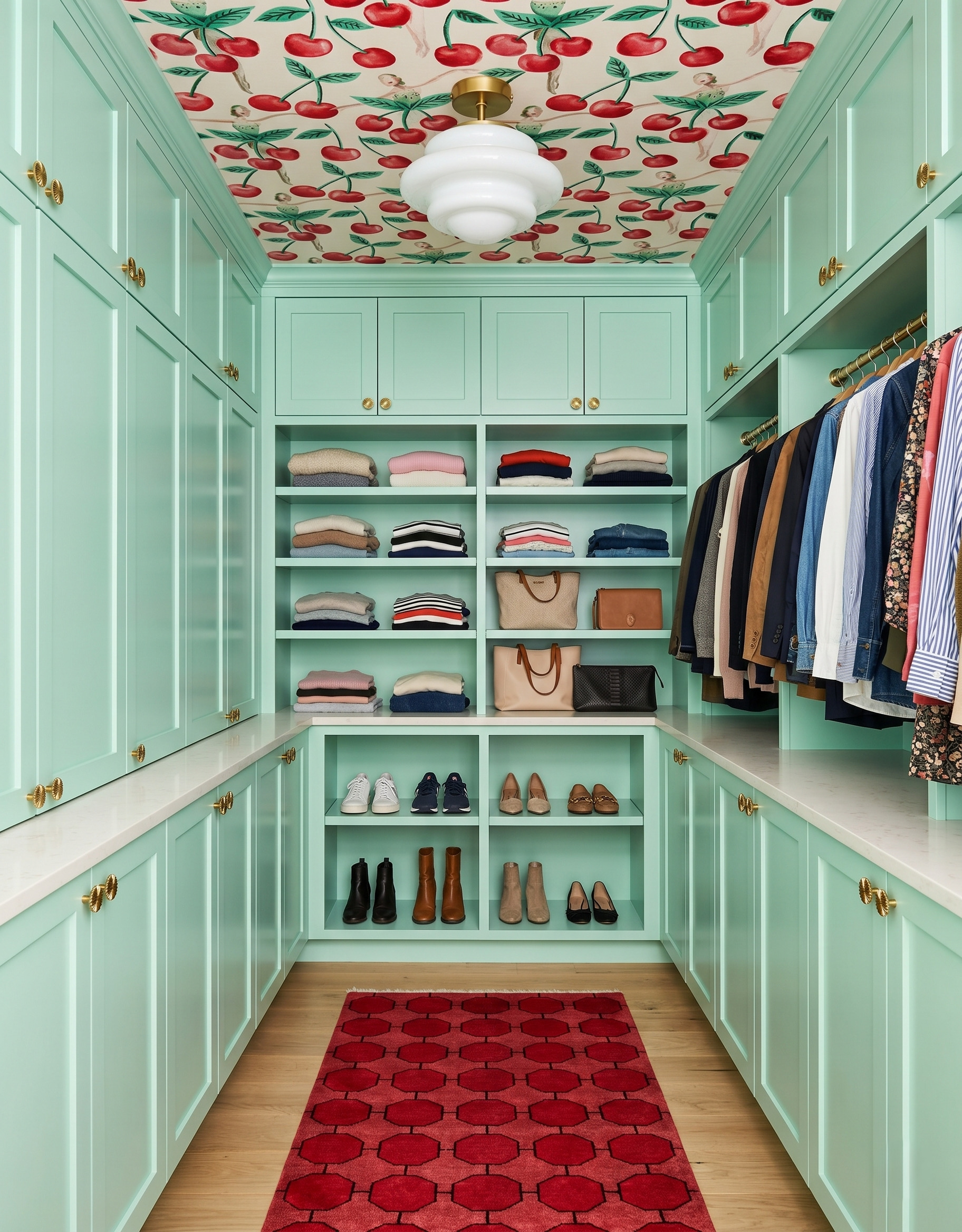
The tiered white shade has enough shape to feel deliberate without competing with the cherry print. Its pale surface also relates to the counters between the mint cabinets and open shelves. A white fixture can be a useful pause within a colorful room. Look for an interesting profile when you want that quieter color to remain a visible part of the design.
8. Repeat a globe cluster along a longer passage
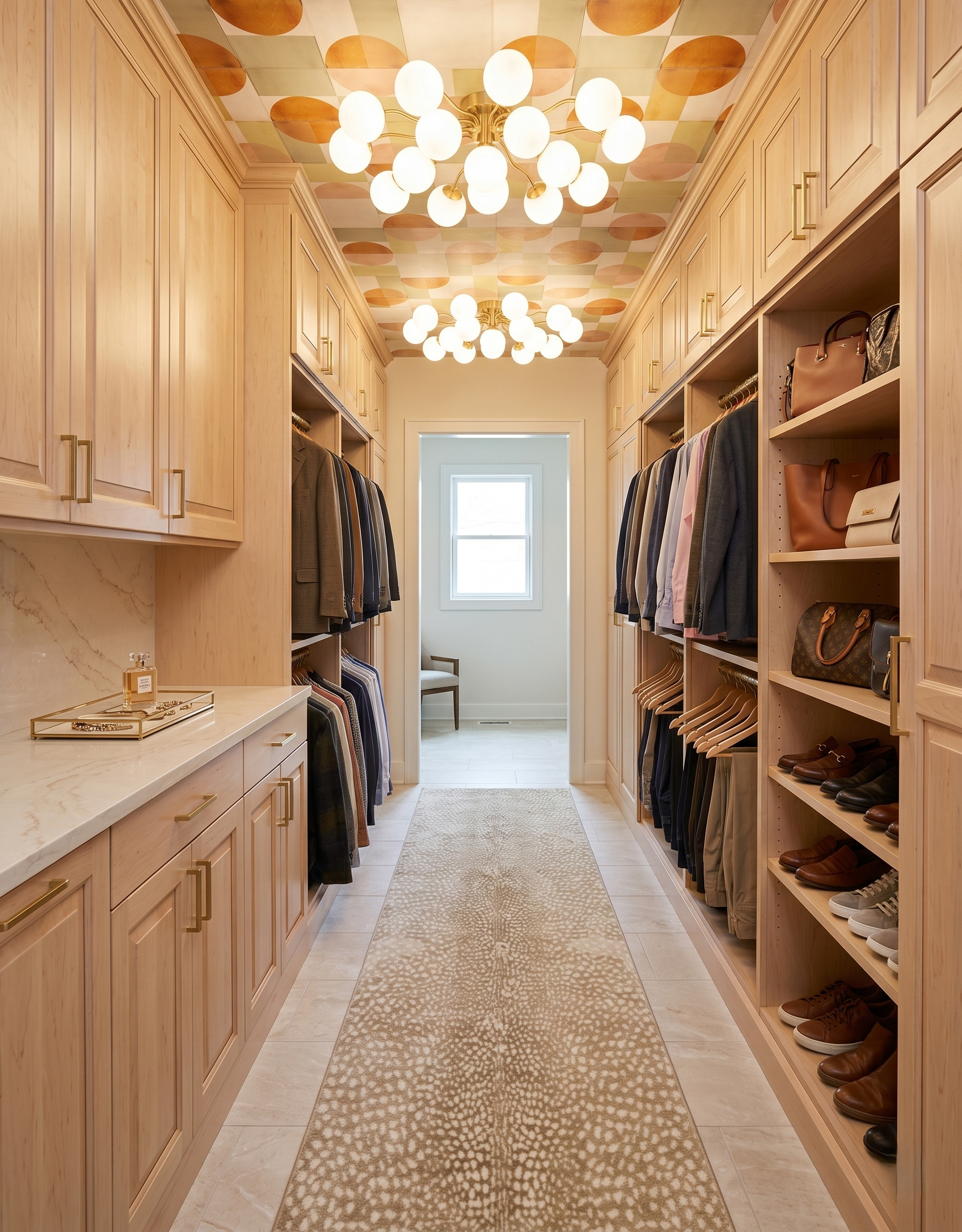
Two matching globe clusters create a rhythm down this pale wood closet. Their rounded shapes relate to the circular ceiling pattern, while the repeating brass arms keep the fixtures consistent with each other. A long room offers an opportunity to repeat a favorite light instead of making every fitting different. Assess the whole sequence from the entrance, including the doorway at the far end.
9. Layer pale panels against black cabinetry
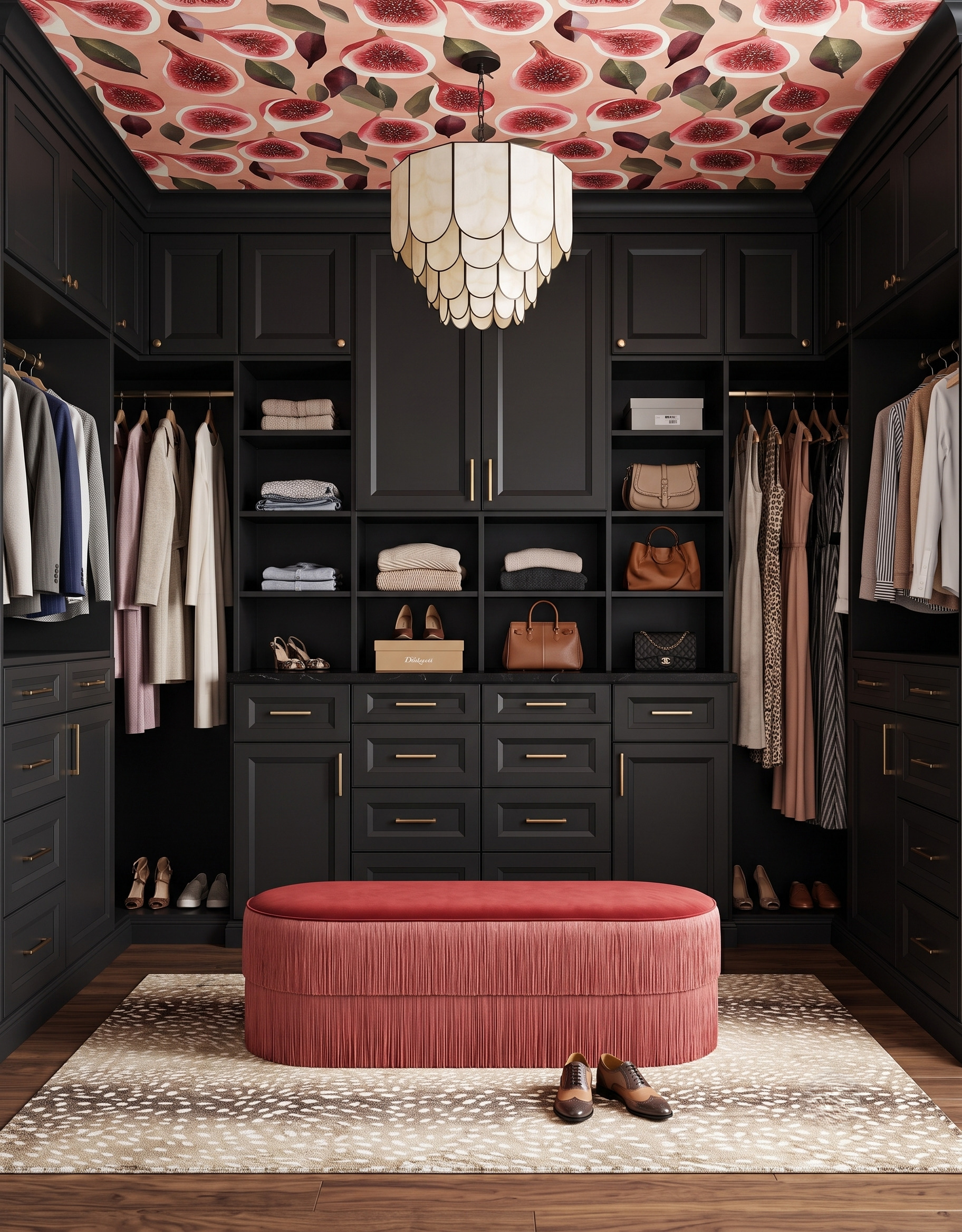
Overlapping pale panels give this pendant a soft, tiered outline against black wardrobe fronts. Fine dark edging helps each piece stay distinct, echoing the cabinetry without matching its visual weight. The dusty rose bench and fig print add color elsewhere. Choose a light with several visible layers when you want a pale fixture to have depth as well as a strong silhouette.
10. Let fluted metal bring warmth to powder blue
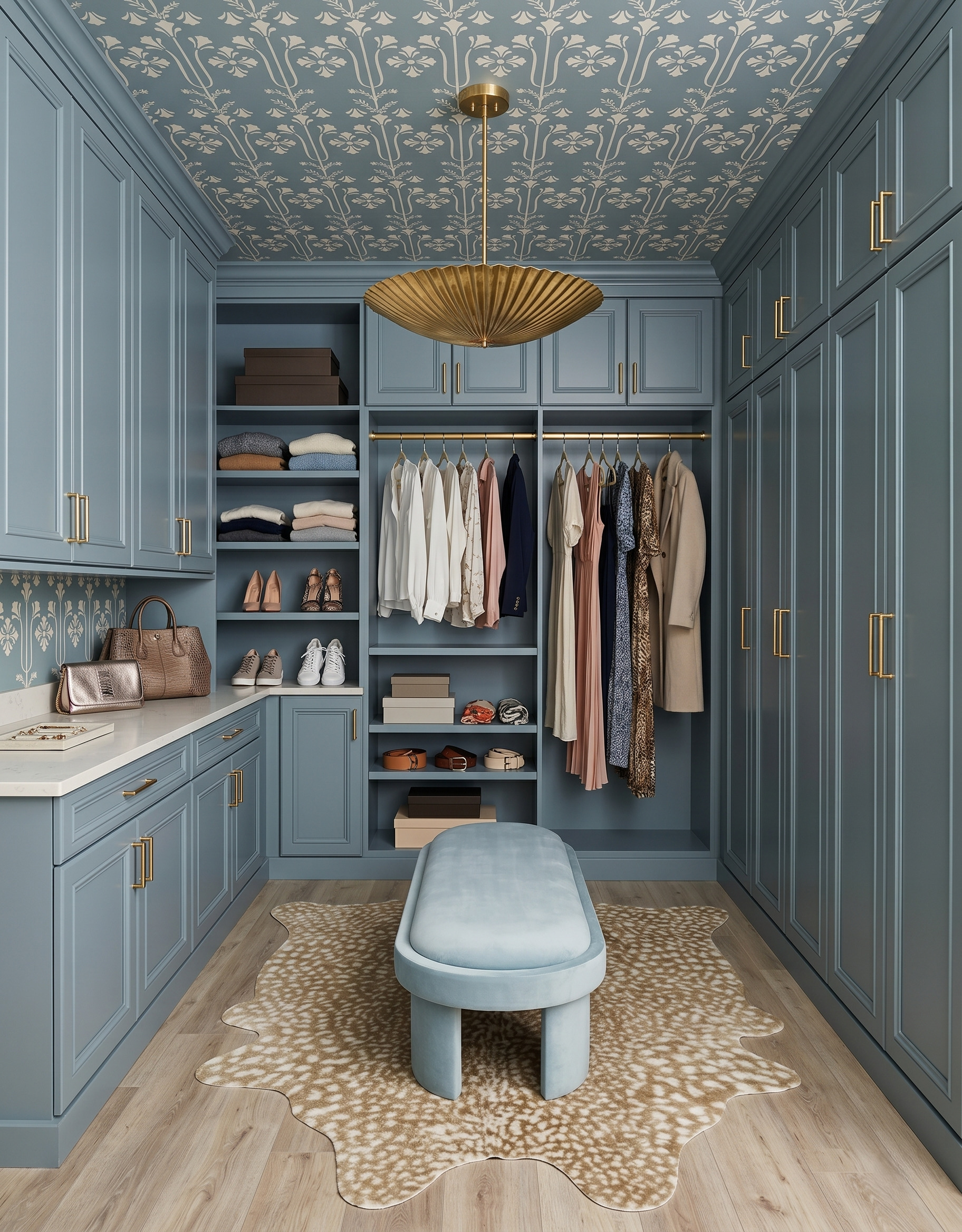
This wide brass dish brings a warm focal point into an otherwise softly colored closet. Its radial fluting catches gentle changes in light, giving the metal texture without relying on a complicated outline. Blue cabinetry and upholstery let that warm accent stand out. Compare the pendant with your hardware finish, then leave enough contrast for the light to read as its own design detail.
Look at the light from the doorway
Save the fixture shapes that appeal to you, then compare them with the cabinet finish and ceiling pattern together. Consider the shade's underside as well as its side profile, and check the actual ceiling height, door movement and walking route before choosing a fixture. A distinctive light should make sense within the whole room, including the storage you use every day.
If your next project is a kitchen, explore StilePath, Home3's kitchen planning tool. Bring the color and material relationships you saved here into that next room.
Explore StilePath for your kitchen