10 Bathroom Mirror Ideas With Bold Shapes and Frames
A bathroom mirror can do much more than fill the space above a sink. Its outline, frame width, color and texture can give the whole vanity wall its personality. These ten rooms show how bold mirrors work with patterned walls and rich, natural-looking finishes, from a simple black rectangle to a scalloped frame with plenty of depth.
Images are AI-created design concepts from Anna's authorized collection. They illustrate decorating ideas, not completed Home3 projects or measured construction plans.
1. Put the pattern on a round frame
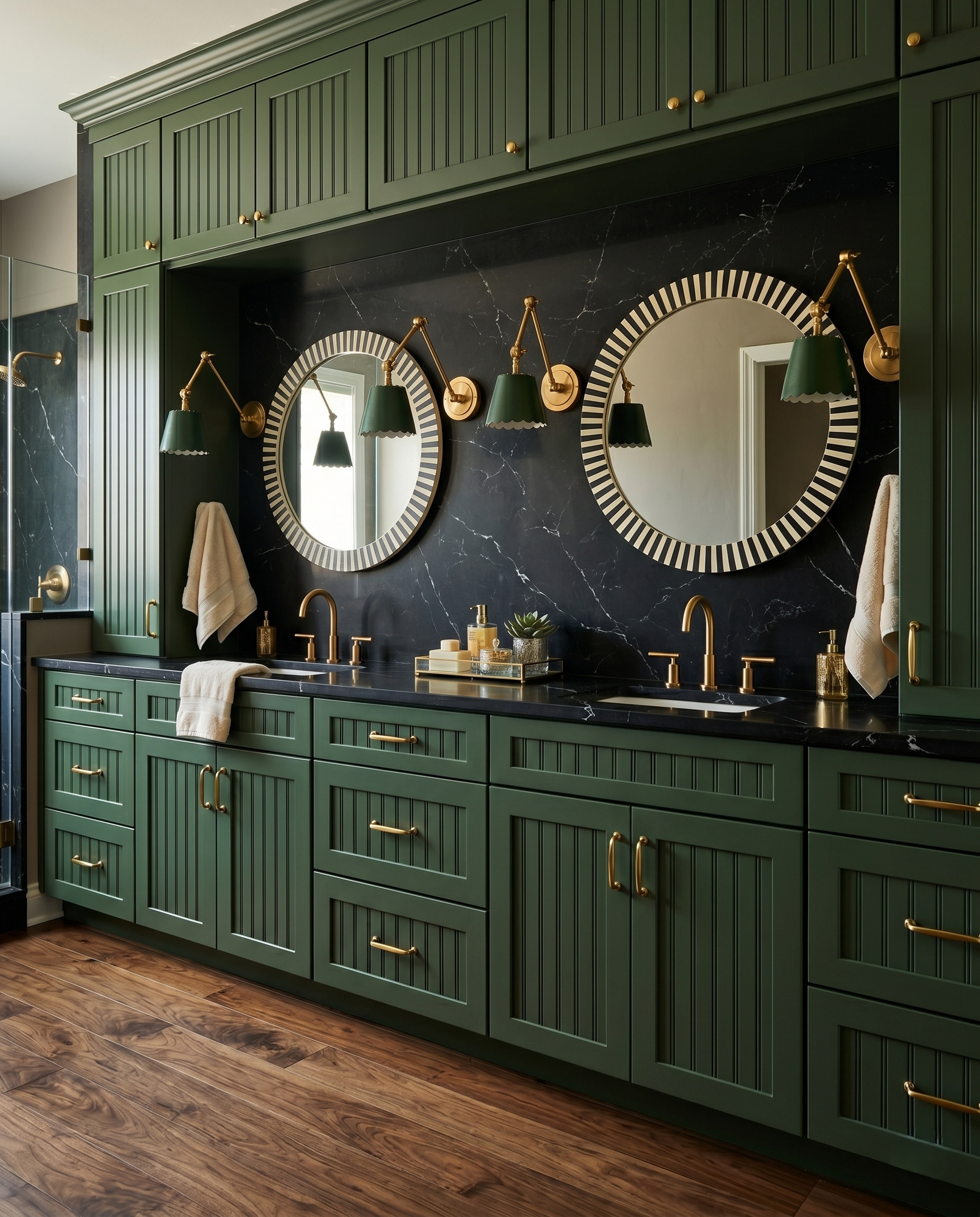
Black-and-cream stripes turn these circular mirrors into the room's strongest graphic shapes. Their regular rhythm contrasts with the flowing veins behind them, while the olive cabinet surround gives everything a quiet border. Try a patterned frame when you want a focal point above the sinks. Compare the stripe width with nearby veining so both patterns remain clear from the doorway.
2. Give rounded corners a substantial frame
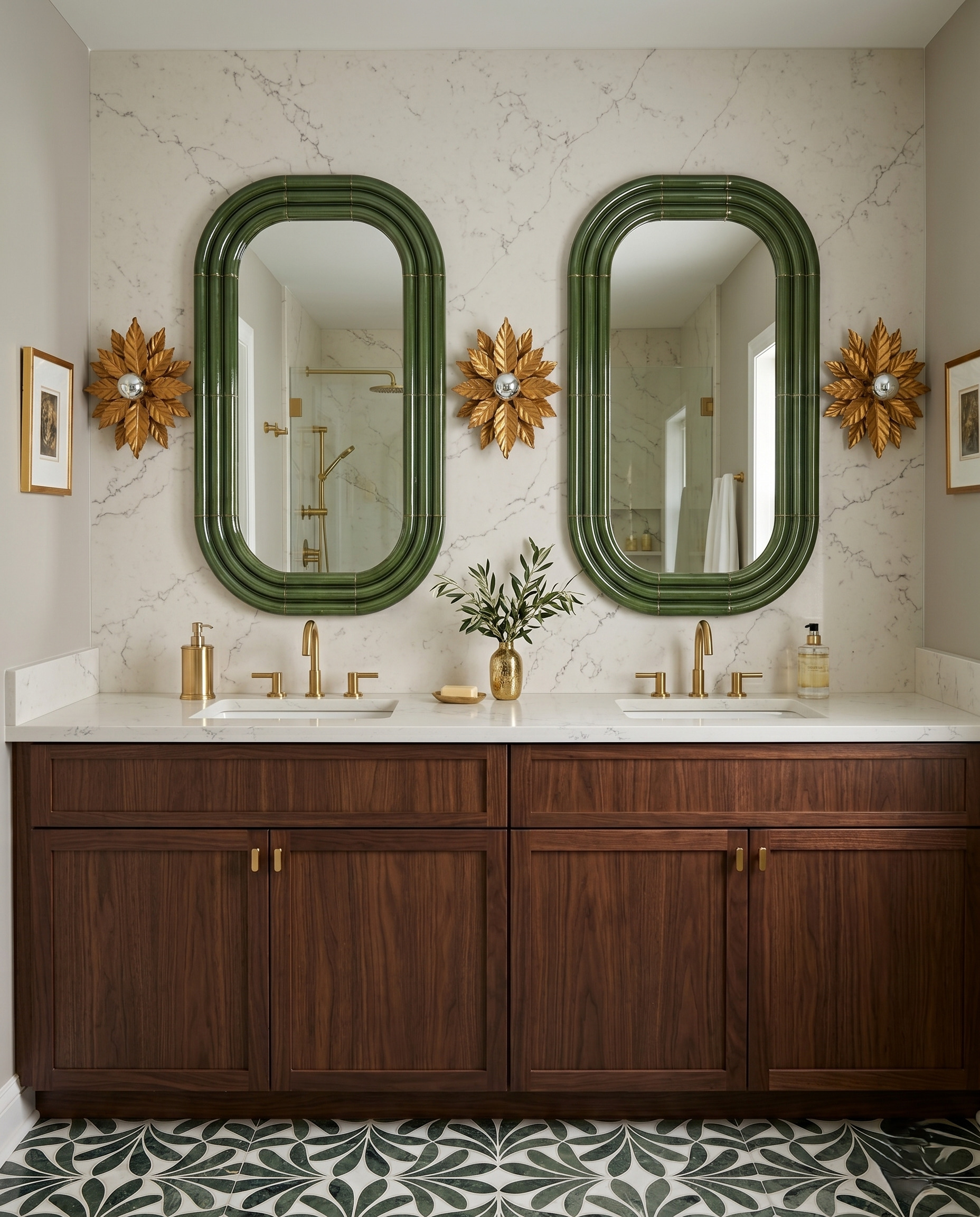
Several raised bands give these deep green frames more presence than a thin metal outline. The rounded corners soften their rectangular shape, while the pale wall makes each ridge easy to see. Consider this approach when you want a mirror to feel substantial without ornate carving. Compare the frame's depth and finish beside your cabinet sample, especially when both materials are dark.
3. Choose stepped corners for a sharp outline
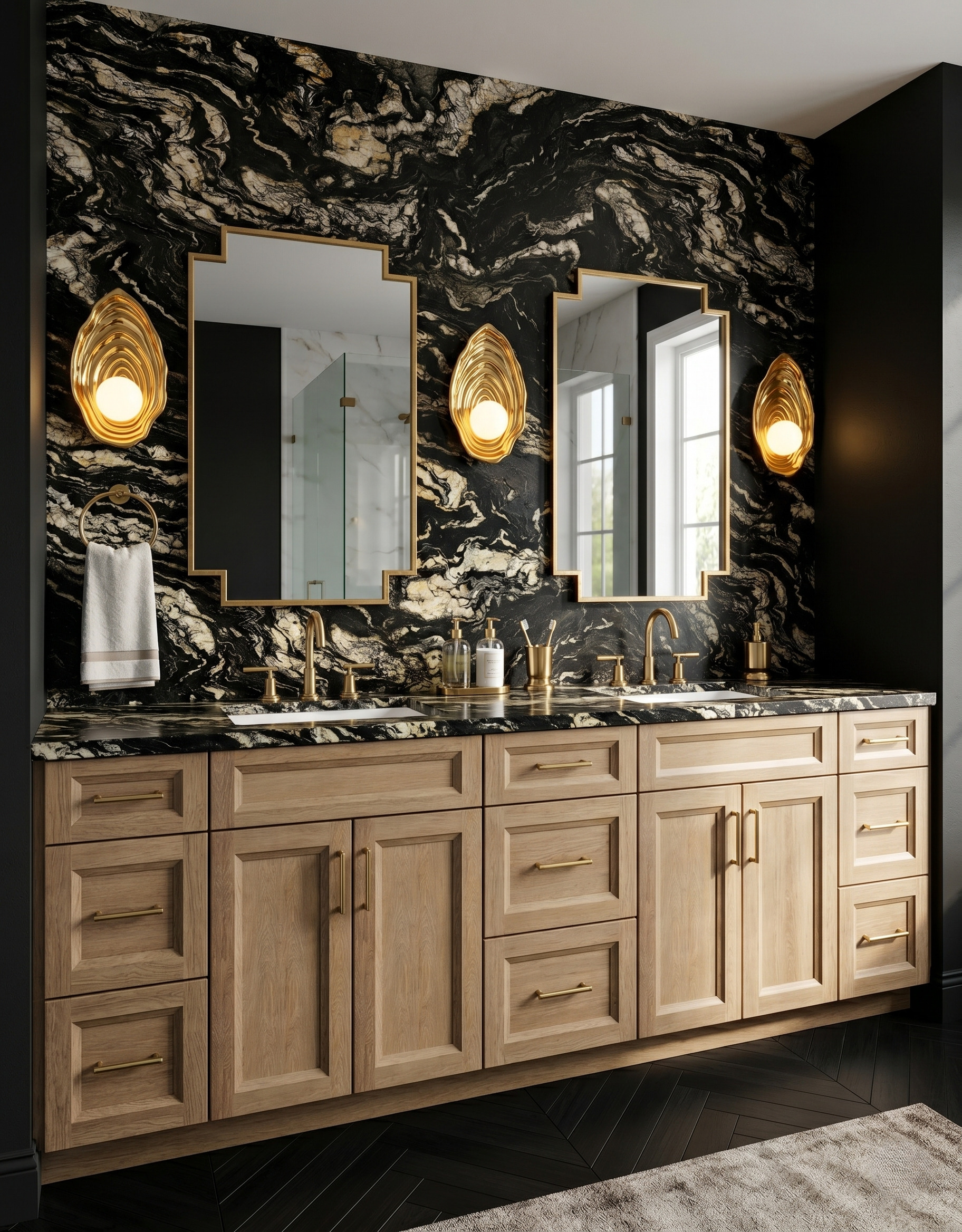
Small square steps at the top and bottom give these tall mirrors an architectural outline. The gold border stays slender, leaving plenty of glass beside the busy black-and-cream wall. This shape works as a deliberate contrast to flowing veins and rounded decorative objects. Sketch the whole outline on your sample board so the corners become part of the design conversation.
4. Let a cutout frame become the wall's decoration
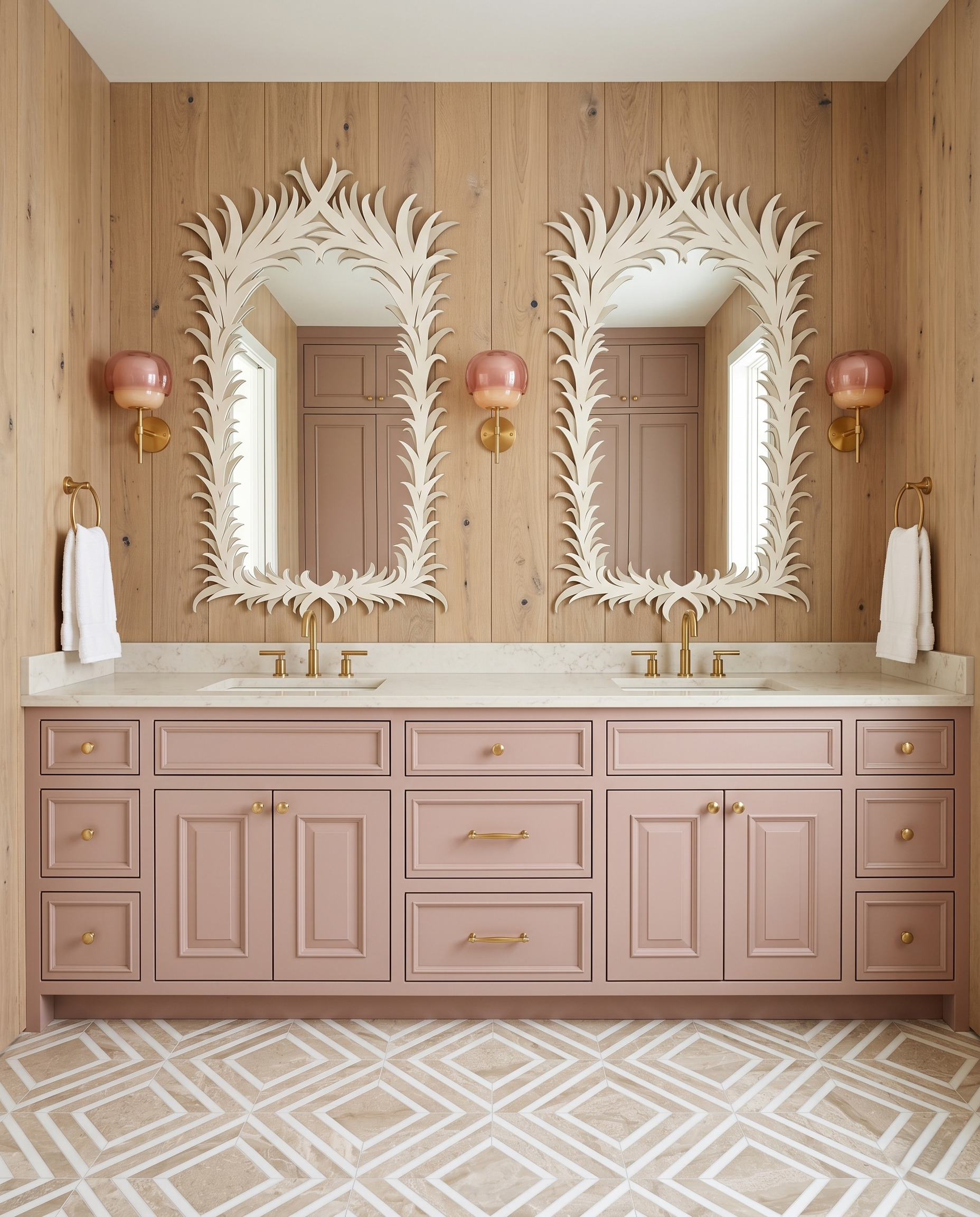
White leaf-like edges spread around these mirrors, leaving small openings that reveal the wood wall behind them. That negative space makes the frame feel intricate without adding a wallpaper print. The dusty pink vanity keeps the room's color gentle. If you love decorative outlines, compare an openwork frame with a solid carved one; the surrounding wall becomes part of its appearance.
5. Use narrow black rectangles to define a busy wall
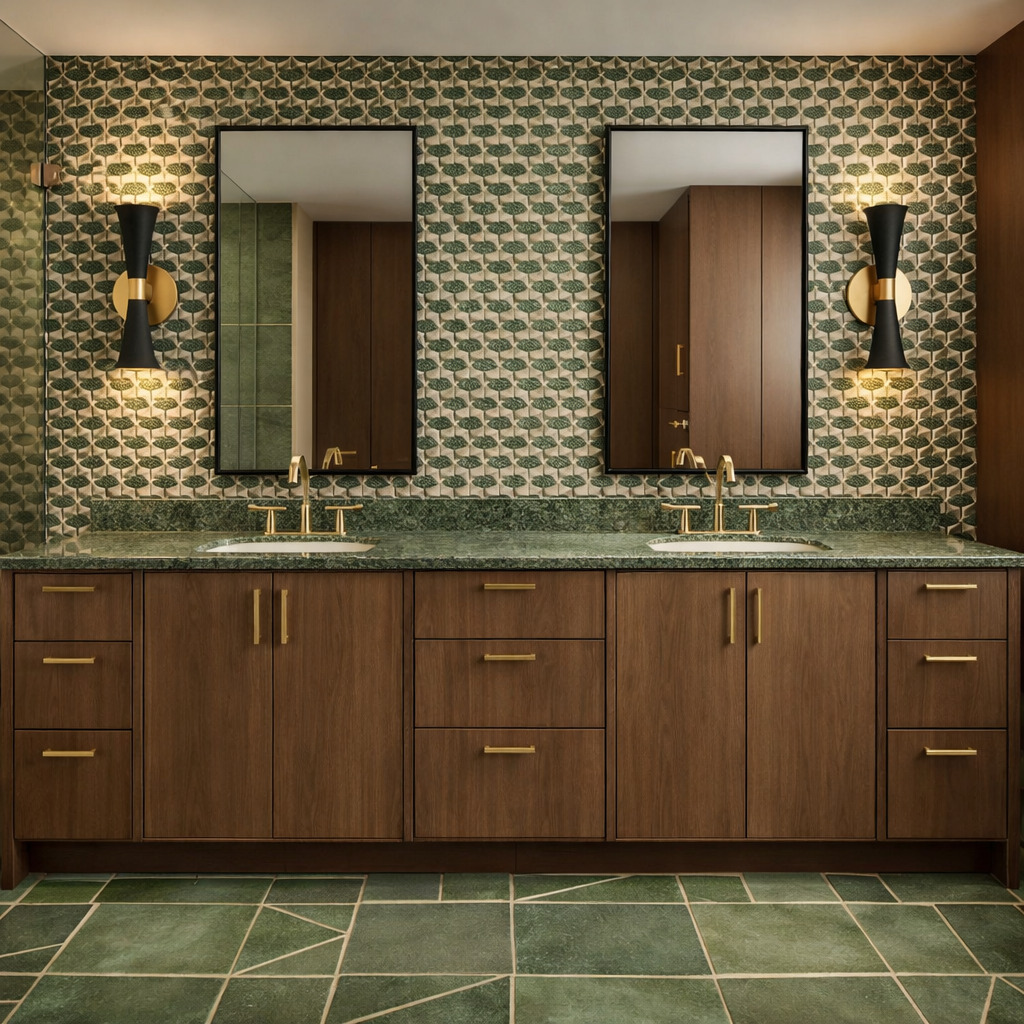
Tall black rectangles give this small leaf pattern a firm vertical boundary. Their narrow frames leave the wallpaper visible and repeat the dark accents in the nearby sconces. The wood vanity adds a broad, quieter surface underneath. If your wall already has plenty of movement, compare a simple dark frame with an ornate one and notice which lets the room feel more composed.
6. Treat carved frames as a second color
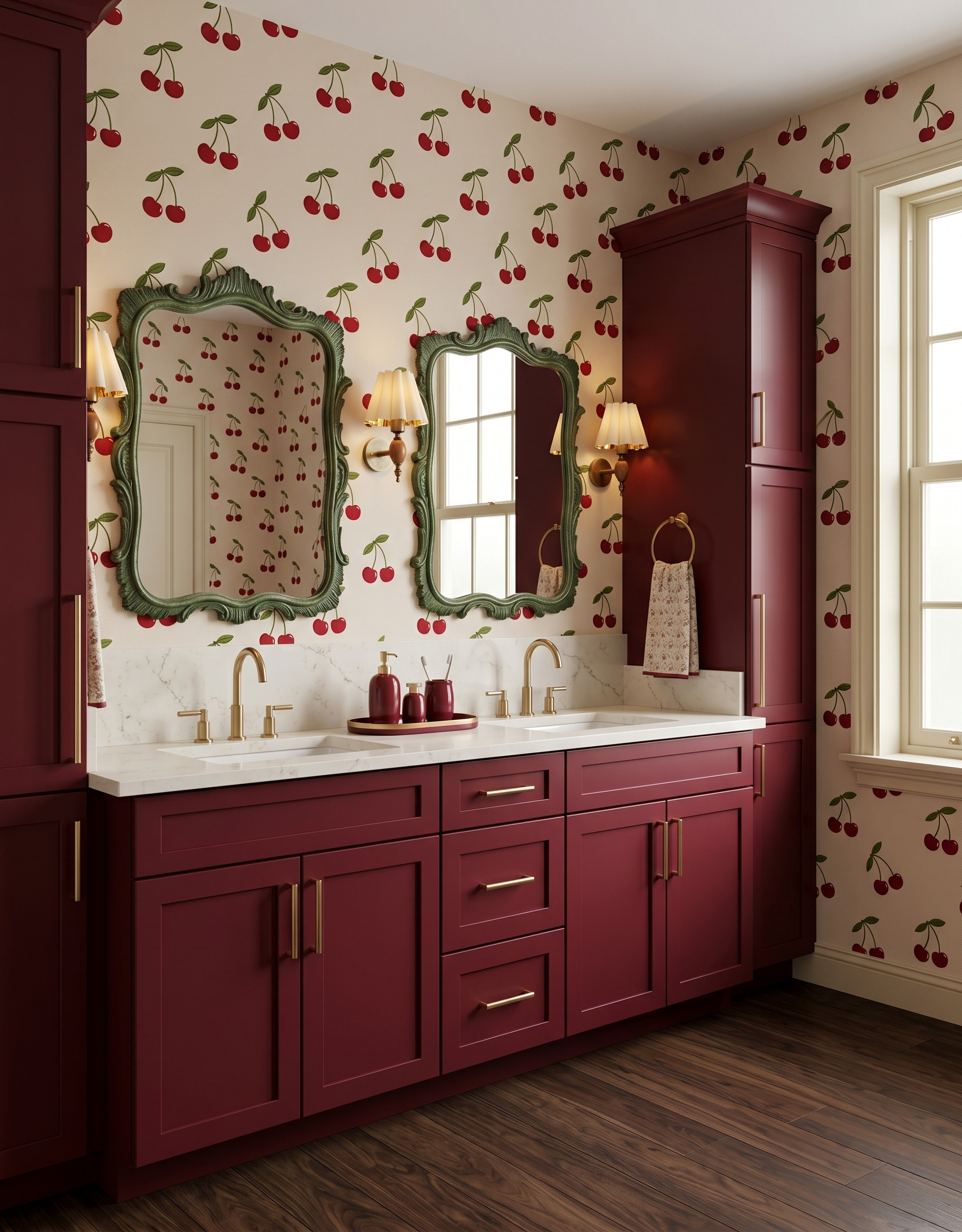
The olive scrollwork frames bring a distinct green note to the wine-colored cabinetry and cherry print. Their carved edges feel almost like decorative furniture hung on the wall. Use this idea when you want the mirror to contribute color as well as shape. Pull a quieter shade from the wallpaper, then compare it with the cabinet finish in your room's light.
7. Soften a rectangle with shaped corners
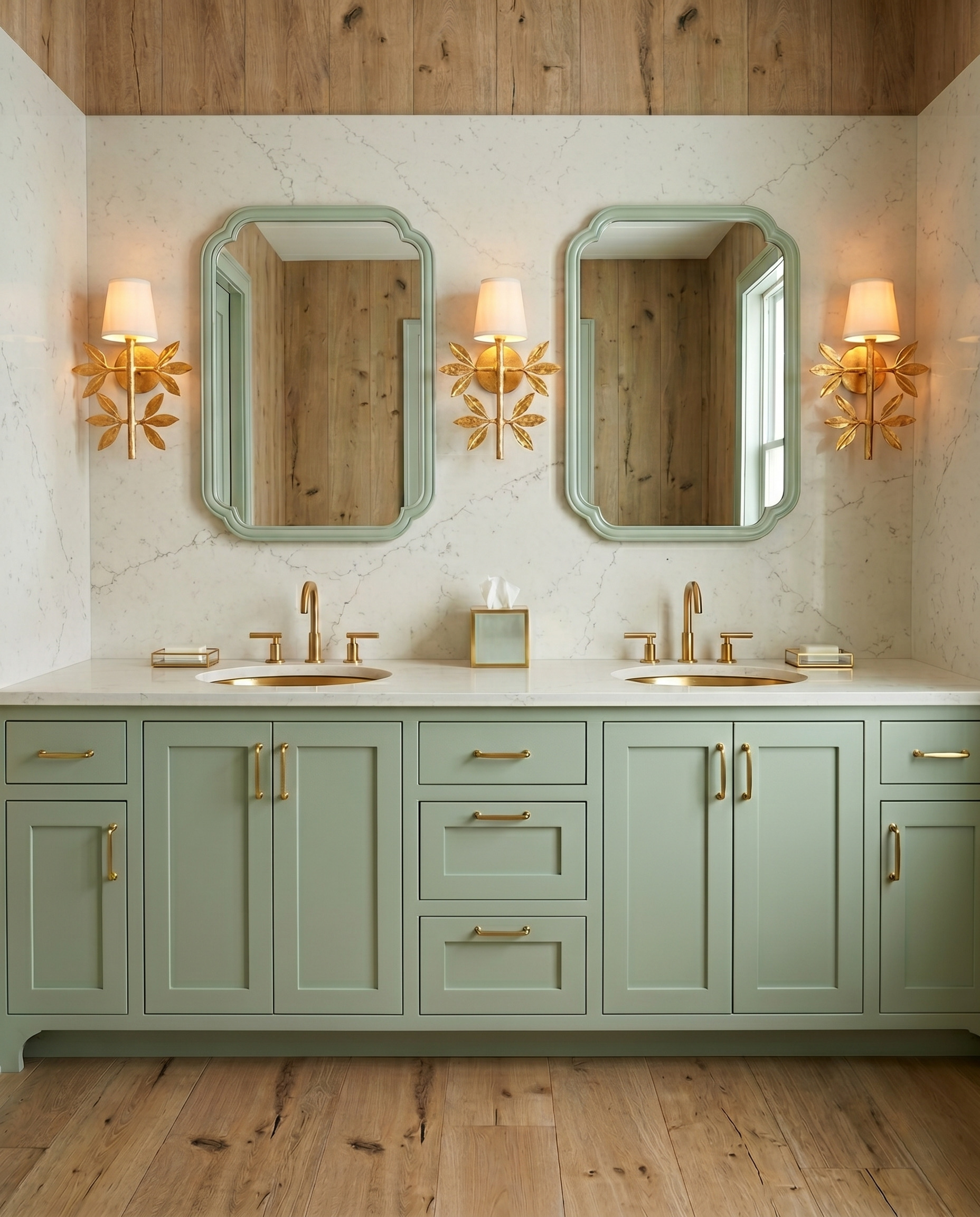
These sage mirrors keep the practical feel of a tall rectangle while adding small curves around the corners. The matching vanity makes the outline feel intentional, and the pale veined wall lets its profile show. It is a useful middle ground between a plain frame and elaborate carving. Look for a corner detail you enjoy at both close range and across the room.
8. Let a simple arch sit above scenic wallpaper
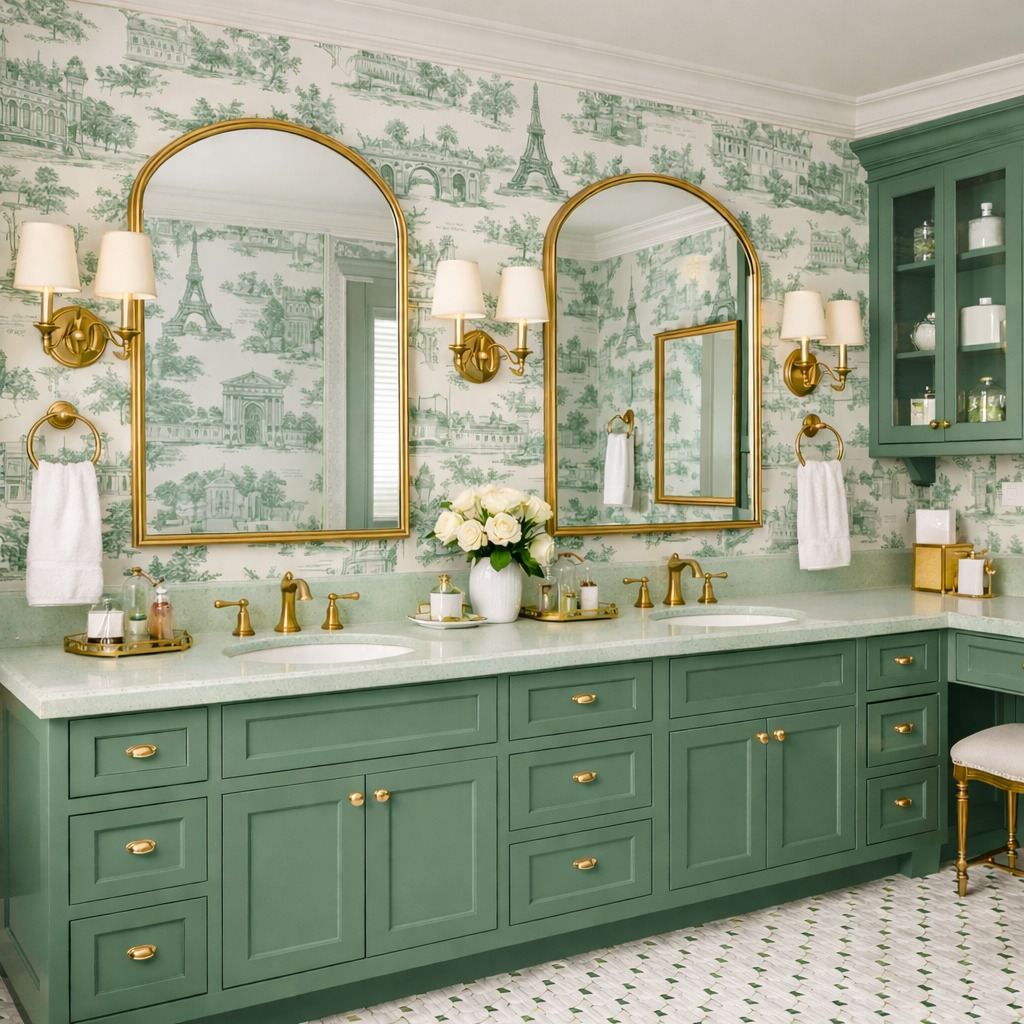
The clean gold arches give this detailed scenic wallpaper an easy shape to gather around. Their straight lower edges relate to the counter, while the curved tops soften the wall's architectural illustrations. Choose this approach when the print is already telling a story. A restrained frame can still feel decorative through its height, warm finish and relationship to the sink below.
9. Set a dark frame inside a pale cabinet surround
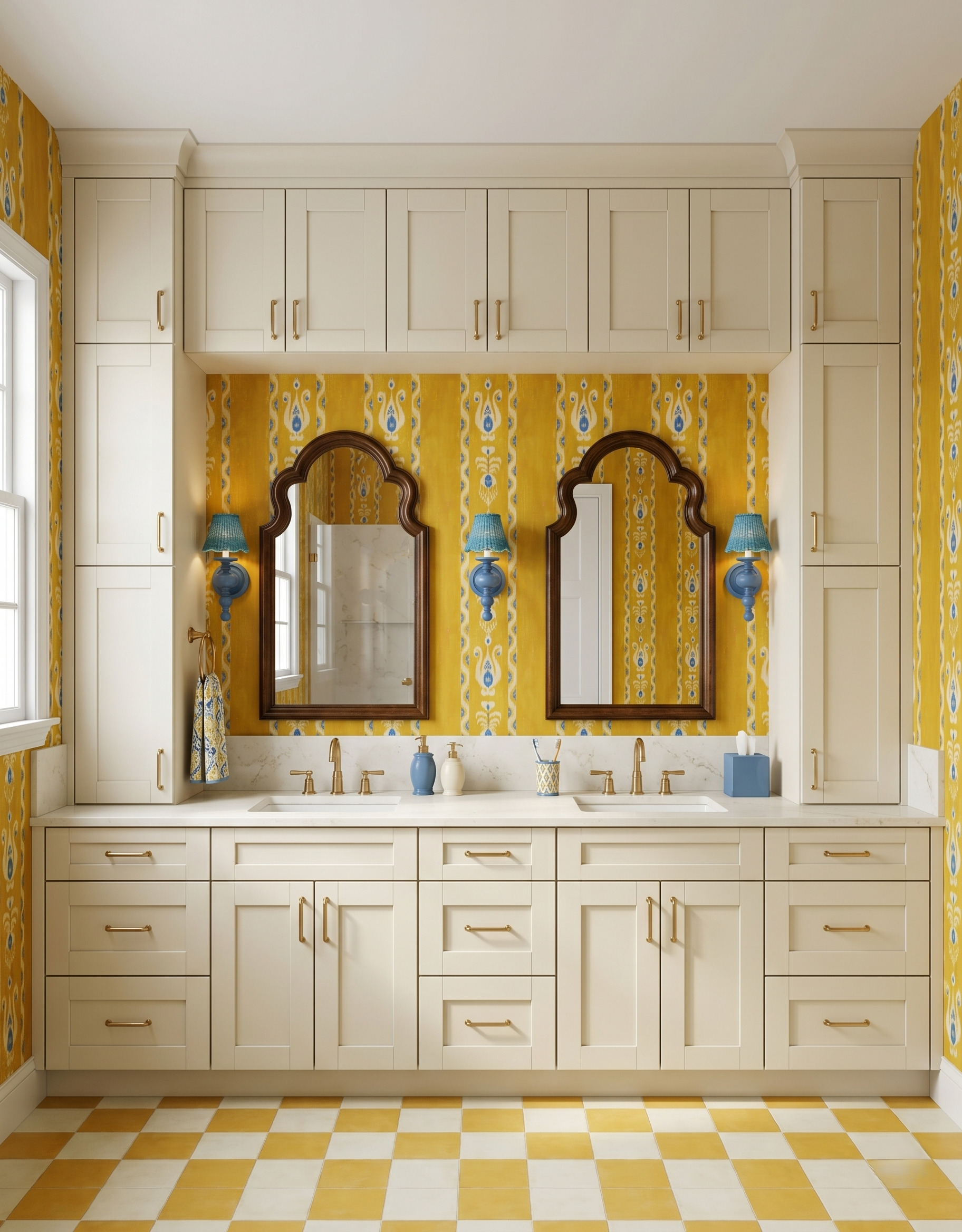
A cream cabinet surround makes these dark wood mirror frames especially noticeable. Their curved crowns sit within a band of yellow pattern, giving the eye a distinct outline inside the larger cabinet arrangement. When a vanity wall includes tall storage, compare mirror shape with the space it occupies. Leave the frame visually separate from nearby cabinet edges so its profile remains readable.
10. Make the frame's texture part of the silhouette
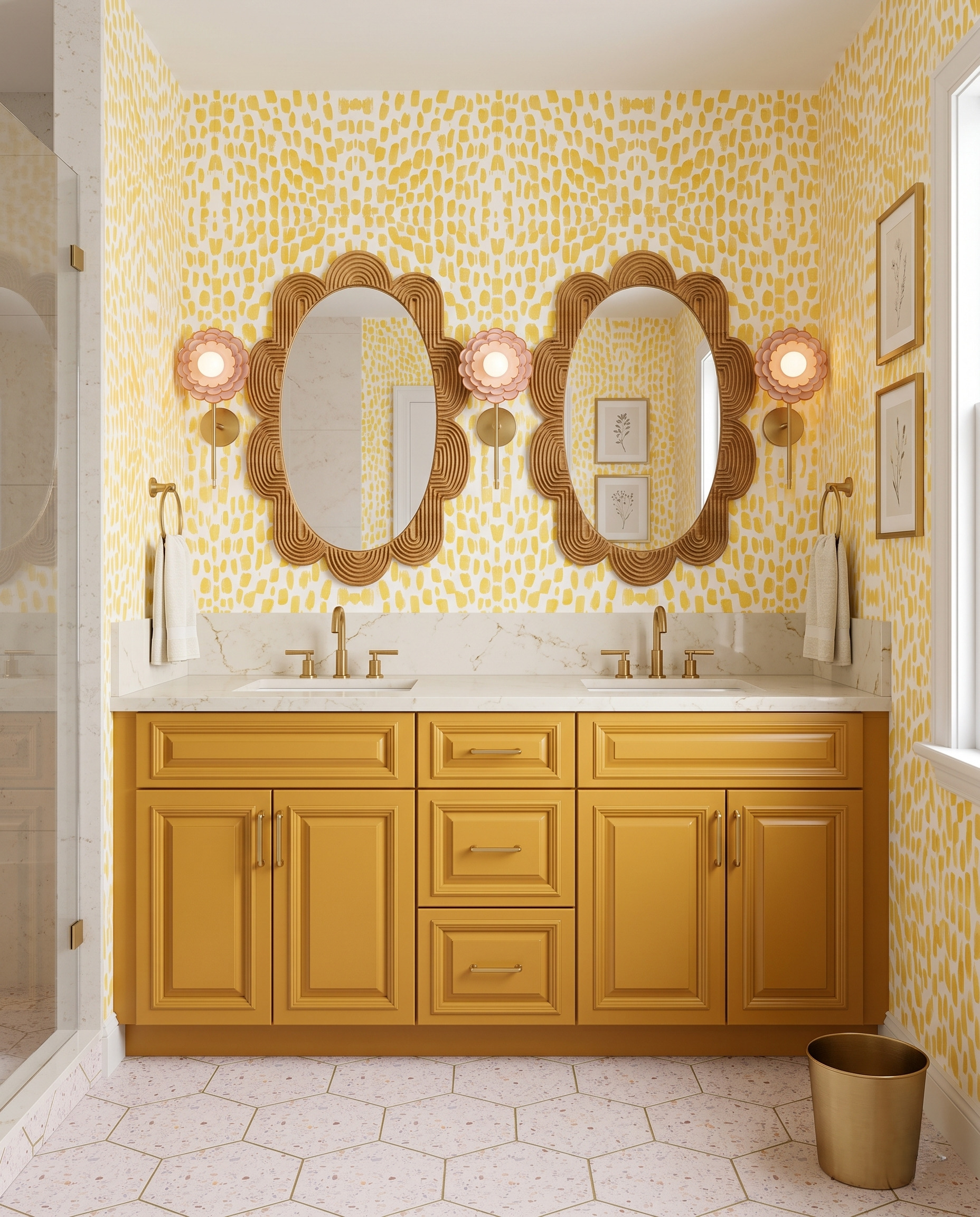
Repeated scallops turn these oval mirrors into large decorative shapes, and the ridged brown surfaces add depth inside each curve. The pink flower lights echo that rounded rhythm without repeating the same outline. If a sculptural frame catches your eye, compare its shadow and texture beside your wallpaper sample. The edge should remain recognizable even when several decorative details share the wall.
Start with the outline you want to notice
Save two or three mirror shapes that appeal to you, then compare them beside your wall pattern, cabinet finish and lighting choices. A paper outline on the wall can help you judge the frame's visual weight and its relationship to the sink. Check the actual product size and mounting requirements before making a final selection.
If your next project is a kitchen, explore StilePath, Home3's kitchen planning tool. Bring the color and material relationships you saved here into that next room.
Explore StilePath for your kitchen