
Thanksgiving kitchen ideas · Early hosting inspiration
10 Thanksgiving-Ready Eat-In Kitchens Worth Gathering In
A Thanksgiving table does not need to disappear under a centerpiece to feel special. Often the room has already done half the decorating: a strong cabinet color, a wallpaper with personality, a wood table and chairs that belong together.
These ten eat-in kitchen concepts are an early planning board for the holiday. Cream dishes, warm linens and low pumpkin groupings add a seasonal layer to very different palettes, from moss green to berry and smoky blue.
Look past the place settings for the larger idea you want to borrow. The images are design concepts, not seating charts. Before inviting everyone around a real table, test the actual chairs, dishes, serving pieces and routes through the room.
These images are AI-created design concepts using Anna's selected prompts and material references. They are inspiration, not photographs of completed projects or installation plans.
1. Set a warm table against mauve and geometry
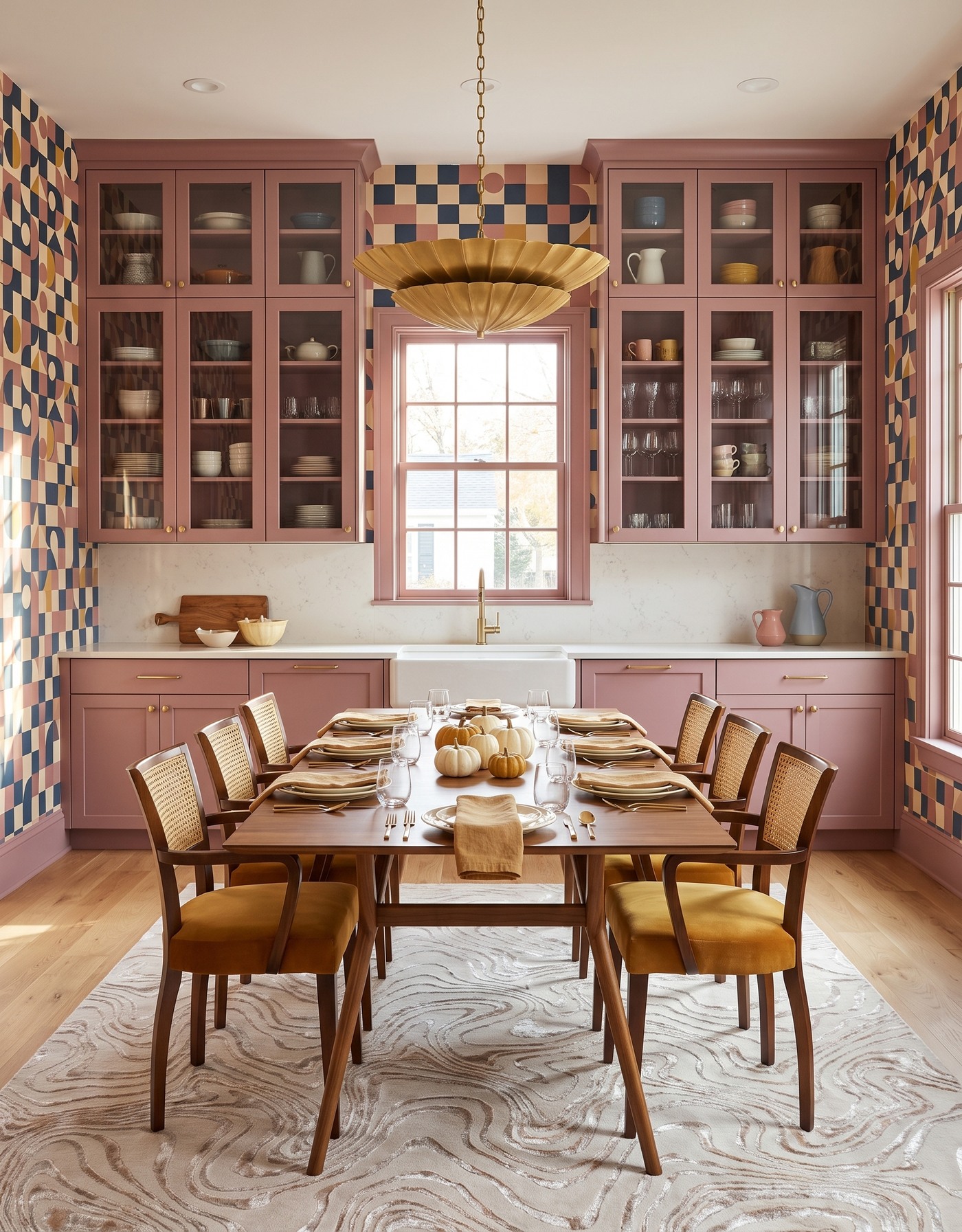
Mauve eat-in kitchen with geometric wallpaper, mustard chairs and a wood table set with cream dishes and small pumpkins.
Dusty-mauve cabinetry and a geometric wallpaper make an unexpected Thanksgiving backdrop. Mustard seats and warm wood connect to the print's ochre and terracotta notes, while cream dishes keep the table setting from adding another competing color story.
The low pumpkins are important to the mood: they suggest the season without creating a tall wall down the center. In your own room, sit in the chairs before deciding on a centerpiece. Conversation and a useful tabletop matter more than the arrangement's height in a photograph.
Try this: Pull the table's warm accents from the room, then keep the centerpiece low and compact.
2. Let moss green and warm florals feel welcoming
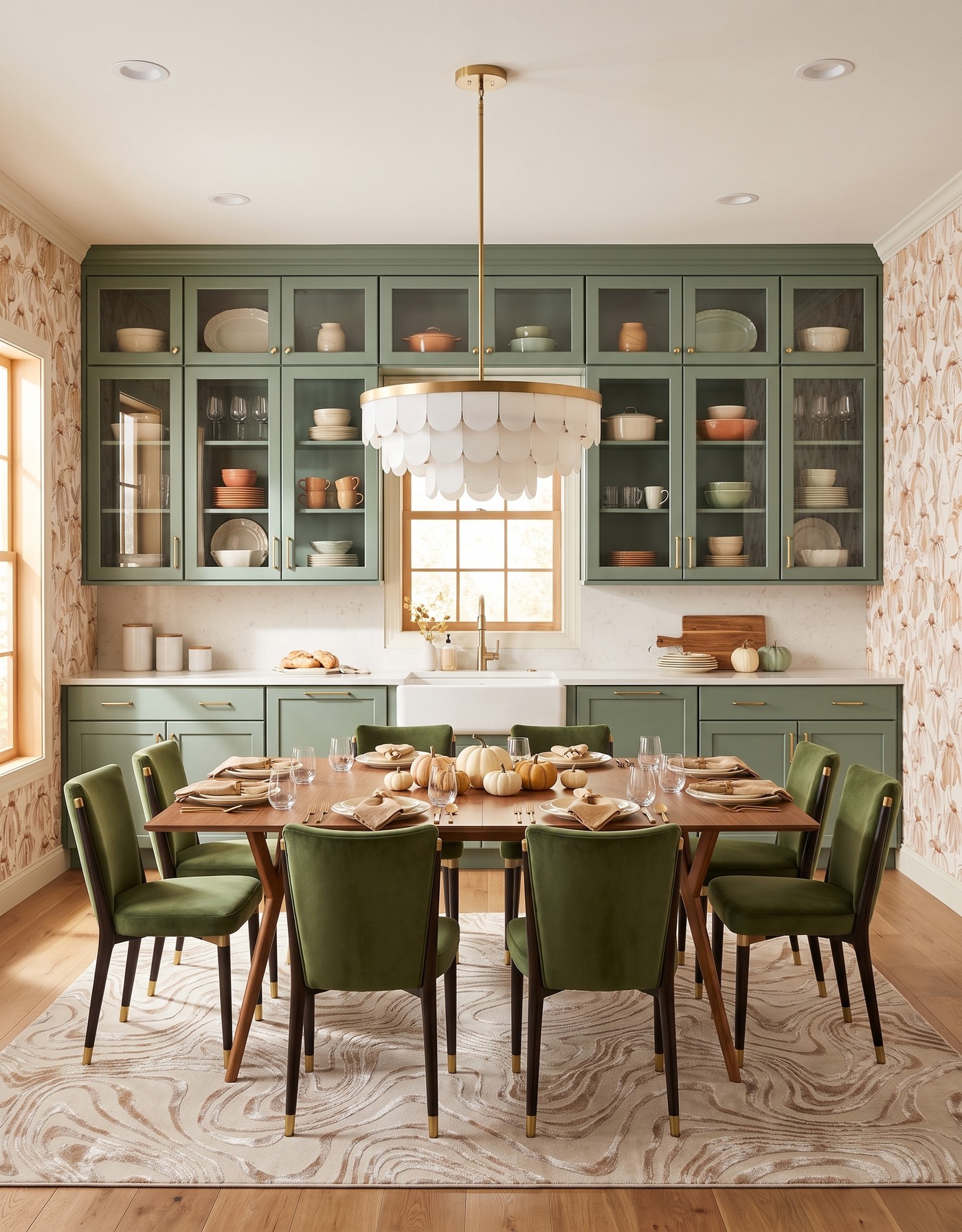
Moss-green kitchen with warm botanical wallpaper, olive chairs and a wood table set with cream plates and small pumpkins.
Moss-green cabinetry and a cream botanical give the room a relaxed, earthy foundation. Olive seating keeps the green family connected, while warm linen and pale dishes make the table feel dressed without looking separate from the kitchen.
Use this as a reason to edit the holiday shopping list. If your room already has a coherent palette, plain dishes and a small seasonal accent may be all it needs. The goal is a table that belongs to the room, not a second decorating scheme placed inside it.
Try this: Build the holiday setting from the room's existing colors before introducing new ones.
3. Give berry cabinets a tailored plaid partner
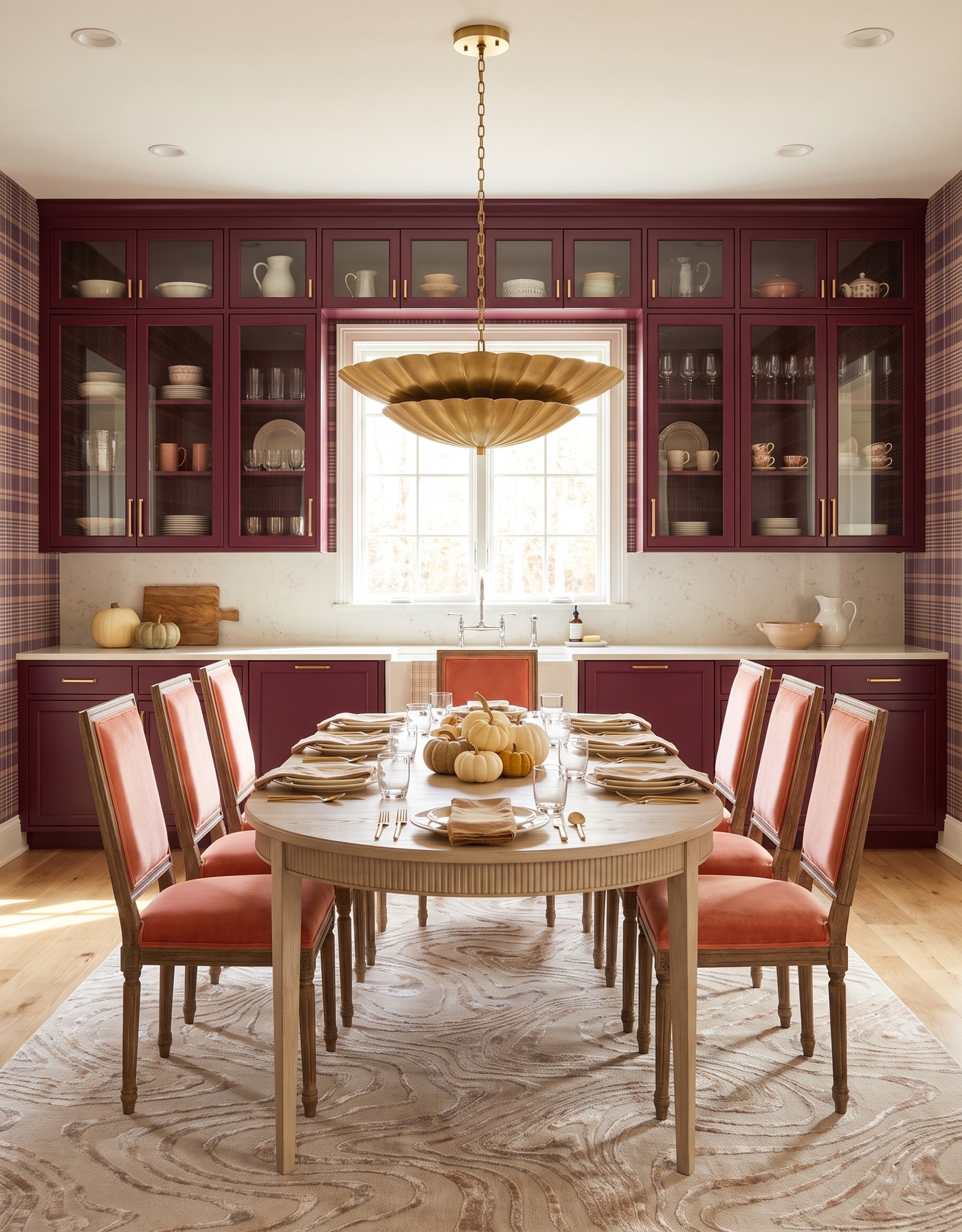
Berry kitchen with plum plaid, coral chairs and a pale oval table set for an autumn gathering.
Berry cabinetry and plum plaid create a richer Thanksgiving mood. Softer chair color and a pale table surface keep the dining area from becoming too dark, while the cream place settings provide a clear, repeated rhythm.
Repetition is useful when the room has several expressive finishes. Similar dishes, napkins and glasses create order across the table. They do not have to be elaborate; their consistency is what lets the more adventurous cabinet-and-wallpaper combination remain the focal point.
Try this: Use repeated, simple place settings to bring order to a richly colored room.
4. Make natural oak feel dressed for dinner
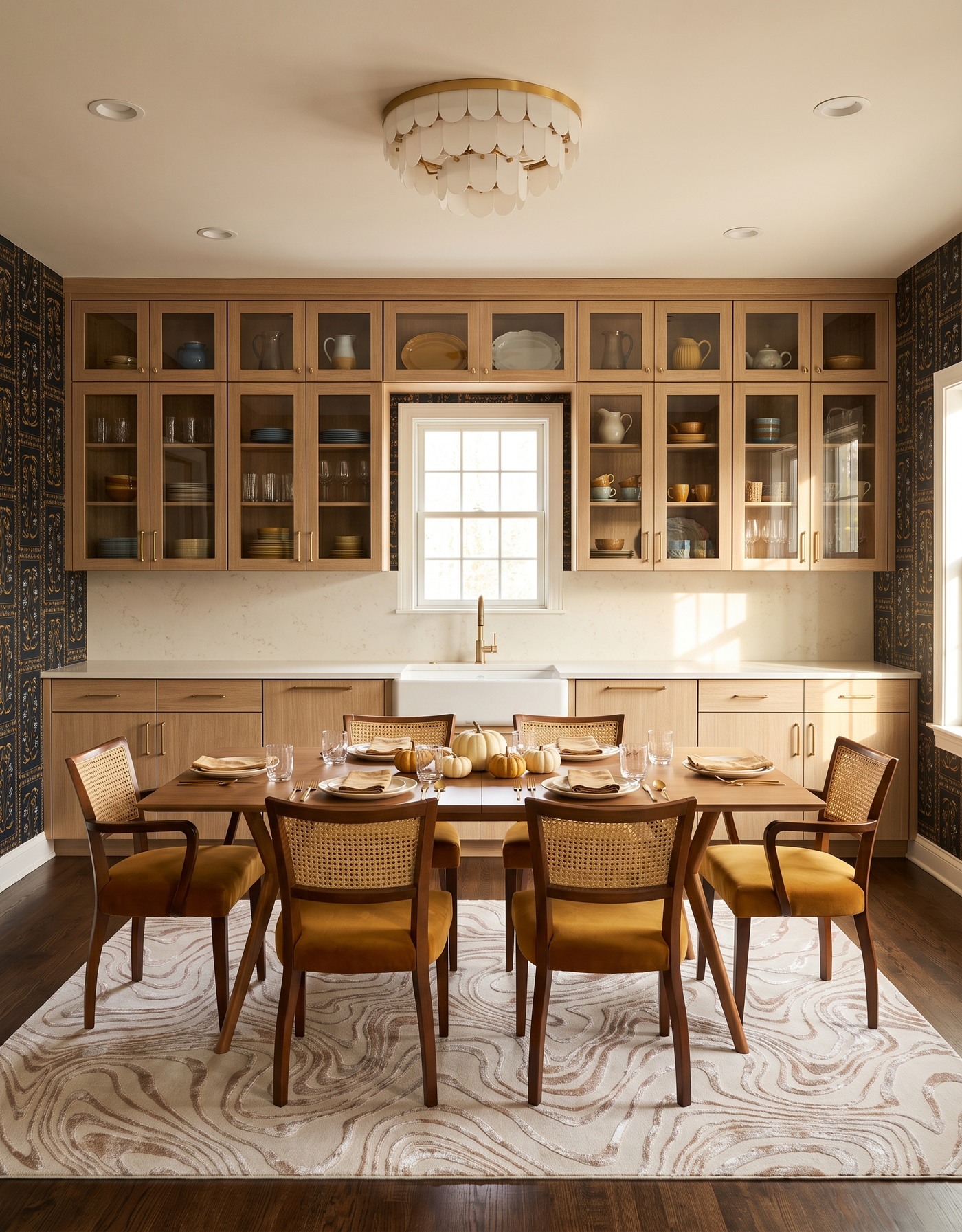
Natural-oak kitchen with dark botanical walls, mustard cane-back chairs and a wood table with a low pumpkin centerpiece.
Natural-oak cabinetry, dark botanical wallpaper and warm dining furniture give this room a layered feel. The wood stays visible as part of the design, with the pale dishes and linens adding contrast rather than concealing the entire table.
You can dress a wood table without covering every inch of it. Decide which part of the material you want to see, then arrange the table around that. Test the actual serving pieces too; a beautiful uncovered surface still needs a practical plan for the meal.
Try this: Let the wood remain part of the table design and plan the serving pieces alongside the decor.
5. Balance golden cabinetry with blue dining details
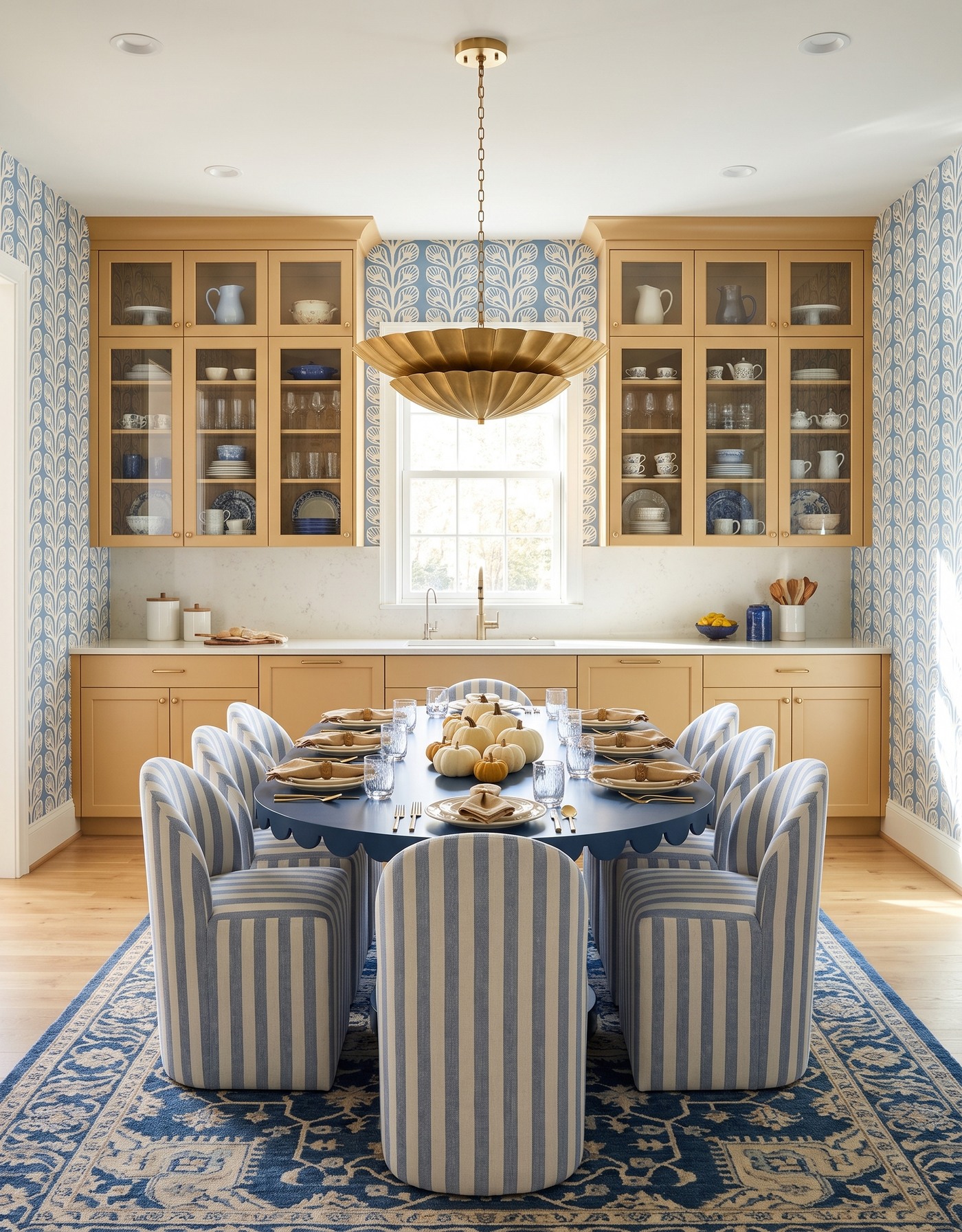
Golden kitchen with blue leafy wallpaper, striped chairs and a blue scalloped table set with cream dishes.
Golden cabinets and blue leafy wallpaper give Thanksgiving a brighter interpretation. Blue dining furniture reinforces the cool side of the palette, while the cream dishes and warm linens bridge the contrast.
A colorful room does not require equally colorful plates. Keeping the tabletop comparatively neutral makes the cabinetry, wallpaper and chairs easier to appreciate. If you want one extra accent, choose it from the room's existing palette rather than adding another unrelated color.
Try this: Use neutral tableware to give a bold warm-cool room palette breathing space.
6. Bring warmth to navy with wood and linen
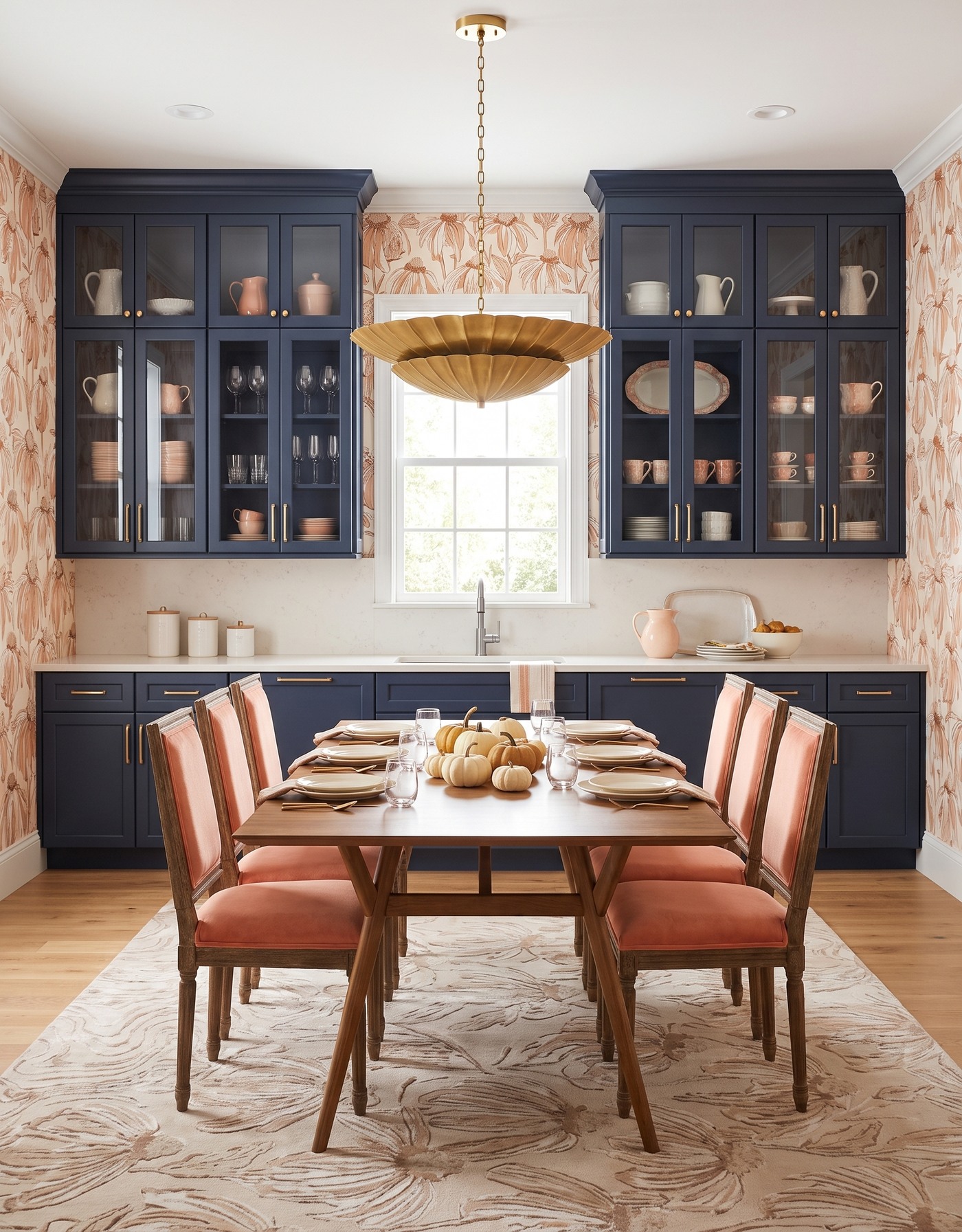
Navy kitchen with warm botanical walls, coral chairs and a wood table set with pale plates, linen and pumpkins.
Navy cabinets provide the depth; warm botanical wallpaper and dining details provide the softness. The table setting follows the same logic, with pale dishes and warm linen standing out against the wood without feeling disconnected from the room.
This is a flexible approach for a kitchen that is already blue. You do not need to force orange into every detail to make it feel autumnal. Texture, warm neutrals and one small pumpkin grouping can shift the mood while respecting the original design.
Try this: Warm up a blue kitchen through linen, wood and a restrained seasonal centerpiece.
7. Give burnt orange a quieter holiday table
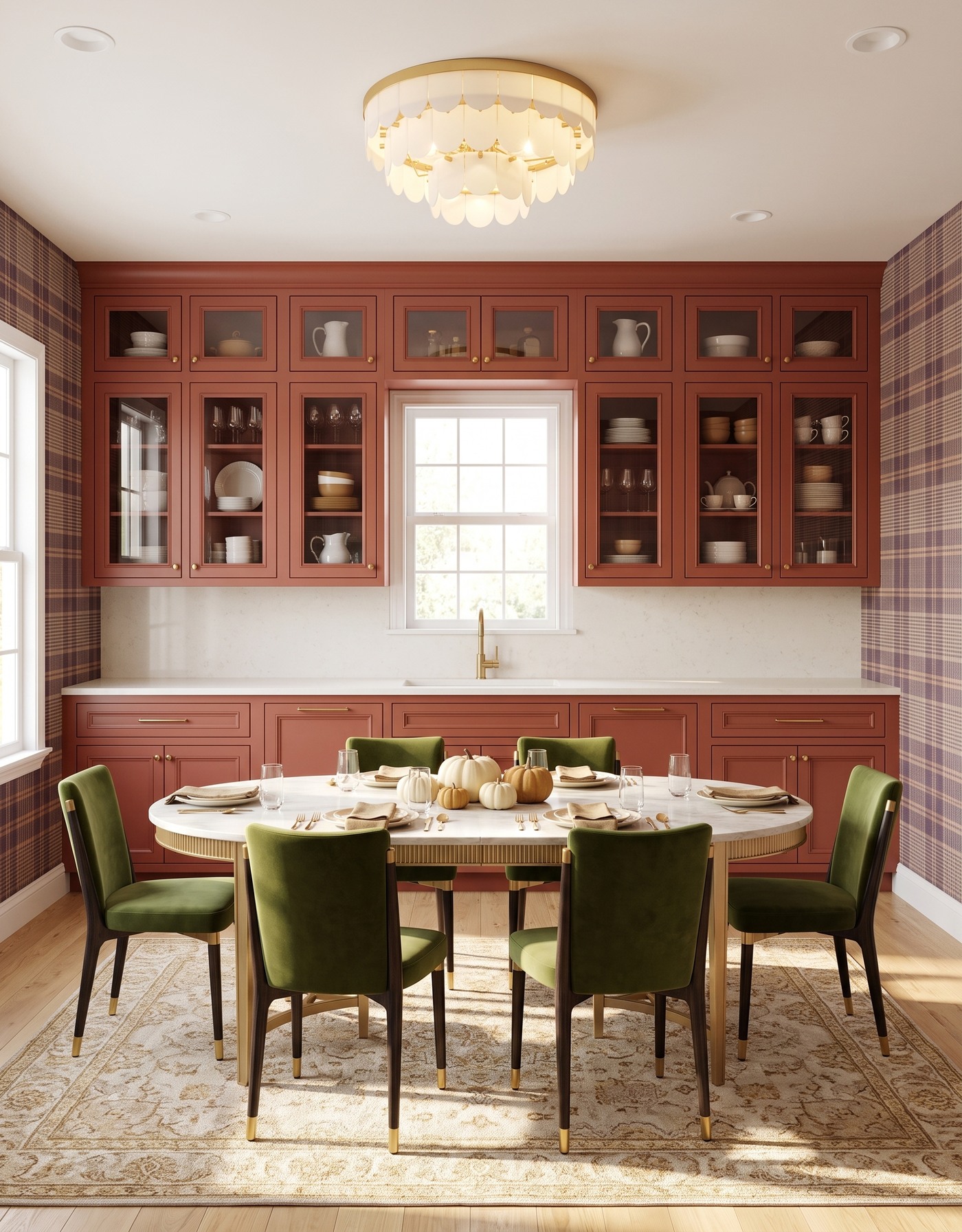
Burnt-orange kitchen with plum plaid, olive chairs and a pale oval table with simple autumn place settings.
Burnt orange cabinetry and plum plaid make a strong seasonal statement on their own. Olive seating adds a grounded partner, while the lighter dishes and napkins keep the table from becoming another large block of saturated color.
The practical styling move is subtraction. Before adding a special runner, patterned plates or extra objects, look at what the room already supplies. Sometimes the most convincing holiday table is the one that lets the cabinetry and wallpaper do more of the decorating.
Try this: When permanent finishes are expressive, simplify the holiday layer rather than matching their intensity.
8. Make black and gold feel generous, not severe
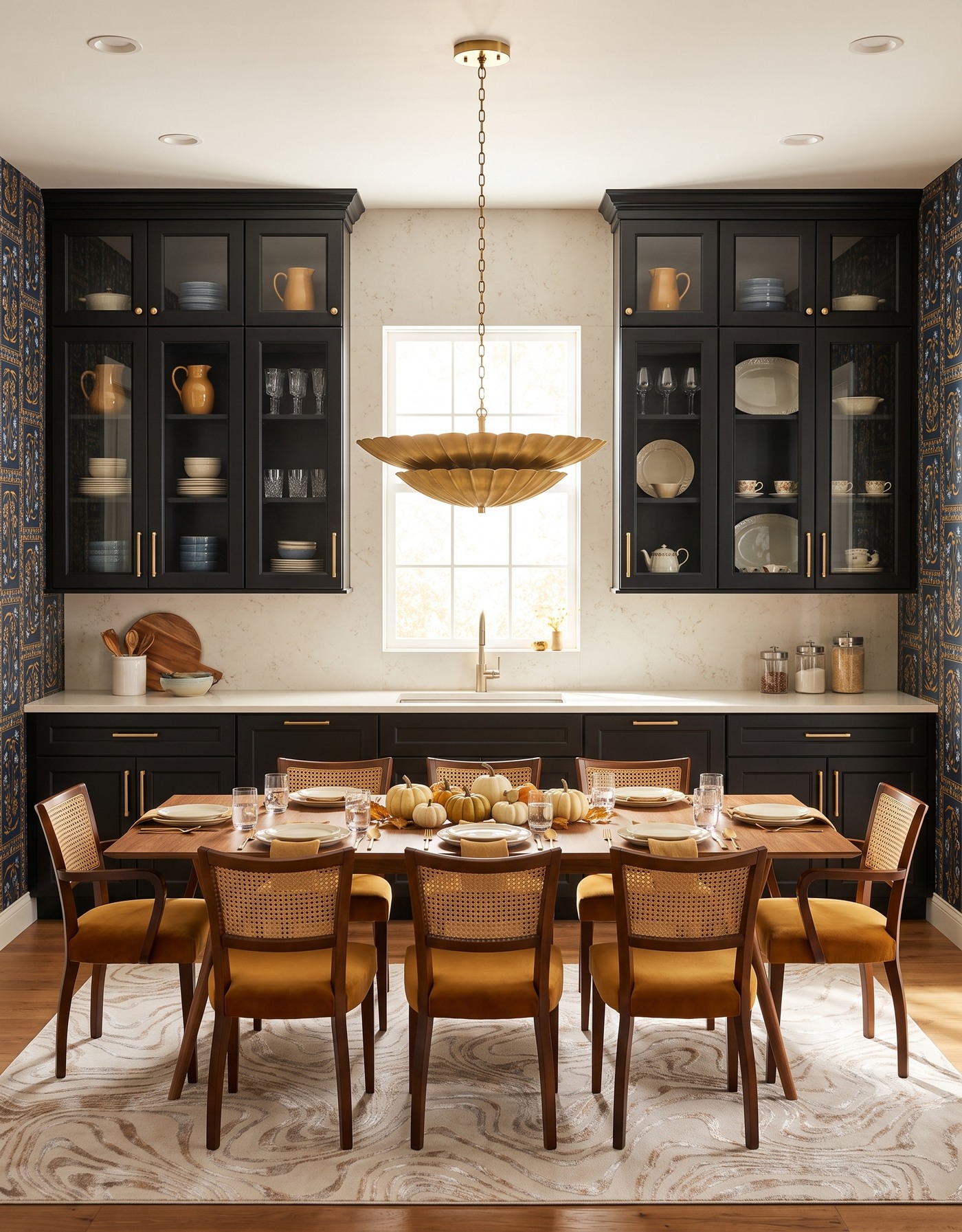
Black kitchen with dark botanical wallpaper, mustard cane-back chairs and cream place settings around low pumpkins.
Black cabinetry, a dark botanical and golden details create a more dramatic gathering space. Warm wood and mustard seating soften that dark frame, with cream place settings making the table feel lighter and more inviting.
The image is a mood reference, not proof that the room's lighting will work for dinner. Check how the actual space looks after sunset, including faces across the table and the working counter nearby. Decorative drama should still leave the room comfortable to use.
Try this: Test a dark dining palette in evening light before settling the final lighting and table details.
9. Try smoky blue with a graphic autumn backdrop
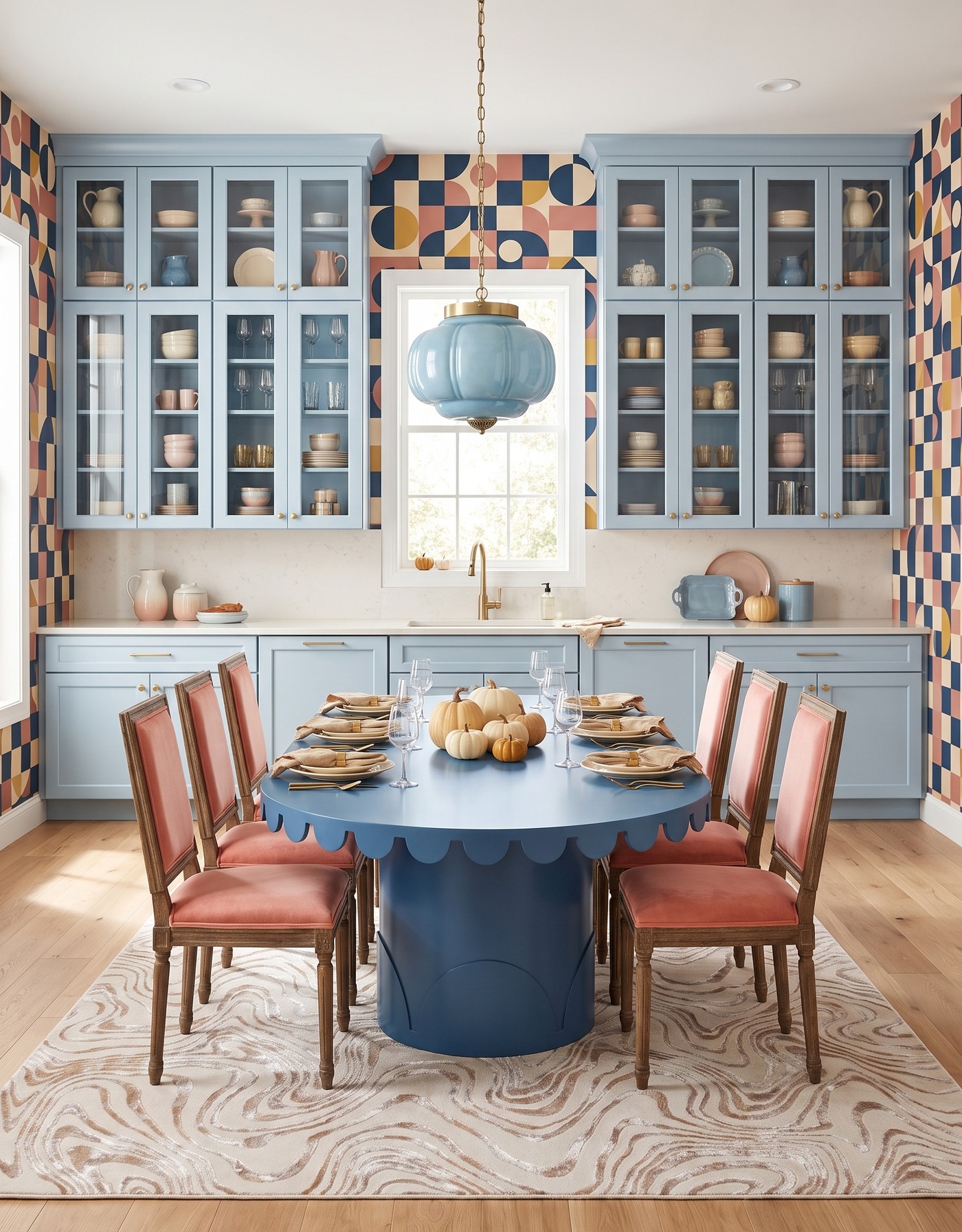
Smoky-blue kitchen with geometric wallpaper, coral chairs and a blue scalloped table set with cream plates.
Smoky-blue cabinets take the edge off a bold geometric wallpaper. Warmer chair color picks up the print's terracotta family, and the pale tableware provides a quieter layer between the pattern and the seasonal centerpiece.
A smaller dining table needs especially disciplined styling. Lay out the real place settings first, then see what remains available in the middle. The centerpiece should fit the usable table, not determine how closely people have to sit around it.
Try this: Place the real dishes and glasses first; choose the centerpiece from the space that remains.
10. Close with berry cabinets and warm botanical walls
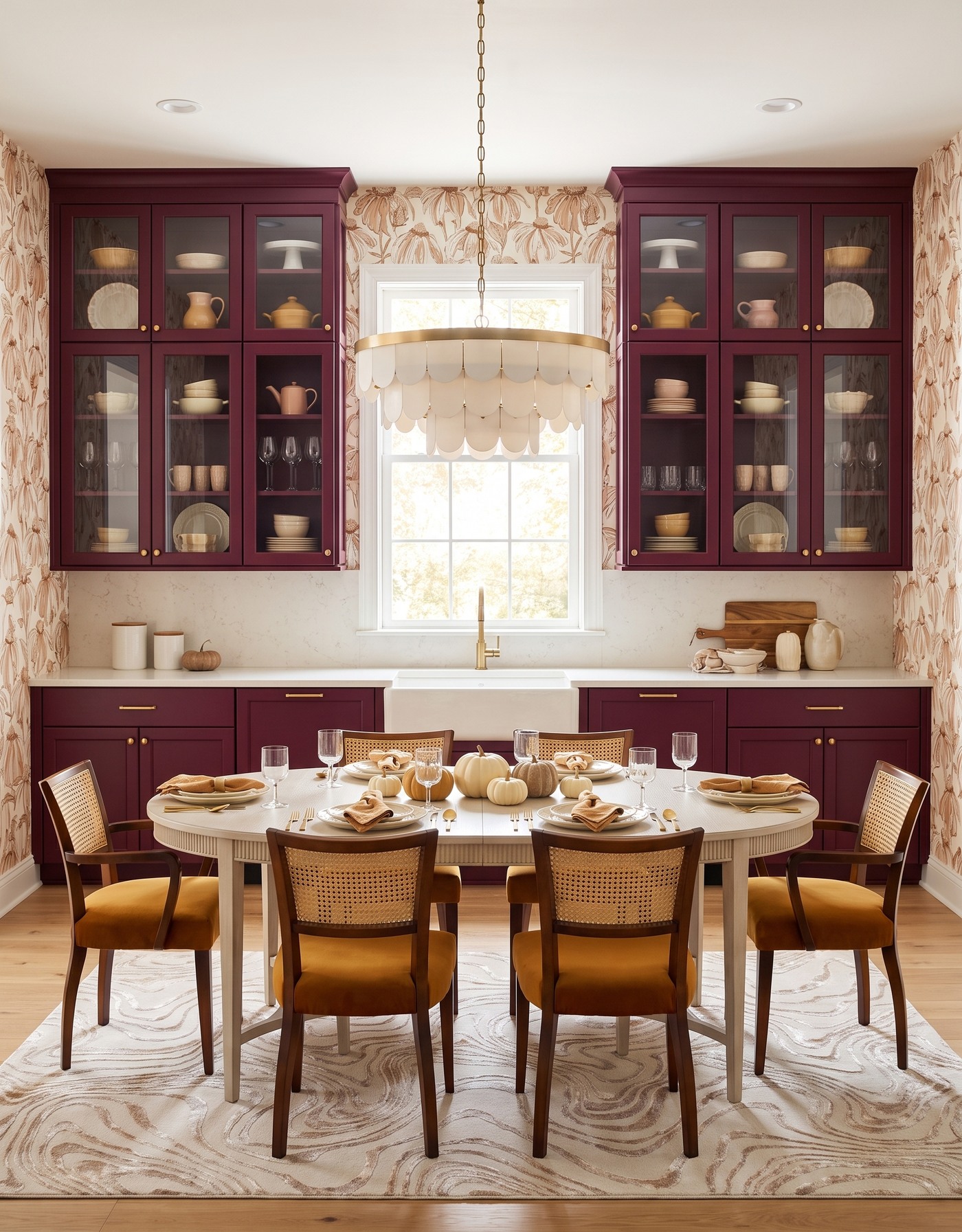
Berry kitchen with cream-and-camel botanical walls, mustard cane-back chairs and a pale table with pumpkins and linen.
Berry cabinetry and a cream botanical give the final room a warm, layered character. Mustard seating and wood connect the deeper cabinet color to the softer walls, while the neutral place settings keep the dining area cohesive.
This combination is worth saving for its balance rather than any single object. One deep color, one lighter pattern, warm furniture and a calm tabletop make a useful recipe. Adapt that relationship to the pieces you own before trying to recreate the entire scene.
Try this: Translate the room into a simple material recipe, then build the holiday setting around your own furniture.
Plan the gathering before styling the table
1. Test the actual guest seating with chairs pulled out, not only tucked neatly under the table.
2. Keep routes to cabinets, appliances and exits clear in the real layout.
3. Set out plates, glasses and serving pieces before choosing the centerpiece size.
4. Keep seasonal objects low enough to preserve comfortable sightlines across the table.
5. Choose one or two colors from the room for linens and accessories, then edit the rest.
Save the table that feels like a place your people would want to linger. Then separate the lasting design decisions from the temporary holiday layer. The room should work on an ordinary Tuesday; Thanksgiving styling is the small extra that makes it feel ready to gather.
Considering a kitchen redesign before future gatherings? Explore Home3's planning approach and start with the room's layout and everyday needs.
Explore kitchen planning