
Breakfast nook ideas · Early fall inspiration
10 Cozy Breakfast Nooks for Slow Fall Mornings
Some rooms make you want to rush out the door. A good breakfast nook does the opposite. It gives the morning a place to land: a chair you want to pull out, a table that feels like part of the room and a view that is a little more interesting than another blank wall.
These ten concepts put a dining spot at the end of a cabinet-lined room. The fall feeling comes from plaid, warm wood, deep colors and soft-looking seating, with enough daylight and pale surfaces to keep the mood fresh.
Use them as palette and furniture inspiration, not measured layouts. A nook only works when people can reach their seats, move the chairs and use the surrounding cabinets. That practical part should lead the real plan.
These images are AI-created design concepts using Anna's selected prompts and material references. They are inspiration, not photographs of completed projects or installation plans.
1. Pair plum plaid with a blue pedestal table
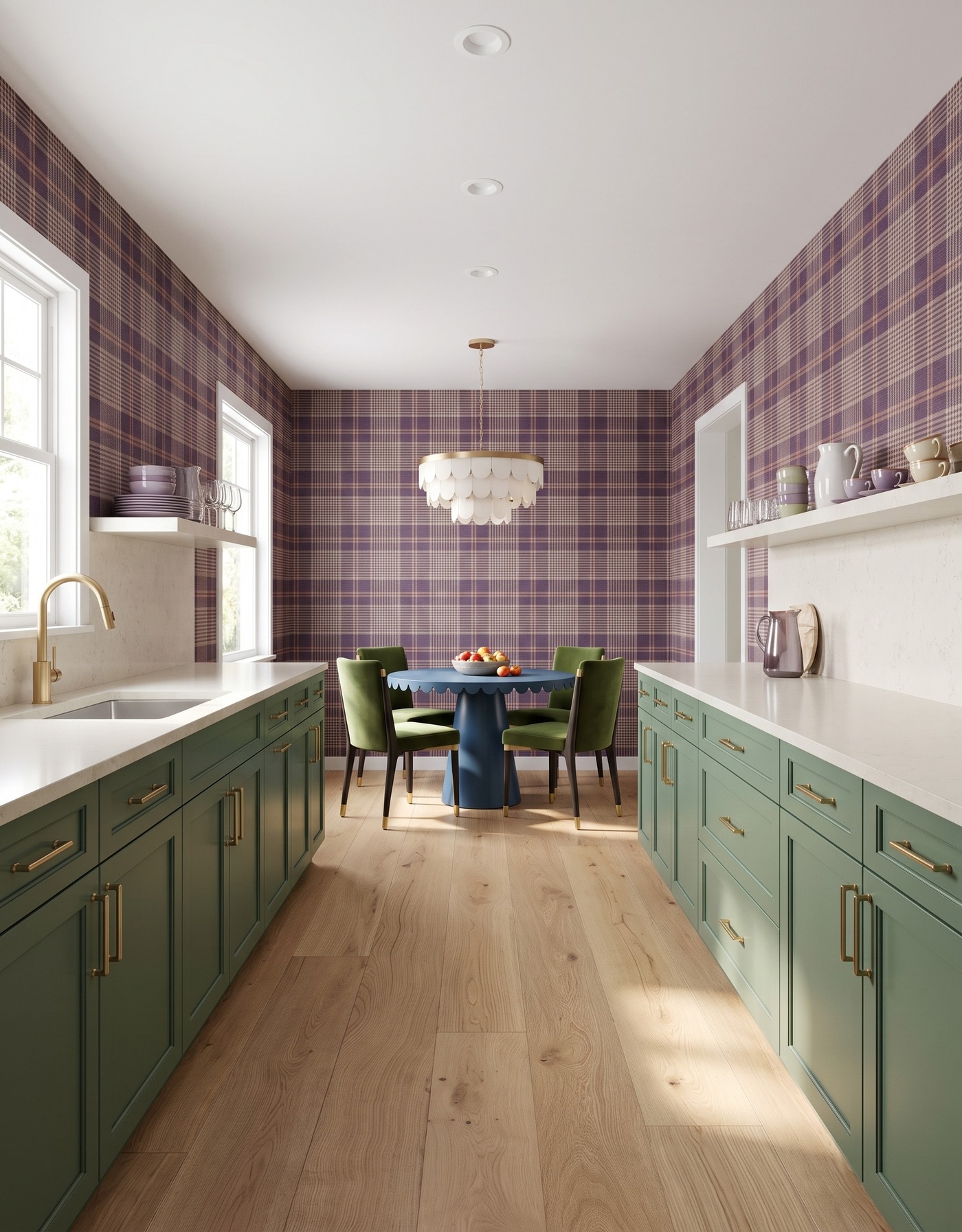
Moss-green galley breakfast nook with plum plaid walls, olive chairs and a blue scalloped pedestal table.
Plum plaid gives this nook a tailored backdrop, while moss-green cabinetry and olive chairs keep the room grounded. The blue pedestal table is the unexpected move: it adds a clear focal point without introducing another busy pattern.
The scalloped table edge and pale light soften the repeated lines around them. That is the relationship worth borrowing. When the walls are full of straight lines, a curved table or a more sculptural light can make the furniture feel less like an extension of the cabinetry.
Try this: Balance a linear wallpaper with one rounded furniture shape in a contrasting color.
2. Let warm wood and camel florals do the work
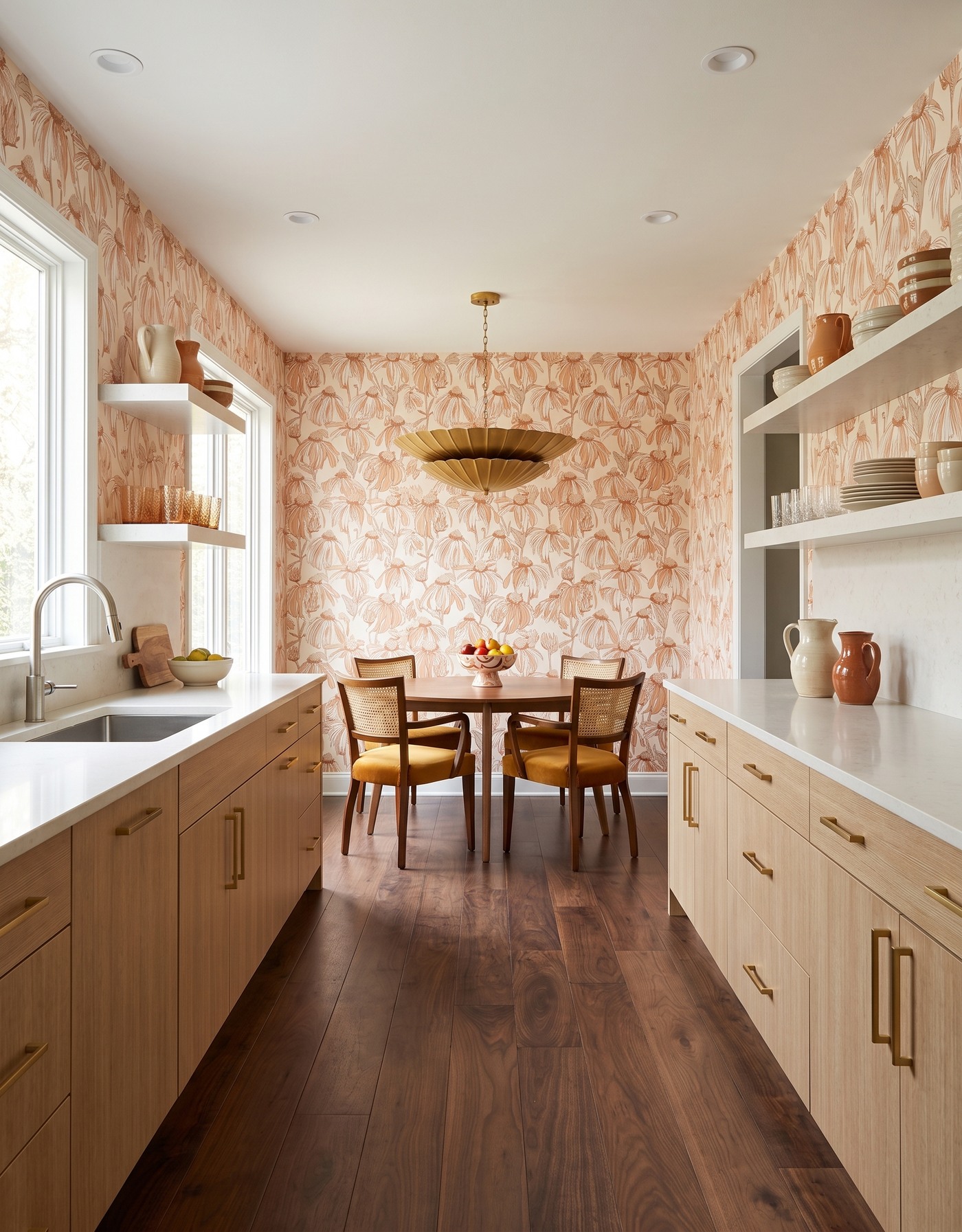
Natural-oak breakfast nook with warm botanical walls, a round wood table and mustard cane-back chairs.
Natural-oak cabinetry and a warm botanical print create a quieter autumn mood. The dining furniture supplies another layer of wood and woven texture, while the darker floor gives the room a firmer visual base.
Several wood tones can work together without matching. The useful question is whether they have a clear relationship in warmth and value. Put the cabinet, table and floor samples side by side, then check whether each remains readable rather than disappearing into the next.
Try this: Mix wood tones deliberately, keeping enough contrast to distinguish cabinets, table and floor.
3. Give golden cabinets a moody breakfast backdrop
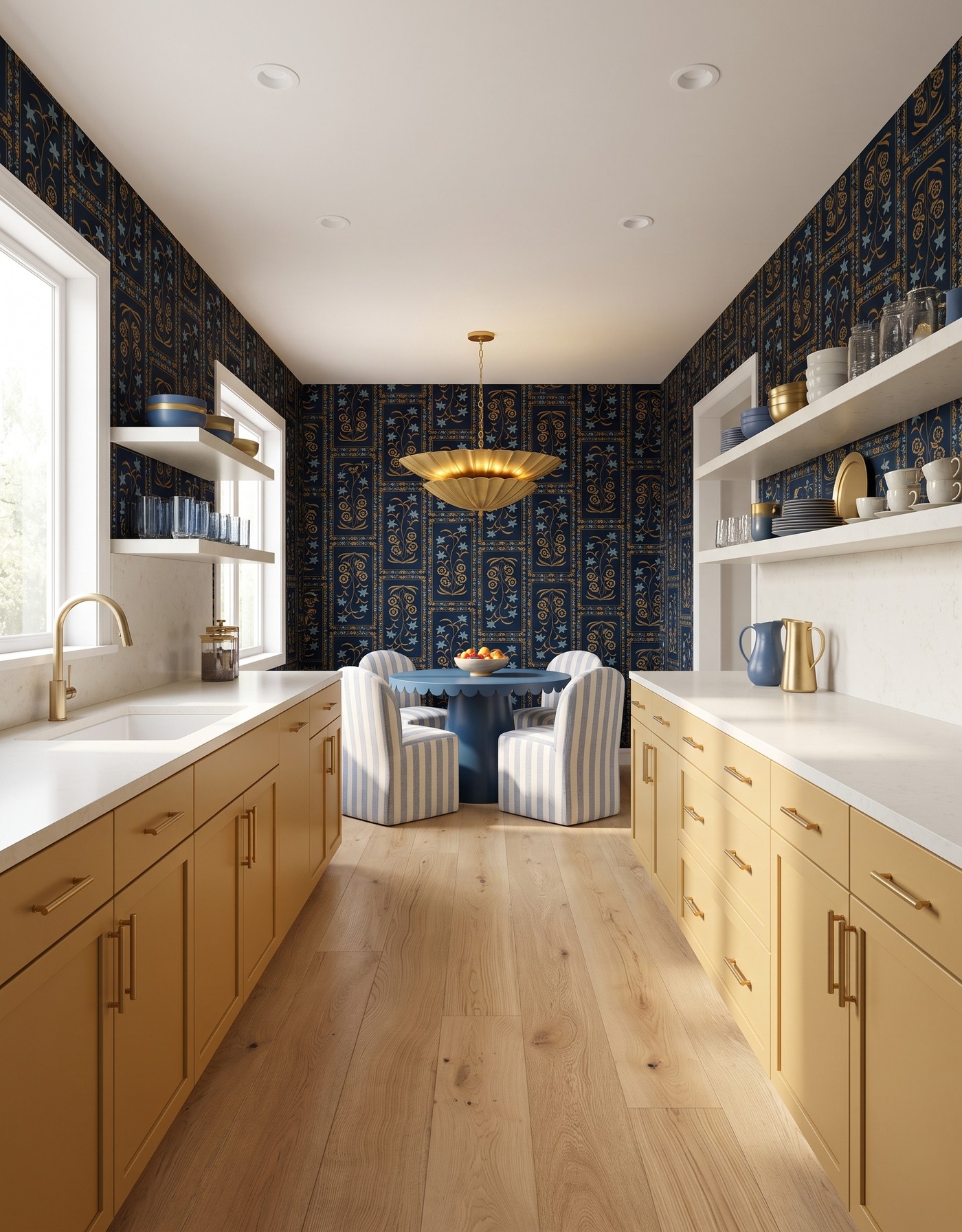
Golden galley cabinets with dark botanical wallpaper, a round blue scalloped table and striped blue-and-cream chairs.
Golden cabinetry beside a dark botanical turns a small dining moment into the main event. Blue furniture details connect to the cooler notes in the wallpaper, giving all that warmth a partner rather than simply adding more yellow.
A dark print can feel enveloping without requiring every surface to be dark. Keep the counter and other supporting planes comparatively light. The contrast helps the cabinet color and the small details in the wallpaper stay visible.
Try this: Use a light supporting surface between golden cabinetry and a dark patterned wall.
4. Make berry and blue feel relaxed
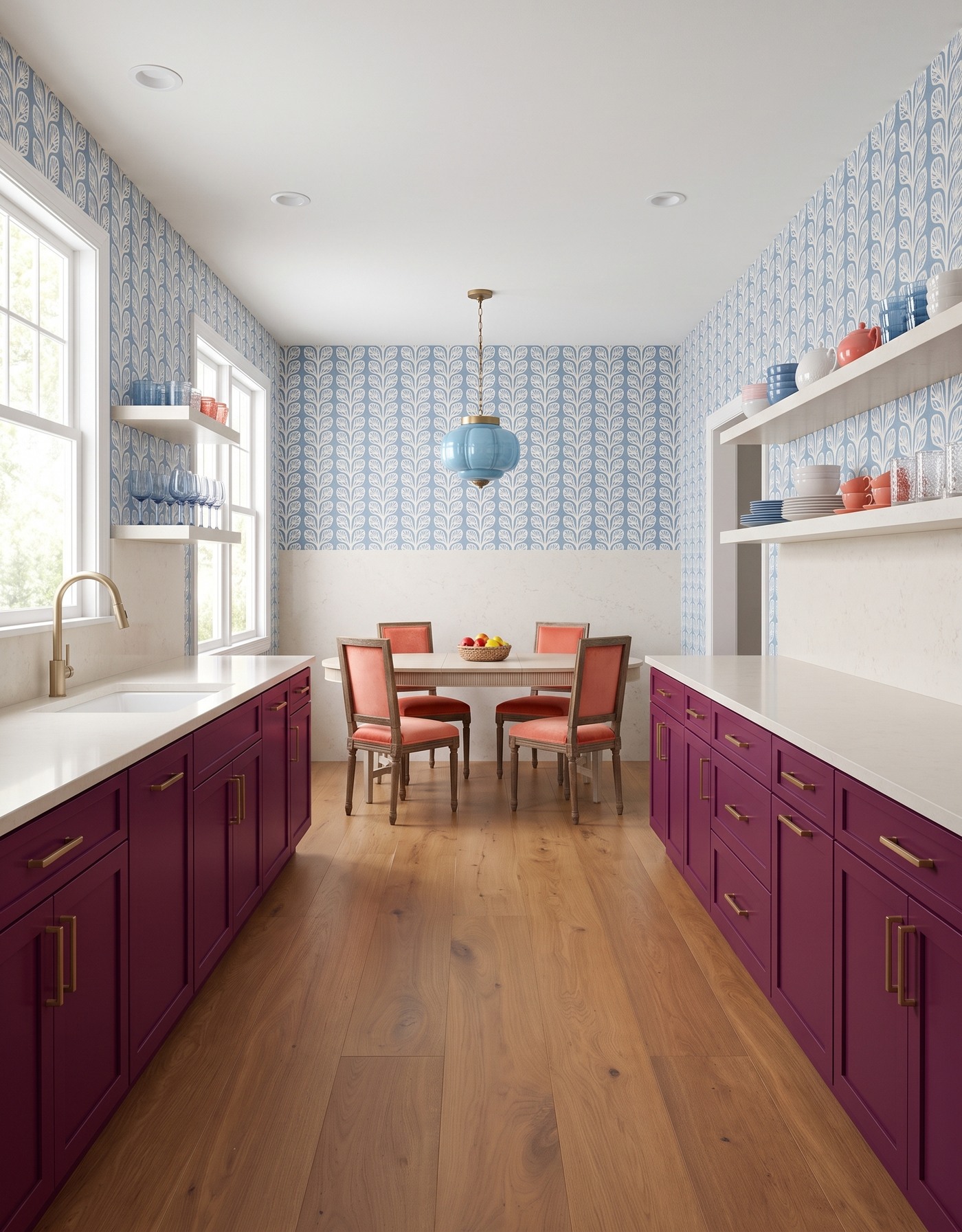
Berry galley cabinets with blue leafy wallpaper, coral chairs and a pale oval breakfast table.
Berry cabinetry brings depth, and blue leafy wallpaper gives it a cooler rhythm. Softer upholstery and a pale table keep the breakfast setting from feeling too formal for an ordinary morning. The palette is expressive, but the furniture does not have to shout.
This is an easy scheme to overcomplicate with additional patterns. If the wall already has a strong repeat, begin with simpler chair fabric. You can still have a memorable room by changing color, texture and silhouette instead of making every surface patterned.
Try this: Let a strong wall repeat carry the pattern while the chairs contribute softer color and texture.
5. Wake up dusty mauve with peach daisies
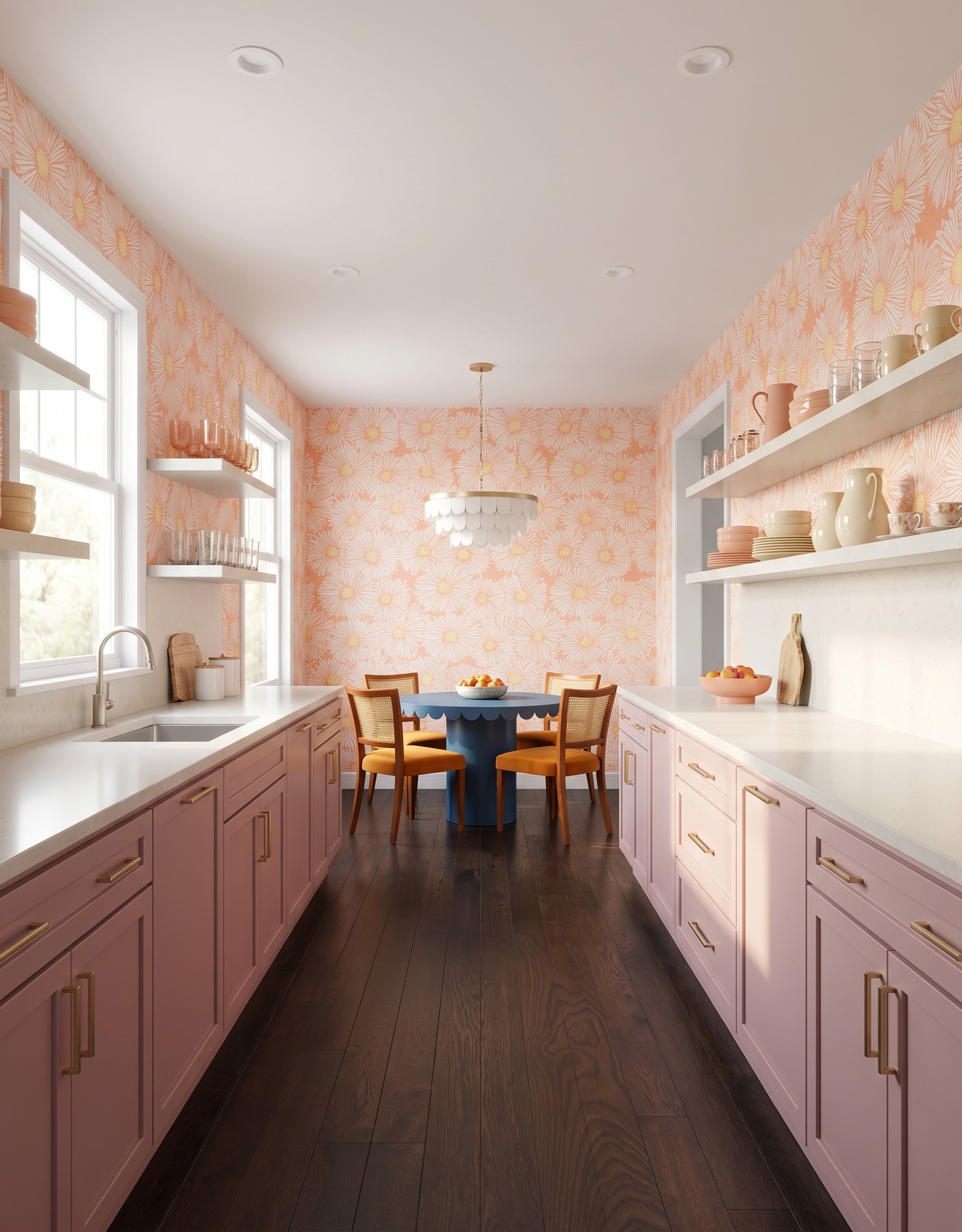
Mauve cabinets and peach daisy wallpaper around a blue round table and mustard cane-back chairs.
Dusty mauve cabinetry gives peach daisies a more grounded setting. The floral is cheerful, but the softened cabinet color keeps the room from turning sugary. A blue table supplies a cool note, with warmer seating helping bridge the colors.
The darker floor matters here because it gives the pale and mid-tone surfaces some definition. When a room contains several gentle colors, one deeper element can make the entire palette feel more deliberate without making the room gloomy.
Try this: Anchor a soft, colorful nook with one deeper surface underfoot.
6. Use navy as the calm beneath a geometric print
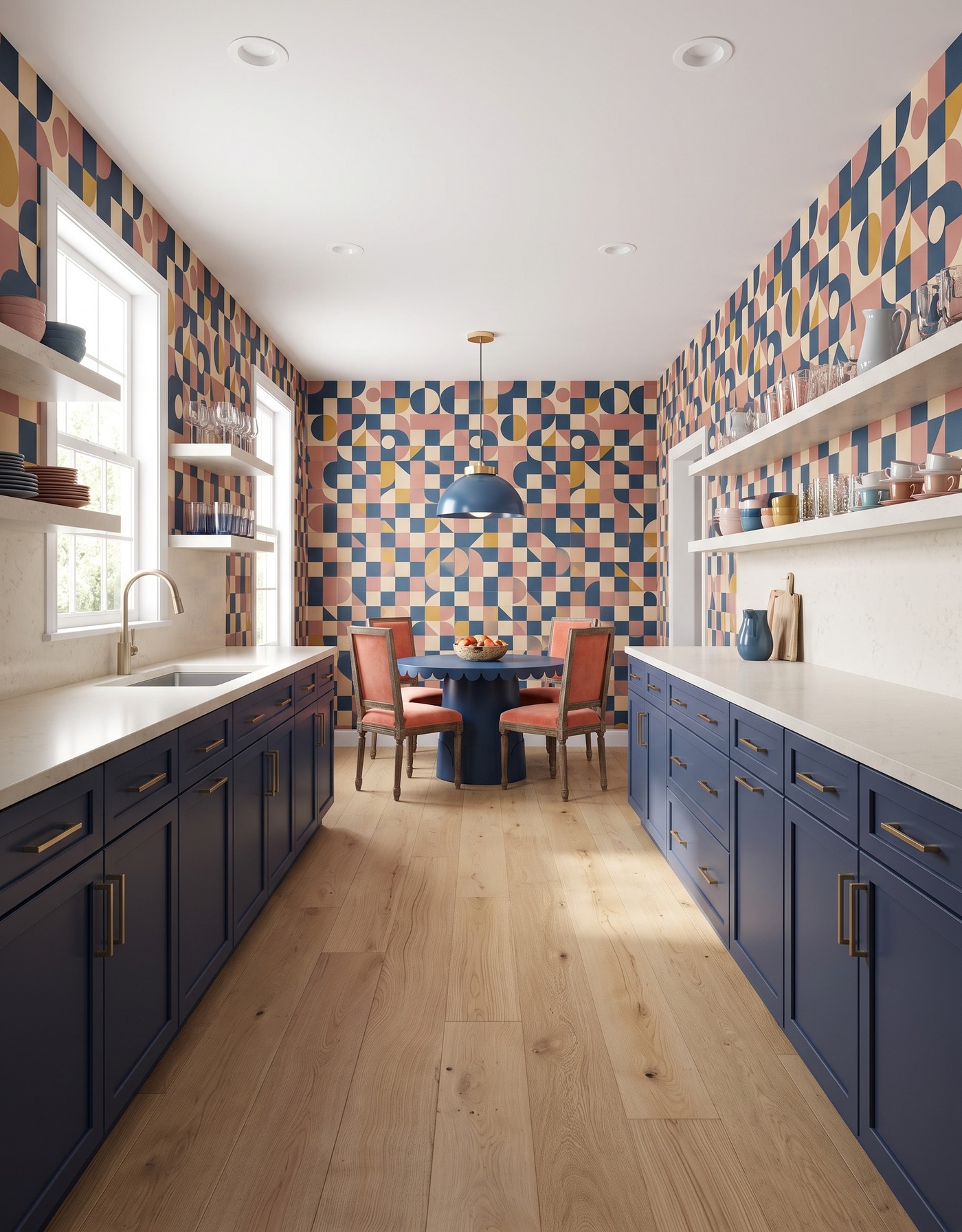
Navy galley breakfast nook with geometric wallpaper, coral chairs and a blue scalloped table.
Navy cabinetry offers a steady foundation for a wallpaper full of geometric blocks. Warm upholstery picks up the print's terracotta family, and a blue table keeps the furniture connected to the larger cabinet color.
The pattern is already supplying plenty of movement. Choose the next details by asking what would help the room settle: a quieter counter, a plain chair fabric or a simple tabletop. A successful bold nook still gives your eye somewhere to rest.
Try this: Repeat two colors from a graphic wallpaper, then keep the remaining surfaces comparatively plain.
7. Put burnt orange beside a softer botanical
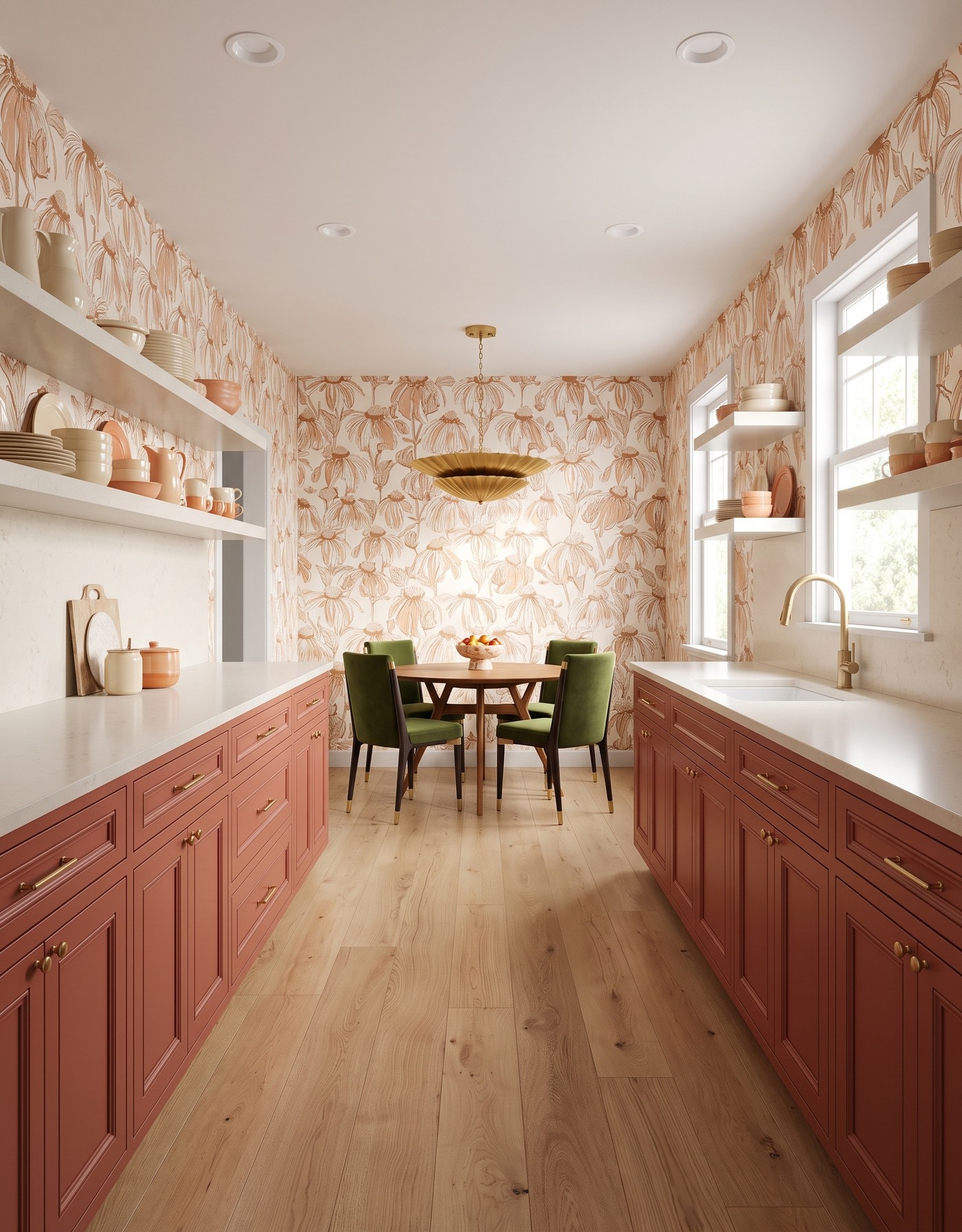
Burnt-orange galley cabinets with warm botanical walls, a round wood table and olive chairs.
Burnt orange cabinetry gives this breakfast setting a distinctly warm mood. The loose cream-and-camel floral has a softer character than a sharp geometric, and olive seating brings in a quieter earthy counterpoint.
This combination is about different kinds of warmth. The cabinet has saturated color, the wallpaper has a faded quality, and the wood contributes grain. Keep those differences visible; matching everything too closely would flatten the character that makes the room inviting.
Try this: Combine saturated warm color with a softer print and natural texture, not more equally strong orange.
8. Make smoky blue feel autumnal with plaid
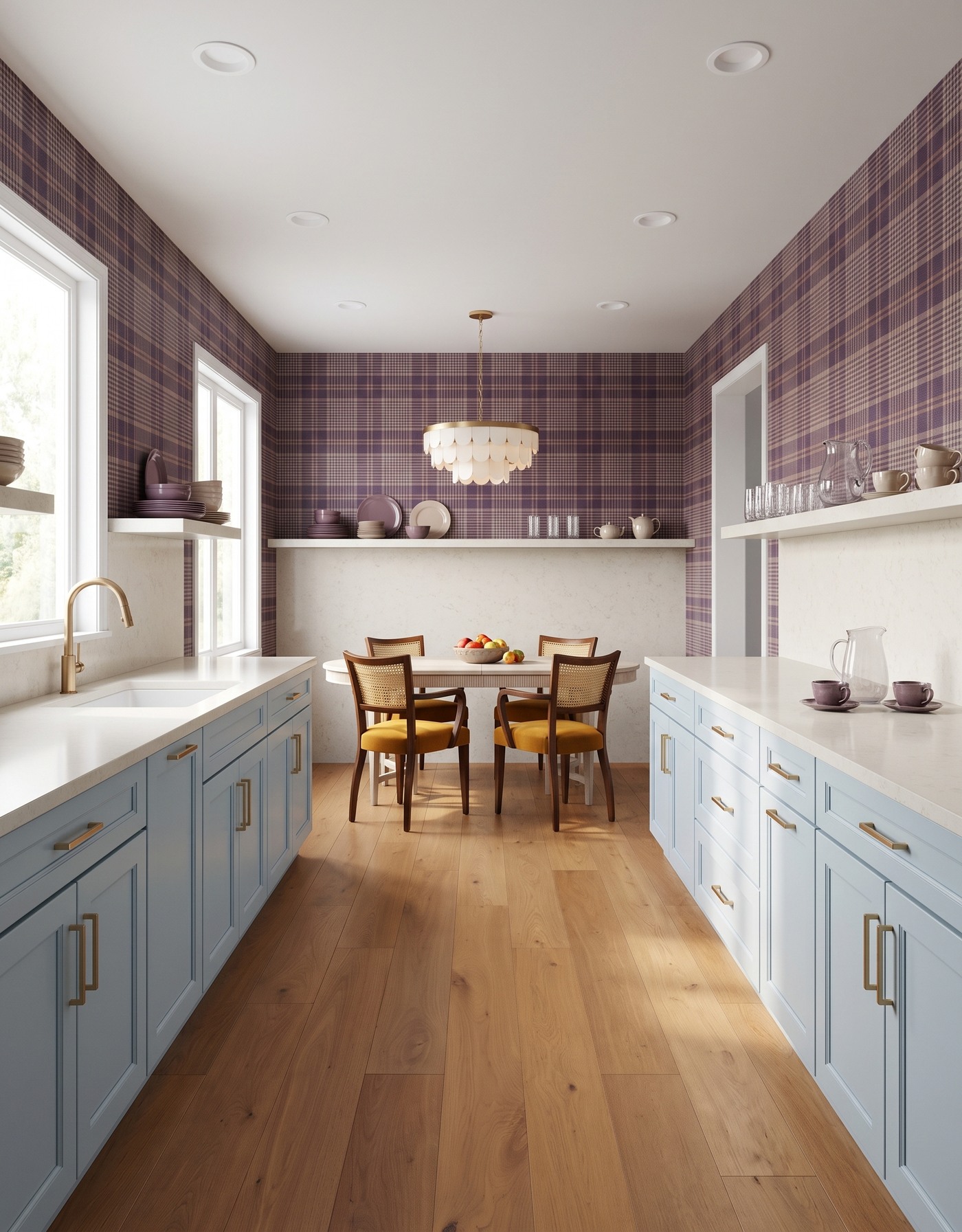
Smoky-blue cabinets with plum plaid, a pale breakfast table and mustard cane-back chairs.
Smoky-blue cabinets can belong in a fall room just as easily as a summer one. Plum plaid changes the context, and warmer dining details keep the blue from feeling chilly. The result is tailored without being severe.
Notice how much the companion materials influence a cabinet color. Before ruling a finish in or out for a particular mood, put it beside the wallpaper and chair fabric you actually want. A small blue sample alone cannot tell the whole story.
Try this: Judge cabinet color as part of the full material group, not as an isolated swatch.
9. Give black cabinetry a blue-and-gold escape
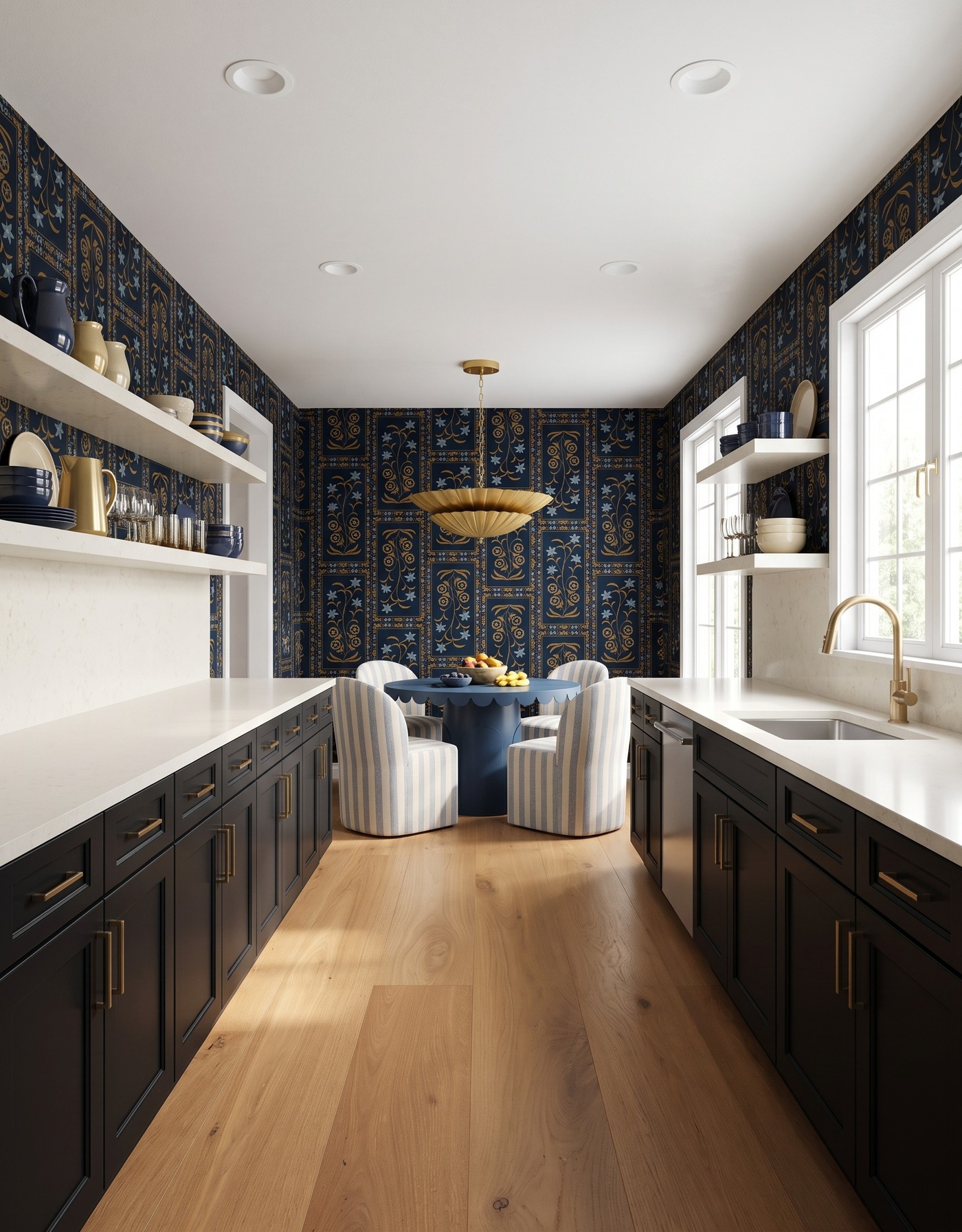
Black galley cabinets with dark botanical wallpaper, a blue round table and striped upholstered chairs.
Black cabinets and a dark botanical create an intimate-looking backdrop for the nook. Blue dining details draw out the print's cooler notes, while gold and warm wood keep the composition from becoming a flat dark mass.
The real-world check is light. Look at samples when you would actually sit down for breakfast and again in the evening. You should still be able to read the wallpaper and cabinet edges, not simply admire the idea of a dramatic palette on a bright screen.
Try this: Test a dark nook palette at the times of day when the room will be used.
10. End on natural oak and oversized daisies
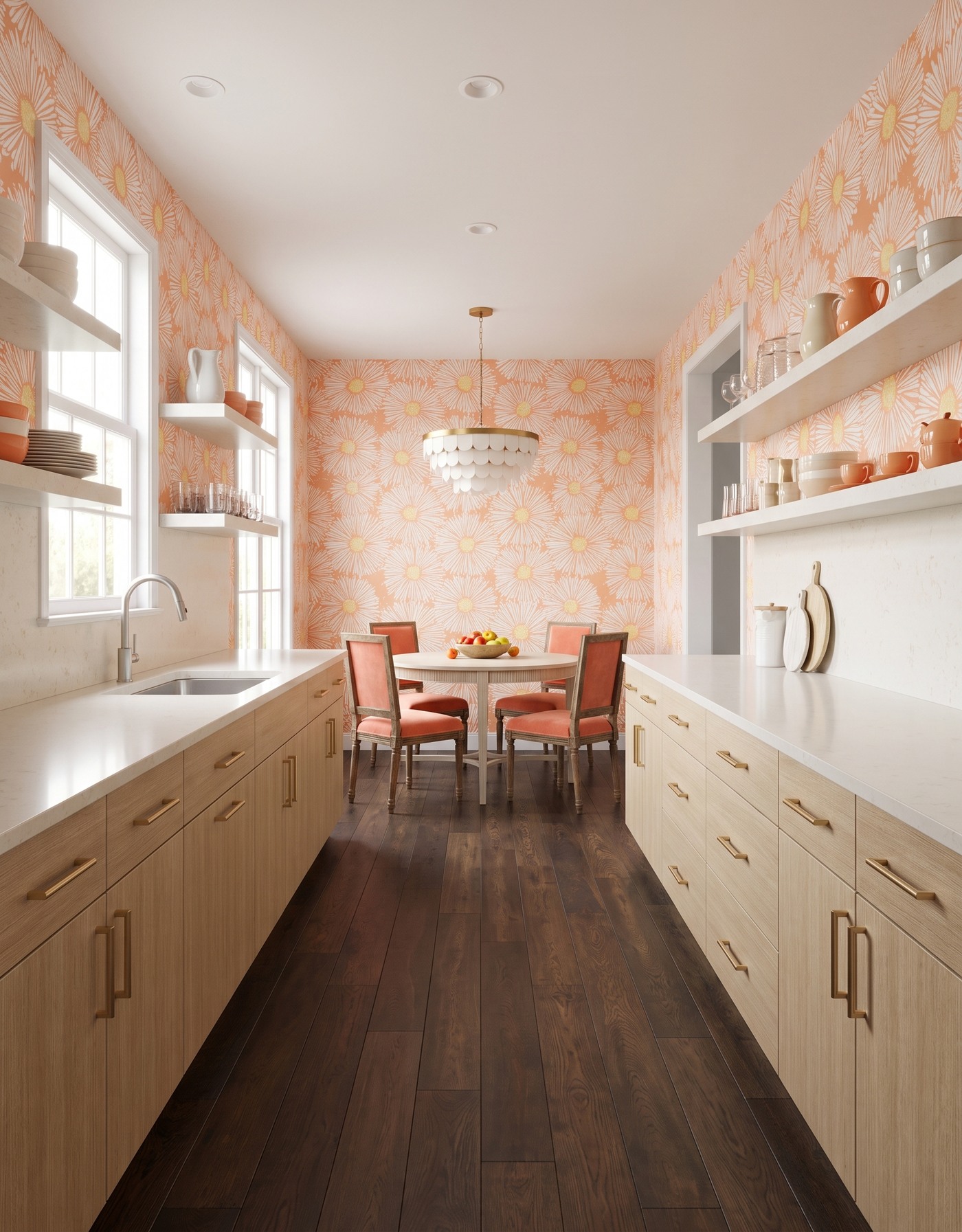
Natural-oak cabinets and peach daisy wallpaper with coral chairs and a pale breakfast table.
Natural oak beside peach daisies is the lighthearted option. The cabinet grain stays calm while the print brings scale and personality. Softly colored seating makes the dining area feel like its own small destination within the room.
A nook does not need a built-in bench to feel intentional. A table, a coherent group of chairs and a backdrop that gives them a clear place can be enough. Start with the furniture you want to use, then design the surrounding palette to support it.
Try this: Give freestanding dining furniture a defined backdrop instead of assuming a nook requires a banquette.
Before turning a corner into a breakfast nook
1. Measure the table, chair pull-out space and routes through the room together.
2. Check cabinet and appliance doors against the furniture layout.
3. Compare upholstery samples for feel, cleaning guidance and everyday suitability.
4. Look at a generous wallpaper sample from the seat and from the room's entrance.
5. Ask a qualified designer to verify the layout; a concept image cannot prove clearances.
Save the nook that makes you picture a slower morning, then name the two or three choices doing the work. A plum plaid, a blue table and olive chairs are a useful starting recipe. The final room should fit your routine just as well as your mood board.
Planning the kitchen around your dining spot? Explore Home3's approach to bringing layout and design decisions together.
Explore kitchen planning